Introduction of Pension Division Law
Confusion Due to Different Timing and Applicable Targets
When a married couple receives different pensions, there is controversy as cases have emerged where, depending on the timing of the divorce, one must share their National Pension with the ex-spouse but cannot receive a share of the ex-spouse's Government Employee Pension.
According to Yonhap News on the 14th, Mr. A (62), who worked at a public institution, married Mr. B, a government employee four years his senior, in January 1989. After about 19 years of marriage, they divorced in February 2008. Mr. A retired from his job in 2021 but struggled financially due to insufficient income.
Mr. A was scheduled to receive his National Pension in November 2024, but after hearing that early receipt was possible, he inquired with the National Pension Service in February this year about receiving it earlier and received an unexpected response.
He was told that depending on the valid marriage period, 30-40%, up to a maximum of 50%, of the scheduled National Pension benefits must be divided and given to the ex-spouse.
Mr. A acknowledged and accepted this to some extent, recognizing his wife's contribution to the household economy during their marriage.
He then asked the pension service whether, similar to dividing his National Pension, he could claim a portion of Mr. B's Government Employee Pension, which Mr. B currently receives after retirement. However, he was told that he could not claim even a single penny.
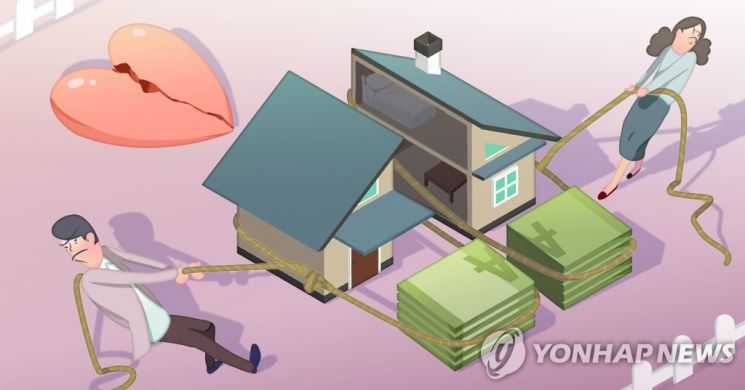
Different Introduction Times and Applicable Targets for Pension Division Regulations
Why does the situation arise where the National Pension must be divided but the Government Employee Pension cannot be shared? According to the Ministry of Health and Welfare and the Ministry of Personnel Management, which oversee the National Pension and Government Employee Pension respectively, the pension division regulations were introduced at different times and apply to different targets.
The National Pension implemented the pension division system much earlier, starting January 1, 1999. At that time, if a person who had been married for more than five years divorced and met certain conditions, they could receive a portion of the ex-spouse's old-age pension. This was intended to guarantee a certain level of retirement income by recognizing the mental and material contributions made during the marriage, even if the spouse did not contribute to the National Pension due to childcare and housework at home.
On the other hand, the Government Employee Pension introduced the pension division system much later, on January 1, 2016, 17 years after the National Pension. Because of the different implementation dates, people like Mr. A, who divorced before January 1, 2016, when the Government Employee Pension division system was introduced, are not entitled to claim a division of their ex-spouse's Government Employee Pension.
A representative from the Pension Welfare Division of the Ministry of Personnel Management, who responded to Mr. A's complaint, stated, "The Government Employee Pension division system was introduced reflecting Supreme Court precedents that retirement pensions are subject to property division upon divorce," and added, "The right to claim division is only recognized for those whose payment reasons first occurred after the law's enforcement date of January 1, 2016, according to the Government Employee Pension Act."
They further explained, "Applying this retroactively to those who divorced before January 1, 2016, could undermine legal stability, and the Constitutional Court also ruled with the same reasoning on April 26, 2018."
A representative from the National Pension Policy Division of the Ministry of Health and Welfare also gave a similar response to Mr. A's complaint, stating, "The pension division systems for the National Pension and Government Employee Pension operate under their respective laws, and under current legislation, the Government Employee Pension of an ex-spouse at the time of divorce in 2008 is not subject to division," aligning with the Ministry of Personnel Management's position.
Meanwhile, Representative Seo Young-seok of the Democratic Party on the National Assembly's Health and Welfare Committee submitted a bill in mid-November 2022 to amend the law so that the National Pension can only be divided if the divorce occurred after the point when the division of pensions under the Government Employee Pension and other occupational pensions applies. The bill is currently pending.
© The Asia Business Daily(www.asiae.co.kr). All rights reserved.
![Clutching a Stolen Dior Bag, Saying "I Hate Being Poor but Real"... The Grotesque Con of a "Human Knockoff" [Slate]](https://cwcontent.asiae.co.kr/asiaresize/183/2026021902243444107_1771435474.jpg)











