Likely to Lower Reserve Requirement Ratio Following Short-Term Interest Rate Cut
Focus on Various Economic Indicators Announced on the 15th
China's May financial indicators fell short of expectations, leading to forecasts that the central bank will pursue additional monetary easing following a short-term interest rate cut for the first time in 10 months. The market expects measures such as a reserve requirement ratio cut to stimulate the economy in the third quarter.
On the 13th, the People's Bank of China, the country's central bank, announced that new yuan loans in May amounted to 1.36 trillion yuan (approximately 241.5768 trillion KRW), a decrease of 541.8 billion yuan compared to the same period last year. This figure is well below the expected 1.6 trillion yuan from a survey conducted by Caixin, a Chinese economic media outlet, targeting 14 institutions.
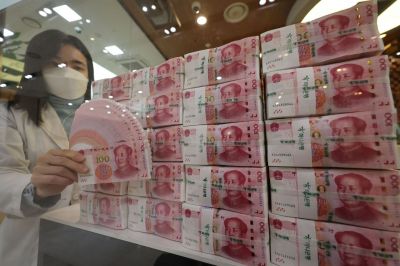
During the same period, the increase in social financing was 1.56 trillion yuan, sharply down 1.31 trillion yuan year-on-year. This significantly underperformed Caixin's survey estimate of 2.13 trillion yuan. Additionally, the broad money supply (M2) growth rate in May was 11.6%, down 0.8 percentage points from the same period last year.
Earlier, the People's Bank of China cut the 7-day reverse repurchase (reverse repo) rate by 0.01 percentage points from 2.00% to 1.90% on the 7th. This reverse repo rate cut is the first in 10 months since August last year (0.01 percentage points). The liquidity supplied to the market through open market operations on that day amounted to 2 billion yuan (approximately 350 billion KRW). This rate cut came after a series of calls for policy easing following the release of weak economic indicators such as disappointing trade balance and inflation data.
The market views this short-term interest rate cut as the prelude to a comprehensive monetary easing stance by the People's Bank of China. Goldman Sachs expects the central bank to cut the reserve requirement ratio by 0.25 percentage points in the third quarter, followed by additional reserve requirement ratio cuts and policy rate reductions in the fourth quarter. Morgan Stanley also forecasted imminent policy easing in China in its research note released the same day.
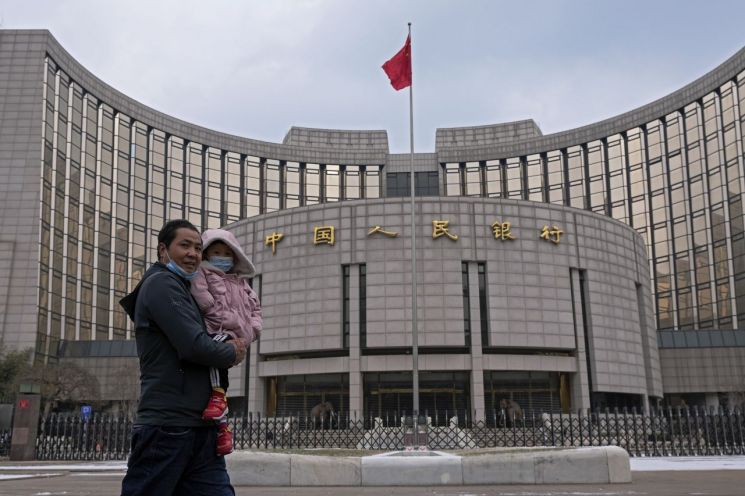
Ding Shuang, Chief Economist for Greater China at Standard Chartered Bank, called this "a clear easing signal," anticipating subsequent cuts to preferential loan rates. He also predicted that the government might consider other policy measures such as lowering commercial banks' reserve requirement ratios, easing real estate policies, and expanding fiscal spending.
Capital Economics explained, "The People's Bank of China’s first short-term policy rate cut since last summer reveals growing concerns among policymakers about China's economic recovery," adding, "It is highly likely that the easing stance will continue through other tools of the People's Bank of China." They further observed, "A sharp acceleration in credit growth remains unlikely, and the recovery will mainly rely on the service sector."
Meanwhile, the National Bureau of Statistics will release key economic indicators directly reflecting China's economic conditions on the 15th, including May industrial production, retail sales, unemployment rate, fixed asset investment, and housing prices.
© The Asia Business Daily(www.asiae.co.kr). All rights reserved.


















