Green Cross is developing a patch-type influenza (flu) vaccine in collaboration with the U.S. startup Backs Technology. On the 7th, Backs Technology announced the results of the Phase 1 clinical trial of the patch-type flu vaccine ‘MIMIX-Flu.’ According to the company, the clinical results demonstrated immune response through antibody formation, safety, and the potential for dose reduction. MIMIX-Flu combines Green Cross’s influenza vaccine antigen (H1N1) with Backs Technology’s patch-based subcutaneous drug delivery system. The patch is equipped with microneedles that slowly release the vaccine drug, controlling the delivery speed and duration. Unlike conventional vaccines, it can be shipped without the need for refrigeration and causes almost no pain.
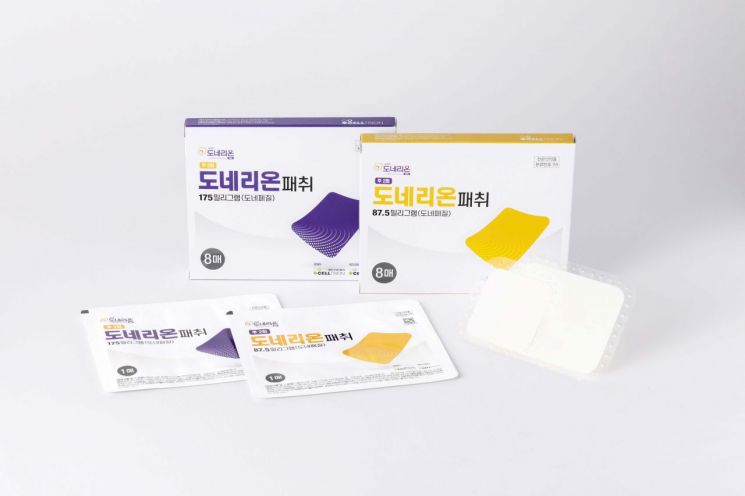
Celltrion, through joint research with iQure, introduced Donerion Patch. Donerion Patch is a patch-type formulation containing donepezil, an ingredient that slows the progression of dementia symptoms, and is the world’s first transdermal donepezil treatment. After receiving product approval from the Ministry of Food and Drug Safety in November 2021, domestic sales officially began in August last year. While existing donepezil pills had to be taken twice daily, Donerion Patch was developed to be applied to the skin twice a week, improving patient convenience, according to the company. In addition, Dong-A ST is conducting a Phase 1b clinical trial of the donepezil patch ‘DA-5207,’ and Boryung has completed Phase 1 of the transdermal donepezil patch ‘BR4002’ and is considering entering Phase 2.
Patch-type treatments are also being utilized for diabetes therapy. A representative example is the IoPatch by iOFlow. IoPatch is a patch-type insulin injector that is attached to the abdomen and allows insulin dosage adjustment and monitoring through a dedicated controller or smartphone app. Diabetic patients typically need to receive insulin injections regularly, but this patch form improves convenience by enabling insulin delivery via a patch. Recently, Medtronic, a U.S. medical device company, announced the acquisition of iOFlow, which is expected to create synergy with Medtronic’s continuous glucose monitor (CGM).
The development of patch-type treatments for various indications is due to their convenience compared to existing formulations. Patch treatments only need to be applied to the body, causing almost no pain compared to intravenous (IV) or subcutaneous (SC) injections. Compared to oral medications, patches can be used for infants and elderly patients who have difficulty swallowing pills or powders. The reason donepezil, a dementia treatment, was developed as a patch is also because dementia patients found it difficult to take oral medications regularly.
Microneedle technology can be effectively utilized when combined with patch-type treatments. Microneedles use ultra-fine needles about one-third the thickness of a human hair to deliver drugs beneath the skin. The microneedles used are less than 1 mm in length, causing almost no pain upon application. However, due to technical barriers, no microneedle drugs have yet received medical approval from the U.S. Food and Drug Administration (FDA). Among domestic companies, Lapas launched a microneedle-based acne treatment in the U.S. in April through an Original Design Manufacturer (ODM) model. The microneedle drug market is expected to grow significantly; according to Future Market Insights, the microneedle market size, which was approximately $644 million (about 830 billion KRW) in 2020, is projected to grow to $1.2039 billion (about 1.55 trillion KRW) by 2030.
© The Asia Business Daily(www.asiae.co.kr). All rights reserved.

















