"Iraq Foreign Minister Meets US Secretary of State in Saudi Arabia, Reaches Agreement"
Focus on Frozen Funds Issue in Korea
Iraq announced on the 10th (local time) that part of the Iranian funds frozen within its territory has been unfrozen.
A senior official from the Iraqi Ministry of Foreign Affairs told foreign media on the same day that $2.76 billion (approximately 3.5 trillion KRW) of Iranian funds held in Iraq were unfrozen with U.S. permission. These funds are known to be payments for gas and electricity imported by Iraq from Iran but not paid due to U.S. sanctions.
Sources explained that the unfreezing of Iranian funds was agreed upon during a recent Middle East foreign ministers' meeting held in Saudi Arabia, where Iraqi Foreign Minister Fouad Hussein met with U.S. Secretary of State Antony Blinken. The spokesperson for the Iraqi Ministry of Foreign Affairs stated in a press release that there was a substantive agreement between the two ministers but did not disclose details such as the amount.

Yahya Al-Eshaq, chairman of the Iran-Iraq Chamber of Commerce, said in an interview with the semi-official Iranian Tasnim News Agency on the same day, "The freezing of $2.7 billion (approximately 3.5 trillion KRW) of Iranian funds in Iraq has been lifted," adding, "This will help stabilize the foreign exchange markets of both countries."
Following the news of the unfreezing of overseas funds, the value of the Iranian rial, which had been falling, has also stabilized. The exchange rate on the day was recorded at 493,000 rials per U.S. dollar, about 10% lower than the rate of 550,000 rials two weeks earlier.
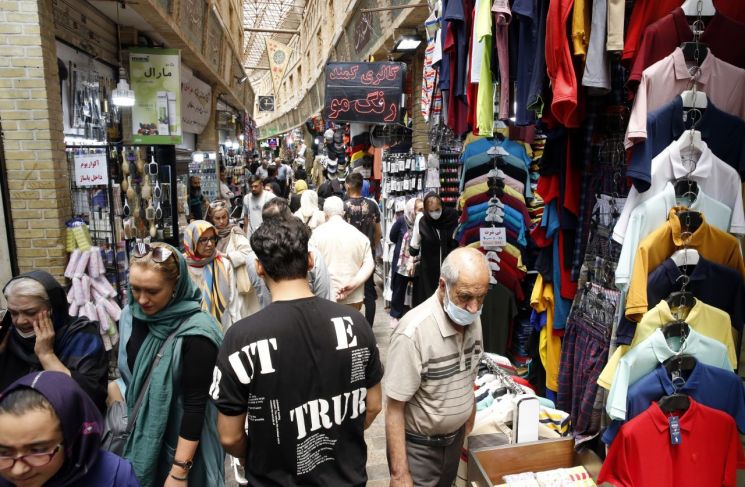
The rial-dollar exchange rate has steadily risen since large-scale anti-government protests began in September last year. Before the protests, the exchange rate was around 310,000 to 320,000 rials. Local media analyzed that the recent decline in the exchange rate (rise in currency value) is due to growing expectations for the unfreezing of Iranian funds held overseas.
About $7 billion of Iranian funds are frozen in South Korea in Korean won. These accounts were frozen after the U.S. government withdrew from the Iran nuclear deal (JCPOA - Joint Comprehensive Plan of Action) in 2018 and reinstated sanctions against Iran, freezing Iran’s oil sales proceeds. This has been the biggest obstacle in South Korea-Iran relations.
The South Korean government has made diplomatic efforts, including consultations with the involved parties, to resolve the frozen funds issue. Initially, the unfreezing of funds in South Korea was expected to be an initial implementation measure along with the release of detainees once the JCPOA restoration negotiations between Iran and the P5+1 countries were concluded. However, the nuclear deal restoration talks, which began in 2021, have been deadlocked for over a year.
© The Asia Business Daily(www.asiae.co.kr). All rights reserved.


















