Court: "Excess Revenue Does Not Indicate Company Control or Management Possibility"
The Supreme Court has ruled that if a taxi driver collects 'excess transportation income' without notifying the company, it does not have to be included in the average wage.
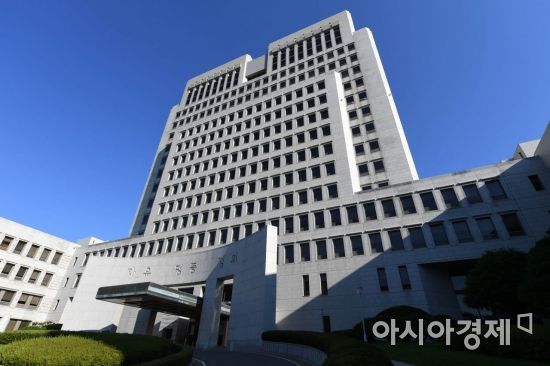
The Supreme Court's First Division (Presiding Justice No Tae-ak) overturned the lower court's ruling, which partially ruled in favor of taxi driver A in a retirement pay lawsuit against the company, and remanded the case to the Suwon District Court, the court announced on the 11th.
The company where A worked had implemented a fixed quota payment system since 2004, where drivers paid only the quota amount, and the excess transportation income was kept by the drivers. The company paid fixed wages such as base salary and allowances.
Later, the company and the labor union agreed in wage agreements in 2010 and 2015 that excess transportation income would not be included in the calculation of retirement pay. However, after retiring on December 31, 2015, A filed a lawsuit claiming that excess transportation income should also be included in the average wage.
The first and second trials ruled that A's claim was valid and ordered additional retirement pay of 2.48 million won and 4.46 million won, respectively.
However, the Supreme Court's judgment was different. The Supreme Court stated that since the company could not intervene in the details of the excess transportation income, which was A's personal income, according to the wage agreement, it should be considered that there was no possibility of management or control over it.
The court ruled, "It appears that A did not report the excess transportation income to the company and attributed it to personal income."
Even though credit card payments have become widespread and passengers' card payments are first fully deposited to the company, the excess transportation income personally earned by A is considered to have been all paid in cash, making it difficult for the company to identify, which was also a basis for the remand.
© The Asia Business Daily(www.asiae.co.kr). All rights reserved.

















