Financial Services Commission Announces Measures to Supplement Accounting System
"Insufficient Data on Policy Effects of Periodic Designation System"
Five-Year Postponement of External Audit for Internal Accounting Control under 2 Trillion Won Consolidated
The Financial Services Commission has decided to maintain the periodic designation system introduced by the new External Audit Act (amendment to the External Audit Act) as it currently stands. However, it will ease the burden on companies regarding external audits of internal accounting control systems, as requested by the corporate sector.
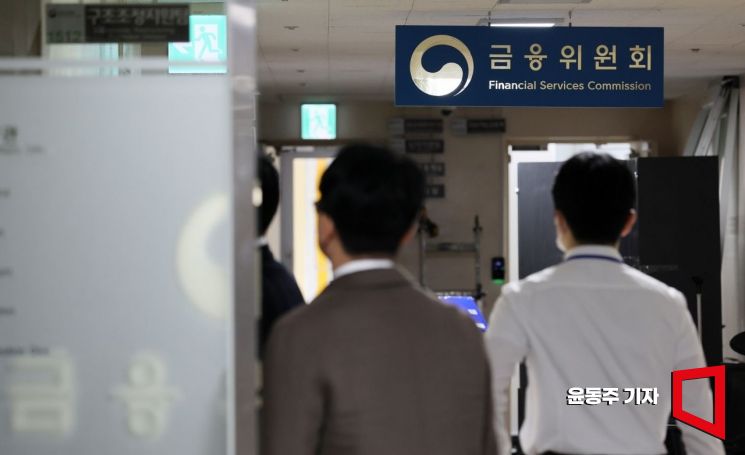
On the 11th, the Financial Services Commission announced the 'Major Accounting System Improvement Measures,' stating, "This plan was prepared by comprehensively reflecting the discussions from the Accounting Reform Evaluation and Improvement Task Force, opinions raised at the Accounting Society public hearing, results from the Accounting Society research project, and discussions at the Capital Market Subcommittee of the Financial Development Deliberation Council." The system was introduced following the accounting fraud scandal at Daewoo Shipbuilding & Marine Engineering and the amended External Audit Act (new External Audit Act) enforced in November 2018, but companies have been requesting improvements citing increased costs and burdens.
The periodic designation system will be maintained. The Financial Services Commission explained, "Since only three years have passed since the implementation of the periodic designation system, there is insufficient data to analyze policy effects, so it will be maintained for the time being," adding, "The improvement will be reconsidered when data for policy effect analysis is secured." The Commission's position is that since only three years have passed since the system's implementation, the earliest review will be possible in March next year when the business reports of 220 companies that freely appointed auditors after designation are disclosed.
The periodic auditor designation system, introduced during the full revision of the External Audit Act, means that if a company autonomously appoints an auditor for six consecutive years, the financial authorities designate the auditor for the next three years. Although the system has been evaluated to have improved accounting transparency since its introduction, companies have expressed dissatisfaction, citing significantly increased audit hours and costs as burdens.
Since the periodic designation system will be maintained for the time being, the Financial Services Commission plans to improve the system to mitigate various side effects. First, the Korea Exchange's Small and Medium Enterprise Accounting Support Center will be utilized as a neutral dispute mediation body between designated auditors and companies, and if abuse of auditor authority is detected, the government will be recommended to cancel the designation and discipline related personnel.
Additionally, efforts will be made to optimize the proportion of auditor designations for listed companies. The auditor designation system includes both periodic designation and discretionary designation. Discretionary designation refers to the government designating auditors to protect investors when any of the 27 designation reasons, such as accounting fraud risk, occur. When the External Audit Act was fully revised in 2017, the number of discretionary designation reasons was significantly expanded from 11 to 27. As a result, the proportion of companies subject to designated audits has become excessively high at around 50%, reducing quality competition among auditors, and side effects such as excessive audit fee demands by designated auditors have been pointed out, prompting plans for improvements.
Designation reasons with low relevance to accounting fraud or minor audit procedure violations will be abolished or largely converted to fines. In particular, financial standard non-compliance reasons, which account for about 25% of all discretionary designation reasons but have a low direct connection to accounting fraud risk, will be abolished through legal amendments.
Since abolishing financial standard discretionary designation reasons requires legal amendments, until then, the criteria for designation judgment will be changed from consolidated financial statements to separate financial statements. To prevent continuous designated audits for the same reason, a minimum free appointment period of 1 to 3 years will be guaranteed. To enhance the industrial expertise and audit quality of designated auditors, accounting firms that form audit teams lacking qualifications will be penalized by reducing the number of companies they can be designated for in the following year.
Alongside this, the Financial Services Commission will also ease the burden of external audits on internal accounting control systems. For small and medium-sized listed companies with assets under 2 trillion won, scheduled to be introduced next year, the timing of external audits on consolidated internal accounting control systems will be postponed from 2024 to 2029, a five-year deferral. For listed companies with assets of 2 trillion won or more, which are subject to introduction this year, audits will proceed as planned, but companies that apply for an exceptional deferral of consolidated internal accounting control system introduction will be allowed a maximum two-year deferral.
For companies subject to disclosure of audit opinions on consolidated internal accounting, the obligation to disclose separate internal accounting audit opinions will be exempted. Accordingly, from this year, for listed companies with assets of 2 trillion won or more where consolidated internal accounting external audits are implemented, the scope of internal accounting audits will be unified on a consolidated basis.
For small unlisted companies with assets between 100 billion and 500 billion won, opinions have been raised that costs for establishing internal accounting control systems and audit fees occur simultaneously upon listing. The improvement plan includes a three-year deferral of internal accounting external audits upon new listing.
The internal accounting control system refers to internal controls designed and operated to prepare and disclose reliable financial statements. Under the new External Audit Act, the certification level has been strengthened from 'review' to 'audit.' Separate internal accounting control systems have been implemented since 2019, and from last year, companies with assets of 100 billion won or more must also undergo audits.
In addition, the Financial Services Commission plans to make the application of standard audit hours more flexible. Standard audit hours are industry-specific general and average audit hours that auditors can use as indicators when determining audit input time, and are readjusted every three years through the Standard Audit Hours Deliberation Committee.
Companies have raised issues that although standard audit hours are not legally minimum audit hours, some designated auditors mechanically apply standard audit hours and demand excessive audit fees. To resolve this, the Financial Services Commission will abolish provisions in the Korean Institute of Certified Public Accountants' bylaws and code of conduct that could be misinterpreted as mandatory norms for standard audit hours, clarifying their nature as guidelines.
Meanwhile, to enhance the neutrality of the 15-member Standard Audit Hours Deliberation Committee, the number of accounting information user members recommended by the KICPA president will be reduced from 4 to 2, and the recommending institution will be changed to the Financial Supervisory Service. This change considers criticism that the committee, composed of 5 accounting industry members appointed by the KICPA president, 4 accounting information user members, and 1 FSS member, could hold meetings and make decisions without the attendance of 5 corporate members. The Standard Audit Hours Deliberation Committee convenes with two-thirds of all members present and resolves matters by a majority vote of attending members.
To prevent cases where auditors set excessive planned audit hours and demand high audit fees without sufficient explanation, auditors will be required to agree on detailed audit time calculation details with companies and submit the agreed contents to the Financial Supervisory Service.
A Financial Services Commission official stated, "To promptly implement the major accounting system improvement measures, we will complete matters that can be pursued through subordinate regulation amendments within this year," adding, "We will also strive for swift legislation on matters requiring legal amendments."
© The Asia Business Daily(www.asiae.co.kr). All rights reserved.

















