Presidential Office Announces Results of National Proposal Website Voting
97% Support Improvement of License Fee Collection Method
Recommendation to Establish Measures for Public Broadcaster's Public Responsibility Compliance
The Presidential Office announced on the 5th that it "recommended preparing plans to amend related laws and implement follow-up measures for separate collection, reflecting public complaints and demands for change regarding the integrated collection method of TV license fees through electricity bills, which has been maintained for over 30 years since its introduction."
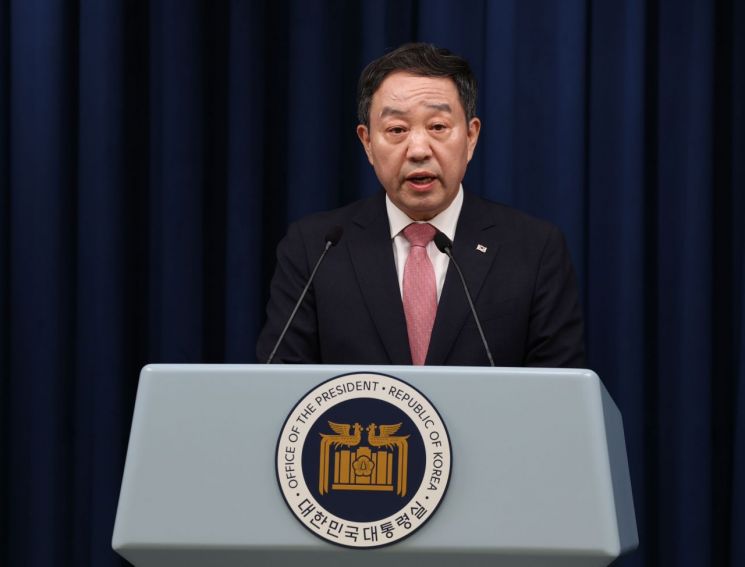
Kang Seung-gyu, Senior Secretary for Civil Society at the Presidential Office, stated at a briefing at the Yongsan Presidential Office that afternoon, "We conducted a public debate on the Presidential Office's public proposal website, where citizens could vote for or against after identity verification and freely express their opinions through bulletin board comments."
Earlier, the Public Proposal Review Committee decided on March 6 to select the improvement of the TV license fee collection method as the topic for public debate, considering factors such as daily relevance, public interest, and timeliness. This public participation debate was held for about a month from March 9 to April 9. Citizens wishing to participate could vote for or against after identity verification on the Presidential Office's public proposal website and freely express their opinions through bulletin board comments.
Senior Secretary Kang explained, "Regarding the voting results for approval or disapproval, out of a total of 58,251 votes, about 97%, or 56,226 votes, supported improving the integrated collection method. In the free discussion through bulletin board comments, over 64,000 diverse opinions were raised. More than half of these participants, about 38,000, expressed the opinion that 'TV license fees should be abolished.'"
He continued, "The call for separate collection of TV license fees accounted for about 20,000 cases, or 31.5%, citing reasons such as it being effectively a tax and that viewers' rights to choose broadcast channels and whether to pay the license fee were ignored. Additionally, many criticisms were raised regarding the role and value of public broadcasting and its failure to meet public expectations."
Senior Secretary Kang also noted, "Criticism reached 8.3%, including opinions requesting a review of whether to maintain the public broadcasting system and suggestions to separate only the public interest program production organization to operate as public broadcasting. In contrast, opinions to maintain the current integrated collection method accounted for only 0.5%, or 289 cases."
Accordingly, the Presidential Office recommended that the Korea Communications Commission and the Ministry of Trade, Industry and Energy prepare plans to amend related laws and implement follow-up measures for separate collection. Senior Secretary Kang also stated, "During the public participation debate, issues such as fairness of broadcasting, content competitiveness, and inefficient management were pointed out, and since the opinion to abolish the license fee was the most frequently raised, the recommendation also included preparing measures to guarantee the status and public responsibility of public broadcasting that meet public expectations."
Meanwhile, Senior Secretary Kang introduced the schedule for future public debates. He said, "Following the first debate on easing the fixed book price system and the second debate on TV license fee collection methods, the third public participation debate will focus on revising the Assembly and Demonstration Act regarding protests, and will proceed with the existing methods of voting for or against and discussion through comments."
© The Asia Business Daily(www.asiae.co.kr). All rights reserved.

















