Bank of Korea Holds 104.4 Tons of Gold... 8,380 Gold Bars
All Stored in the UK... First Audit Conducted Last Month
Some Errors Found but Storage Condition Good
Gold Has Poor Liquidity, Expansion of Holdings Should Be Cautious
The Bank of Korea recently conducted its first physical inspection of the 104.4 tons of gold it holds at the Bank of England, the central bank of the United Kingdom. Although some errors were found, such as discrepancies in the refiner markings on certain gold bars compared to the records, overall, the gold was confirmed to be safely stored.
The Bank of Korea explained that although gold prices have recently surpassed $2,000 per ounce and continue to soar, the potential for further increases remains uncertain. Additionally, since gold has lower liquidity compared to the dollar, the Bank emphasized the need for a cautious approach to expanding gold holdings, contrary to some claims.
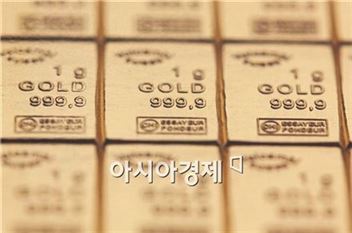
A total of 8,380 gold bars... All stored in the UK
On the 6th, the Bank of Korea stated in its "Status of Gold Holdings Management and Future Gold Operation Direction" report, "On the 23rd, we conducted an inspection not only to check the safety and storage condition of the gold holdings but also to review the behavior of other central banks and market conditions."
The Bank of Korea stores all 104.4 tons of its gold at the Bank of England. Although it previously stored gold domestically, at the New York Federal Reserve, and UBS, it centralized storage at the Bank of England to enhance gold liquidity and generate additional income through gold lending.
To facilitate smooth trading in the London market, the Bank holds gold standardized in purity, weight, and form as designated by the London Bullion Market Association (LBMA). The total number of gold bars is 8,380. This inspection is the first since the Bank began storing gold at the Bank of England in 1990. The Bank of England did not allow inspections until the mid-2010s due to security reasons.
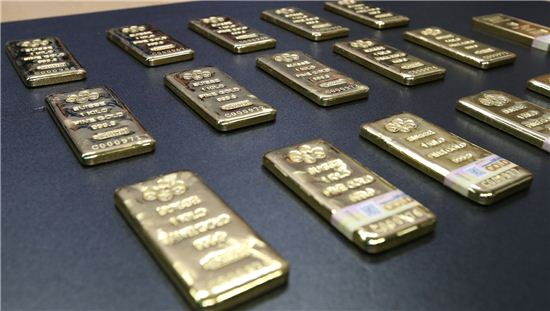 Gold bar (stock photo)
Some errors found but gold storage condition is good
The inspection was conducted on the 23rd of last month by sampling 205 gold bars (3.05% of the Bank's holdings excluding lent gold). Two hundred bars were notified to the Bank of England in advance, and five bars were randomly selected on-site to check storage conditions. The inspection included comparing records with physical bars, weighing, and checking the arrangement in the vault.
When the Bank compared the management numbers, refiner, and purity information recorded on the gold bar surfaces with the records, no issues were found. The investigation of surface scratches and cracks also showed good condition. Of the 30 bars weighed, none showed abnormalities, and the five bars checked inside the vault were well stored.
However, three gold bars inspected showed discrepancies in the refiner markings compared to the records. The Bank explained, "The refiners are the same, but the errors were due to different factory locations, which we judged to be simple mistakes. Such errors often appear in inspections by other institutions as well, so we have corrected the relevant information."
The Bank confirmed through this inspection that the gold is safely stored and that the Bank of England's management system is efficient. However, since some management errors were found, the Bank noted the need to conduct inspections periodically over several years to verify gold information.
The Bank stated that since London is the center of the gold market, storing all gold holdings at the Bank of England is an unavoidable choice but added, "If the Bank's gold holdings increase in the future, it will be necessary to consider diversifying storage institutions, taking safety into account."
Gold price rise due to weak dollar... also influenced by Russia war
The Bank of Korea analyzed that the rise in gold prices from $1,100?$1,300 per ounce in the mid-2010s to around $2,000 recently is due to the weak dollar. The weak dollar is not only a factor supporting gold prices but also increases gold demand as a hedge against dollar weakness, which further drives price increases.
Additionally, ongoing gold purchases by some central banks such as China and T?rkiye are also supporting the rise in gold prices. Last year's central bank gold purchases were the largest since 1950, and this trend continues this year.
Central banks' gold purchases are interpreted as efforts to reduce dependence on the dollar and to respond to inflation. The Bank explained, "Especially after the Russia-Ukraine war, the U.S. excluded Russia from the global dollar financial system, triggering gold purchases by some countries recognizing the risk."
Bank of Korea: "Gold liquidity is poor... dollar is a better choice"
As of the end of last year, the dollar accounts for over 70% of the Bank of Korea's foreign currency assets, while gold holdings make up only about 1%. Although some voices call for increasing gold holdings as gold prices rise, the Bank takes a cautious stance.
The Bank stated, "Unlike other currencies, gold is not an asset that can be actively adjusted based on market outlooks. Its liquidity is relatively lower than other currencies, and if market outlooks change and gold is sold, it may send unexpected signals to the market because gold is perceived as a last resort among foreign reserves."
In particular, the Bank emphasized, "A cautious approach is needed regarding the necessity of expanding gold holdings within foreign reserves, as some claim. Given the potential for a global economic recession and geopolitical risks, ensuring sufficient dollar liquidity is a better choice than expanding gold holdings."
The Bank also explained, "Considering that gold prices are already near their all-time highs and the uncertain potential for further increases, as recently confirmed, the U.S. dollar's strength can emerge anytime depending on the global economy, and the real interest rate, which is the opportunity cost of holding gold, has turned positive, limiting price increases."
© The Asia Business Daily(www.asiae.co.kr). All rights reserved.
















