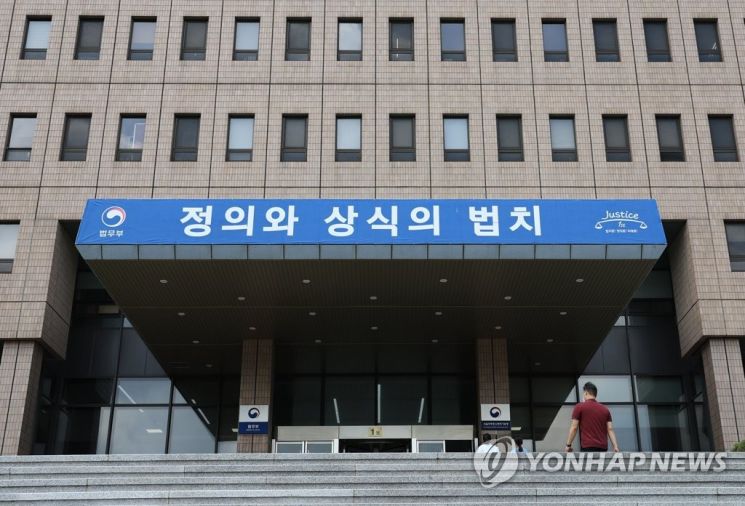
The Ministry of Justice announced that a revision to the Criminal Act, which eliminates the statute of limitations for the execution of the death penalty currently set at 30 years, passed the Cabinet meeting on the 5th.
The revision bill will be submitted to the National Assembly within this week. If the bill passes the National Assembly, the provision exempting execution after 30 years from the death sentence will be removed from the Criminal Act. It will also be applied retroactively to those currently on death row whose 30-year statute of limitations has not yet expired.
Articles 77 and 78 of the current Criminal Act stipulate that if 30 years pass after the death sentence is finalized without execution, the statute of limitations is completed, and execution is exempted. Although this provision has become almost obsolete, it gained attention as South Korea has not carried out executions since December 1997.
In November 1993, Won Mo, who was sentenced to death for arson resulting in death of an existing structure and other charges, is the longest-serving death row inmate. Controversy arose over whether his death sentence would be exempted when he reaches 30 years of incarceration this coming November.
A Ministry of Justice official stated regarding the revision bill, "The bill aims to clearly specify in the law that the statute of limitations does not apply to those with finalized death sentences to prevent gaps in the execution of sentences."
He added, "Although the statute of limitations was abolished in 2015 for crimes punishable by death, such as murder, the execution statute of limitations for those with finalized death sentences has remained, so it is necessary to correct the imbalance with the statute of limitations system."
© The Asia Business Daily(www.asiae.co.kr). All rights reserved.
![Clutching a Stolen Dior Bag, Saying "I Hate Being Poor but Real"... The Grotesque Con of a "Human Knockoff" [Slate]](https://cwcontent.asiae.co.kr/asiaresize/183/2026021902243444107_1771435474.jpg)
















