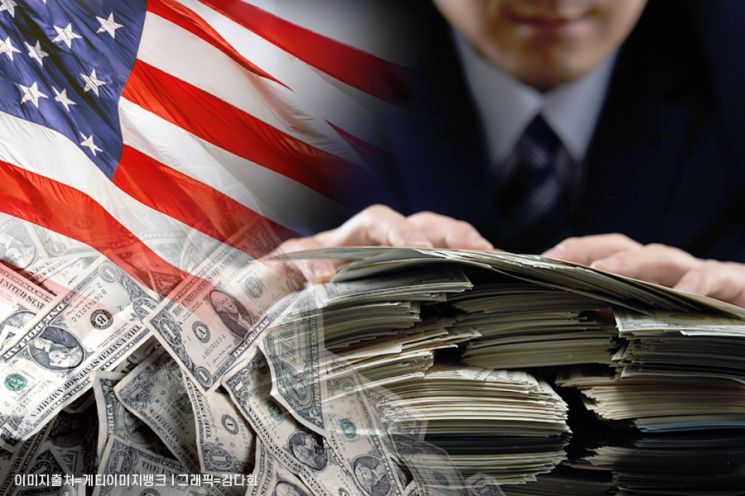
The Korean won to US dollar exchange rate fell to the low 1300 won range as expectations grew that the US Federal Reserve (Fed) would keep its benchmark interest rate unchanged in June. If the US tight monetary policy comes to an end and South Korea's export situation improves in the second half of the year, the won is expected to strengthen against the dollar, potentially pushing the exchange rate down to the 1200 won range. However, considering the current structure of the Korean economy, it is anticipated that the exchange rate will find it difficult to drop back to the 1100 won range.
According to the Seoul foreign exchange market on the 3rd, the won-dollar exchange rate closed at 1305.7 won the previous day, marking the lowest level in about a month and a half since April 14 (1298.9 won). During this period, the won fluctuated between 1310 and 1340 won due to the US's aggressive tight monetary policy and weakened export competitiveness caused by the semiconductor market downturn. Notably, on May 17, amid concerns over a US debt default, the exchange rate hit a record high of 1343 won.
The recent downward trend in the won-dollar exchange rate is due to growing expectations that the US will halt interest rate hikes. In the Beige Book economic report released by the Fed on May 31 (local time), it was noted that ▲ employment growth slowed in most regions, ▲ expectations for future growth slightly worsened, and ▲ overall financial conditions remained tight. These factors increase the likelihood of the Fed maintaining its benchmark interest rate.
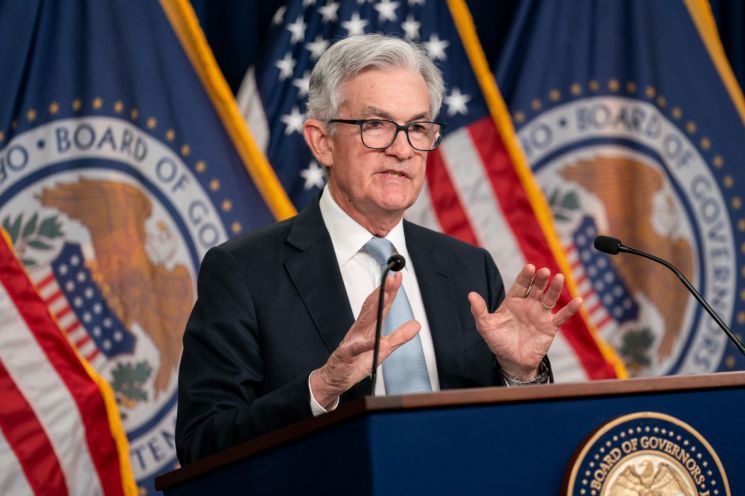
Especially, Philip Jefferson, nominated as the next Fed Vice Chair, hinted at a rate hold at the upcoming Federal Open Market Committee (FOMC) meeting on June 13-14 during the annual conference on financial sector policy challenges held in Washington DC on the same day, stating, "Even if the decision is to maintain the policy rate at the next meeting, it should not be interpreted as having reached the terminal rate."
Expectations that South Korea's export situation will improve from the second half of the year are also expected to contribute to the won's strength. Many market analysts predict that from the third quarter, supported by China's economic recovery and improved semiconductor exports, the trade balance will turn to surplus, pushing the won-dollar exchange rate down to the 1200 won range. In fact, as optimism about the semiconductor industry's performance improvement has emerged recently, foreign investment inflows have increased, and pressure on the won's depreciation has somewhat eased.
Shin Seung-chul, Director of the Economic Statistics Bureau at the Bank of Korea, said at a press briefing the day before, "The economy is expected to show a 'low in the first half, high in the second half' pattern, with economic growth rates rising year-on-year in the second half after a sluggish first half." Concerns over a US default, which had driven risk aversion and dollar strength in recent months, have also been resolved. President Joe Biden and the Republican Party, after a brinkmanship standoff over raising the federal government's debt ceiling, reached a final agreement on May 28.
However, it seems difficult for the won-dollar exchange rate to fall back to the pre-COVID-19 level of the 1100 won range. Seo Young-kyung, a member of the Bank of Korea's Monetary Policy Committee, said in a presentation titled "The New Normal After the Pandemic: Changes in the Transmission Channels of Exchange Rate Fluctuations" at the BOK International Conference the day before, "It is expected to be difficult for the won exchange rate to fall to pre-pandemic levels." Considering structural changes such as intensified competition with China, population aging, and increased overseas investment demand from companies and households, it is explained that the won is unlikely to show the same strength as in the past.
© The Asia Business Daily(www.asiae.co.kr). All rights reserved.
![Clutching a Stolen Dior Bag, Saying "I Hate Being Poor but Real"... The Grotesque Con of a "Human Knockoff" [Slate]](https://cwcontent.asiae.co.kr/asiaresize/183/2026021902243444107_1771435474.jpg)

















