Financial Deterioration Due to COVID-19 and Real Estate Slump Effects
Due to increased spending during the COVID-19 outbreak, a real estate market downturn, and reduced tax revenues, the finances of local governments in China are deteriorating. This year, bond refinancing has surged sharply, and many are unable to repay their debts on time.
According to Chinese economic media outlet Caijing on the 1st, the total bond issuance by local governments from January to May this year reached 3.54 trillion yuan (approximately 656.7 trillion KRW), a 6.6% increase compared to the previous year. Of this, new issuances decreased by 7.8% to 2.26 trillion yuan, while refinancing surged by 47% to 1.28 trillion yuan.
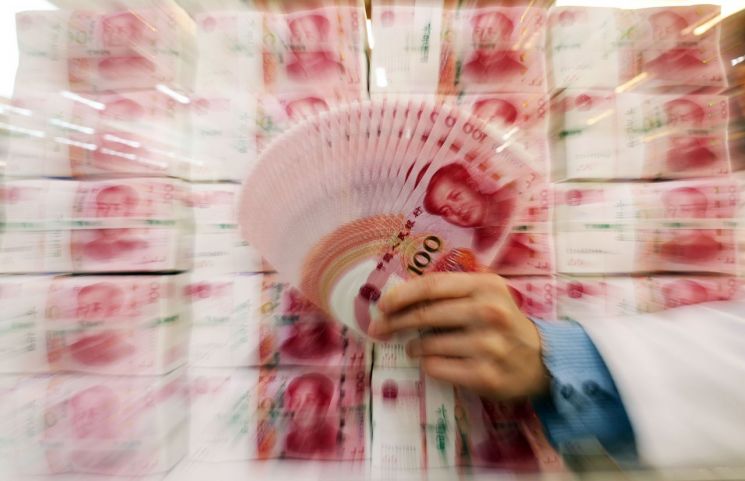
Refinancing refers to borrowing money not for specific projects but to repay existing loans. Caijing analyzed, "In recent years, local government revenues have been hit by the pandemic, economic downturn, tax reductions and exemptions, and the real estate market slump," adding, "Debt repayments still heavily rely on refinancing."
According to the Chinese Ministry of Finance, the principal repayment amount of local government bonds maturing from January to April this year was 791.6 billion yuan, but the actual repayment was only about 1.2%, or 9.8 billion yuan. Recently, the maturity period of bonds has also lengthened. As of the end of April, the average remaining maturity of local government bonds was 8.8 years, double the 4.4 years recorded in 2018.
Most newly issued bonds are classified as special bonds. Over the past five months, the issuance of new special bonds reached 1.9 trillion yuan, filling half of the issuance quota (3.8 trillion yuan). According to data from the Anxin Securities Research Center, about 48.5% of special bonds issued from January to May this year were invested in traditional infrastructure sectors such as transportation, municipal construction, and industrial park development. The share of housing and aging facility repairs dropped significantly to 15.2% from 11.0% at the end of last year.
Caijing stated, "Special bonds are an important tool to increase effective investment and stabilize the macroeconomy," and added, "Since April, some economic indicators have weakened, raising market demands for proactive fiscal policies." Citing opinions from financial and tax experts, it emphasized, "The pace of special bond issuance should be accelerated, and efficiency improved to promote effective investment," and "Economic operations should be stimulated within a reasonable range."
As of the end of April, the total local government debt nationwide stood at 37.5 trillion yuan, controlled within the limit approved by the National People's Congress (42.17 trillion yuan). The Ministry of Finance reported that local fiscal revenues nationwide from January to April this year were 4.561 trillion yuan, a 14.8% increase from last year, but this growth is largely attributed to the base effect. In some regions, fiscal conditions have become critical, prompting authorities to publish debt lists through official channels to urge repayment. The Wuhan Municipal Finance Bureau, where COVID-19 was first discovered, publicly disclosed a detailed list of 259 companies, including state-owned enterprises, and their outstanding debts in the Changjiang Daily, urging them to fulfill their debt repayment obligations.
© The Asia Business Daily(www.asiae.co.kr). All rights reserved.
![Clutching a Stolen Dior Bag, Saying "I Hate Being Poor but Real"... The Grotesque Con of a "Human Knockoff" [Slate]](https://cwcontent.asiae.co.kr/asiaresize/183/2026021902243444107_1771435474.jpg)
















