Final Confirmation of Lower Court's Dismissal of Request to Cancel Information Disclosure Refusal
"The Public Interest Gained from Non-Disclosure Outweighs the Benefit of Disclosure"
The Supreme Court has ruled that the administrative agency's decision not to disclose the negotiation documents related to the 'Comfort Women Agreement' between South Korea and Japan, announced on December 28, 2015, was justified.
This was because the public interest gained by not disclosing the information, considering the serious diplomatic issues that could arise if it were disclosed, outweighed the benefits of disclosure.
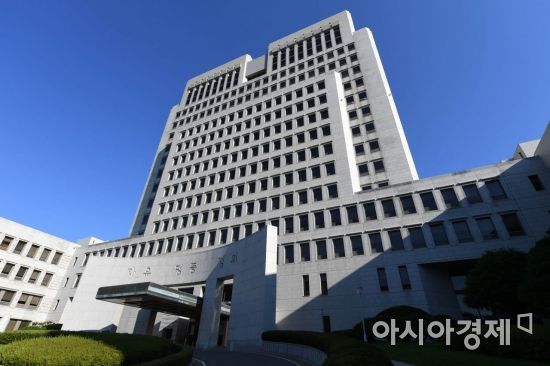
The Supreme Court's 3rd Division (Presiding Justice Lee Heung-gu) upheld the lower court's ruling on the 1st in the appeal trial of the information non-disclosure cancellation lawsuit filed by lawyer Song Ki-ho of the Minbyun against the Minister of Foreign Affairs, ruling against the plaintiff.
The court stated, "The lower court's judgment is proper, and there is no error in misunderstanding the legal principles concerning non-disclosure information stipulated in the Information Disclosure Act."
Previously, the Minister of Foreign Affairs of the Republic of Korea and the Minister of Foreign Affairs of Japan jointly announced an agreement on December 28, 2015, regarding the issue of victims of Japanese military comfort women.
The agreement included ▲the acknowledgment that the comfort women issue occurred under the involvement of the Japanese military at the time, with the Japanese government taking responsibility, and the Prime Minister of Japan apologizing and reflecting on this, ▲supporting the healing of the emotional wounds of the victims of Japanese military comfort women with the Japanese government's budget, and ▲confirming that, based on the implementation of such measures, the issue of victims of Japanese military comfort women between South Korea and Japan was finally and irreversibly resolved.
Lawyer Song requested disclosure on February 1, 2016, from the Ministry of Foreign Affairs regarding negotiation documents about the selection and use of terms such as 'military involvement,' 'sex slave,' and 'general comfort women.'
However, on February 15 of the same year, the Ministry of Foreign Affairs decided not to disclose the information, citing that it fell under 'information concerning diplomatic relations, etc., which, if disclosed, is recognized to significantly harm the nation's vital interests,' thus qualifying as non-disclosure information under Article 2, Paragraph 1, Subparagraph 2 of the Information Disclosure Act.
Article 9 (Non-disclosure Information) Paragraph 1 Subparagraph 2 of the Information Disclosure Act stipulates that public institutions may withhold information related to national security, defense, unification, diplomatic relations, etc., if disclosure is recognized to significantly harm the nation's vital interests.
Lawyer Song filed an objection to the non-disclosure decision on February 17, 2016, but after it was dismissed on February 27, he filed a lawsuit.
After filing the lawsuit, Lawyer Song reduced the scope of his claim in October 2016 by excluding the cancellation requests for non-disclosure decisions related to the terms 'sex slave' and 'Japanese military comfort women,' and in November of the same year, for the term 'military involvement.'
Ultimately, the trial focused on the legality of the cancellation of the non-disclosure decision regarding Lawyer Song's information disclosure request for documents produced by the defendant related to negotiations on the existence and factual recognition of forced abduction by the Japanese military and authorities during the consultations and negotiations conducted to draft the joint announcement by the South Korean and Japanese foreign ministers on December 28, 2015, following the start of South Korea-Japan director-general level consultations in April 2014.
The first trial ruled to disclose the documents.
The reason was that the national interest protected by withholding the documents was not greater than the public interest gained by fulfilling the public's right to know.
The court noted, "The documents contain statements from the Japanese side during the South Korea-Japan consultation process, which could cause some diplomatic disadvantages with Japan," but added, "Considering the legislative purpose of the Information Disclosure Act, which in principle guarantees the public's right to know and transparency in government administration by disclosing information held and managed by public institutions, the determination of whether the information falls under the exception of non-disclosure information must be strictly judged."
Furthermore, the court stated, "The essence of the December 28 agreement can be said to be 'the Japanese government's apology and support for the victims of Japanese military comfort women,' and the reason the Japanese government apologizes and supports is encapsulated in the expression 'military involvement.' However, there is no indication of how this 'military involvement' occurred, so it is necessary to understand its meaning by disclosing the full texts of the 1st to 12th South Korea-Japan director-general level consultations."
However, the second trial's judgment differed.
The court pointed out, "The consultations for the December 28 agreement on Japanese military comfort women victims were conducted confidentially, and disclosing them could seriously damage the diplomatic trust built between South Korea and Japan, as well as adversely affect future treaty negotiations between other countries."
It continued, "Although the expressions used in the December 28 agreement are somewhat abstract and ambiguous, they were adopted after careful consideration and coordination regarding sensitive issues between South Korea and Japan, and it is appropriate to understand them as expressed. It is not necessarily essential to finalize their meaning through disclosure of this information."
The court also added, "Disclosing the contents of confidential consultations could become a subject of diplomatic and political disputes. Especially since the Japanese military comfort women issue is sensitive between South Korea and Japan, partial disclosure of the consultations could distort the overall intent of the negotiations."
The Supreme Court also agreed with this second trial judgment.
The court stated, "Considering the relevant laws, legal principles, and records, the lower court's judgment is proper, and there is no error in misunderstanding the legal principles concerning non-disclosure information stipulated in Article 9 Paragraph 1 Subparagraph 2 of the Information Disclosure Act and partial disclosure stipulated in Article 14 of the same law."
A Supreme Court official said, "Previously, the Supreme Court ruled that information related to the South Korea-Japan General Security of Military Information Agreement (GSOMIA) and the Mutual Defense Support Agreement also falls under non-disclosure information as defined in Article 9 Paragraph 1 Subparagraph 2 of the Information Disclosure Act," adding, "The Supreme Court takes a cautious stance on disclosing negotiation contents of diplomatic agreements concluded between South Korea and other countries."
He continued, "This ruling is significant in that it accepts the lower court's judgment that the interest in not disclosing confidential diplomatic negotiation contents outweighs the benefits of disclosure, reaffirming the existing cautious approach toward the disclosure of diplomatic negotiation information."
© The Asia Business Daily(www.asiae.co.kr). All rights reserved.

















