Card Loan Interest Rate 200% Per Year
Household Loan Delinquency Rate 6.2%
Number of Credit Cards Twice the Economically Active Population
With Brazil's credit card loan interest rates soaring to the highest level in six years, household debt is expected to balloon like a snowball. Currently, Brazil's benchmark interest rate stands at 13.75%, which is among the highest in the world in terms of real interest rates.
According to Bloomberg on the 31st, the Central Bank of Brazil announced that the average revolving loan interest rate remained at an annual 447% for five consecutive months, marking an 84 percentage point increase compared to the previous year. This is the highest level since March 2017. The credit card loan interest rate averaged 200% per year, the highest level recorded since the Central Bank of Brazil began compiling statistics in 2011.
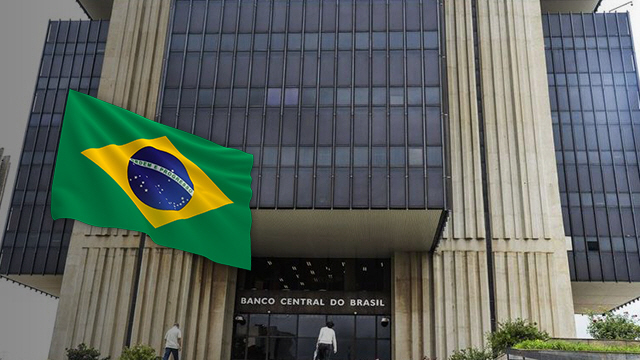
With Brazil's credit card loan interest rates hitting a record high for the first time in six years, household debt is expected to swell like a snowball. Currently, Brazil's benchmark interest rate is 13.75%, trailing Argentina's 81% in nominal interest rates. However, in terms of real interest rates, Brazil leads the world with 9.52%, surpassing Argentina's -24%.
The sharp rise in credit card loan interest rates is due to Brazil's benchmark interest rate holding steady at 13.75% since August last year, marking the highest level in five years. To curb inflation, Brazil raised interest rates 12 consecutive times starting early 2021. Although inflation, which peaked at 12.1% in April last year, slowed to 4.18% last April, it still exceeds the Central Bank of Brazil's target of 3.25%. The market expects Brazil's inflation rate to reach 6.03% this year.
As interest rates rise sharply, the repayment burden on ordinary citizens is also increasing rapidly. Bloomberg reported, "Debt accounts for 49% of Brazilians' income, meaning people spend about one-third of their monthly salary on debt repayment."
According to a report from the Central Bank of Brazil, 22% of Brazilians hold three or more credit cards, and customers owning five credit cards have outstanding loans exceeding $2,551 (3,374,717 KRW). The delinquency rates for household and corporate loans in Brazil stand at 6.2% and 2.8%, respectively. Considering that South Korea's household and corporate loan delinquency rates were only 0.32% and 0.39% as of the end of February, this indicates slower debt repayment progress in Brazil.
As household debt balloons like a snowball, Brazilian authorities have taken measures to address the issue. The government has offered debt repayment deferral benefits to ease consumers' household spending burdens. In 2020, when the economy was depressed due to the spread of COVID-19, the four major banks in Brazil extended loan repayments amounting to $43.98 billion. Additionally, the Brazilian Ministry of Planning and Finance plans to introduce legislation to regulate excessive credit card loan interest rate calculations.
Bloomberg stated, "As of June last year, there were 111 million credit cards across Brazil, which is twice the economically active population," adding, "The Central Bank is expressing concerns about household debt levels amid the sharp rise in credit card interest rates."
© The Asia Business Daily(www.asiae.co.kr). All rights reserved.
![Clutching a Stolen Dior Bag, Saying "I Hate Being Poor but Real"... The Grotesque Con of a "Human Knockoff" [Slate]](https://cwcontent.asiae.co.kr/asiaresize/183/2026021902243444107_1771435474.jpg)
















