"Even if Illegal Act Liability is Claimed, Product Liability Must Be Examined"
The Supreme Court has ruled that in cases where apples deteriorated due to a machine purchased to enhance their freshness, the point in time to calculate the damage amount should be when the apples are sold and actual loss occurs, not when the machine use was stopped.
Additionally, the Supreme Court stated that even if a party claims damages based on a tort, if the claim includes allegations related to product 'labeling defects' or other facts required under the Product Liability Act, the court must consider whether the Product Liability Act, a special law under the Civil Act concerning torts, applies.
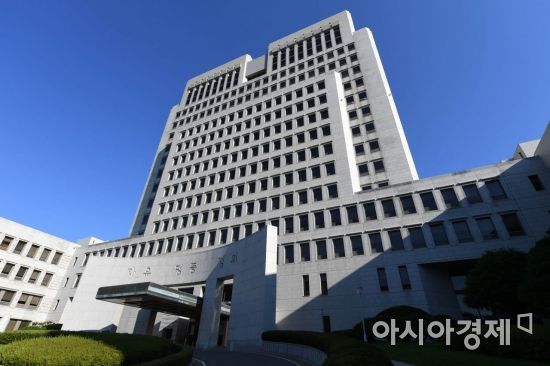
According to the legal community on the 31st, the Supreme Court's 2nd Division (Presiding Justice Min Yu-sook) overturned the lower court's ruling partially favoring Mr. A, an apple farmer who sued Mr. B, the representative of the ozone generator manufacturer and seller, for damages exceeding 80 million won, and remanded the case to the Daegu District Court, ordering Mr. B to compensate Mr. A about 32 million won.
In October 2019, Mr. A purchased a plasma (ozone) generator named 'Singsing Solution' from Mr. B for 3 million won and installed it in his cold storage. Plasma refers to a state where gas is heated to an extremely high temperature and separated into electrons and positively charged ions. Mr. B advertised that the machine delays ripening and has a sterilizing effect on agricultural products.
However, in January the following year after installation, some of the 1,962 boxes (about 113,800 apples) harvested from Mr. A's farm and stored in the cold storage showed browning discoloration, and some apples exhibited depression symptoms.
Mr. B took five boxes of apples showing abnormal symptoms from Mr. A and requested an inspection at an apple research institute. The institute responded that the symptoms observed were browning symptoms. Mr. A then inquired whether the plasma generator he was using was related, and the institute confirmed the connection.
A researcher from the institute visited Mr. A's warehouse again, examined the apples, and diagnosed that some of the abnormal symptoms were ozone damage caused by plasma. However, Mr. B disputed the diagnosis. Nevertheless, repeated experiments by the institute yielded the same results, and at Mr. B's request, among five boxes (256 apples) that Mr. A had separately purchased and stored, 202 apples showed the same symptoms.
As of July 3, 2020, 1,967 boxes (including the five boxes purchased at Mr. B's request) of apples stored in Mr. A's warehouse, totaling about 113,800 apples, showed the same symptoms in 1,729 boxes (about 104,800 apples), which is 92%. Mr. A sold 1,497 boxes but had to discard 232 boxes of severely spoiled apples.
Ultimately, Mr. A filed a lawsuit against Mr. B seeking damages.
In court, Mr. A argued that "if Mr. B had disclosed that the plasma machine's ozone concentration could increase and cause browning or depression symptoms in apples, along with its sterilizing power, he would not have purchased the machine."
He claimed that Mr. B only explained the machine's advantages and violated the duty to inform by failing to properly disclose the risks, causing him damage.
Mr. A demanded that Mr. B compensate over 80 million won, including about 77 million won for the decreased exchange value of the apples he stored and 3 million won for the machine purchase price.
The first trial court recognized a causal relationship between Mr. B's negligence in failing to disclose important information that would have influenced Mr. A's decision to purchase the machine and the occurrence of damages. The court found that merely providing the machine manual did not fulfill the duty to inform.
The court ruled that Mr. B's breach of duty continued until Mr. A sold or discarded the apples stored in the warehouse. Accordingly, it set the damage calculation date as the time when the result occurred, i.e., July 3, 2020, when Mr. A disposed of or sold the apples, and ordered compensation of about 42 million won.
However, the court did not consider the 3 million won machine purchase price as damage caused by Mr. B's breach of duty, although it could be refunded by canceling the sales contract due to fraud.
Furthermore, the court acknowledged contributory negligence by Mr. A for not properly fulfilling his obligation to prevent damage by learning how to use the machine or consulting the seller if unsure, and for possible influence of Mr. A's negligence in humidity and temperature control on the damage occurrence. Therefore, it recognized compensation for 55% of the total damage amount through contributory negligence adjustment.
The second trial court also partially ruled in favor of Mr. A but reduced the compensation amount to about 32 million won.
Unlike the first trial court, the second court found no breach of duty by Mr. B.
The court reasoned, "The risks of ozone are generally well known, and since the defendant, as the producer and seller, directly sets the time to control ozone generation, it is difficult to see that the defendant must explain the risks of ozone beyond providing the manual and setting the time directly to the plaintiff."
The court stated that unless the machine inevitably causes adverse effects like those in Mr. A's warehouse, it is unreasonable to expect Mr. B to explain all possible negative outcomes.
Also, the court set the damage calculation date as April 23, 2020, when the machine operation stopped, unlike the first trial court. Since the illegal state of Mr. B's failure to set appropriate time continued until then, the court considered the tort completed at that time.
The court limited Mr. B's liability to 60%, considering the worsening condition of the apples from machine stoppage to actual sale, possible contribution of Mr. A's storage negligence, and third-party factors.
However, the Supreme Court's judgment differed.
The court held that it was reasonable for Mr. B to indicate in the manual the warehouse conditions for installing the machine and the appropriate operating time for the apples to be stored, as well as to disclose ozone's side effects such as potential damage to stored crops if ozone concentration increases. The failure to include such information was deemed a breach of the duty to inform.
Moreover, since the manual provided by Mr. B stated that "ozone is generated at a concentration harmless to humans," Mr. A missed the opportunity to observe the apples more carefully and reduce or avoid potential damage or risks.
The court pointed out, "The lower court denied the defendant's breach of duty solely for the reasons stated, which is a misinterpretation of the law regarding the duty to inform."
Furthermore, the court criticized the second trial court for failing to consider the application of the Product Liability Act, a special law on tort liability under the Civil Act with relaxed requirements.
First, citing past Supreme Court precedents, the court stated, "The Product Liability Act is a special law under the Civil Act concerning torts. Therefore, even if a person suffering damage from a defective product claims damages under tort liability in the Civil Act without invoking the Product Liability Act, the court must apply the Product Liability Act preferentially. If the requirements of the Product Liability Act are not met but those of tort liability under the Civil Act are, tort liability under the Civil Act may be recognized."
The court noted, "According to the reasons and records of the lower court's judgment, the plaintiff claimed facts including the Product Liability Act's 'labeling defect' requirements, such as 'the manual provided by the defendant lacks appropriate operating time and specific side effects for the plaintiff's warehouse and apples.' The Product Liability Act differs from tort liability under the Civil Act in that it requires 'defect' rather than 'intent or negligence' as a basic condition, easing the burden of proof for defect existence and causation between defect and damage. Therefore, the application of the Act can significantly affect the outcome of the lawsuit."
It added, "Upon remand, the lower court should consider the possibility of applying the Product Liability Act, a special law on tort liability under the Civil Act, provide both parties an opportunity to present opinions on this matter, and examine and decide on the establishment of liability for damages under the Product Liability Act."
© The Asia Business Daily(www.asiae.co.kr). All rights reserved.

















