Pilot Project for Underground Public Parking Lot at School Playground
Operation of Traffic Expert TF to Introduce Central Bus-Only Lane
Incheon City is implementing transportation measures to alleviate public transit congestion in new towns and parking difficulties in the old downtown area.
According to the city on the 30th, Geomdan New Town, where newly built apartment complexes are densely located, is experiencing a rapid increase in commuters heading toward Seoul as the number of residents grows (20,538 households and 54,055 residents as of the end of March this year).
Accordingly, during rush hours, city buses traveling from Seo-gu Geomdan to Gyeyang Station are frequently passing without stopping due to full capacity, and waiting times for metropolitan buses range from 20 to 30 minutes, with an average of more than 20 standing passengers per bus, causing significant transportation inconvenience. The city manages a total of 10 congested metropolitan bus routes, including 7 direct seat routes and 3 metropolitan express routes.
Additionally, the Airport Railroad experiences congestion levels reaching 218% between Gyeyang and Gimpo Airport during rush hours, and Line 2 of Incheon Metro has a congestion level of 132%. As the number of residents increases, the congestion is expected to worsen further with more rail users.
The city has prepared various transportation measures to resolve traffic congestion caused by increased transportation demand due to large-scale development projects such as Geomdan New Town and Songdo Districts 6 and 8, despite the metropolitan transportation facility expansion not yet being scheduled.
First, during rush hours, charter buses currently operating on 6 routes with 10 vehicles in Geomdan New Town, Songdo International City, and Namdong-gu will be supplemented with an additional 10 vehicles on 5 new routes. Metropolitan bus routes between Geomdan and Gangnam, and Cheongna and Yangjae Flower Market will also be newly established.
In March, the 7700 BRT (Bus Rapid Transit) route was adjusted from Cheongna-Gayang to Cheongna-Hwagok to secure passenger seats in congested sections and areas where buses frequently pass without stopping due to full capacity. This shortened the one-way congested section from Hwagok Station to Gayang Station by 3.2 km, reducing travel time from 150 minutes to 120 minutes and increasing the number of trips from 84 to 110.
In April, congestion was partially eased by adding 2 more charter buses and increasing intermediate dispatches at Jakjeon Station from 5 to 9 buses. The city plans to add 2 more charter buses in the second half of the year and replace 11 buses whose service life has expired. Next year, 2 electric buses will be added to improve transportation safety and reduce congestion.
Furthermore, the city will monitor the occupancy trends in Geomdan New Town and increase city buses and adjust routes accordingly. In the Geomdan area, 15 buses will be added across 7 routes, and 14 buses will be newly introduced on 3 routes in other areas.
The Airport Railroad plans to add 9 trains by 2025 to reduce congestion from 218% to 139%, and by upgrading facilities and replacing 28 trains, the operation interval will be shortened from the current 6.7 minutes to 3.6 minutes.
Additionally, considering the opening of the Overseas Koreans Office in Songdo, metropolitan bus route 6777, which runs to Incheon Airport, will resume operation from July, and the city will analyze transportation demand to adjust and establish metropolitan bus routes.
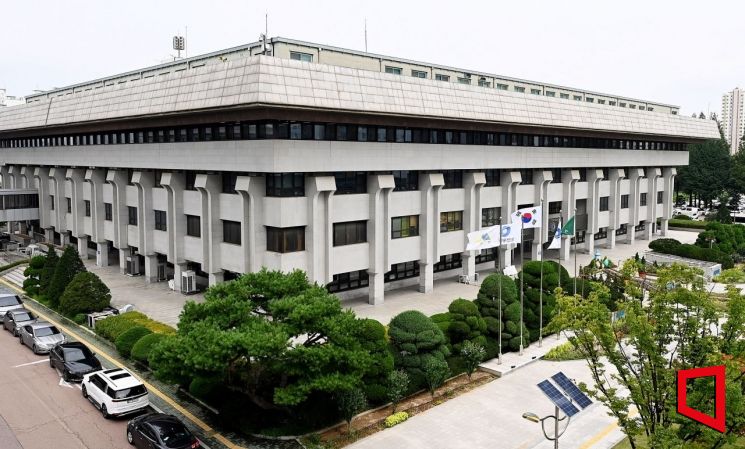
Meanwhile, Incheon City plans to increase parking spaces by a total of 15,000 spots by 2026 through constructing underground public parking lots at schools and parks in the old downtown area, where complaints about insufficient parking spaces are ongoing. Currently, the parking lot occupancy rate in residential areas of the old downtown stands at 74.7%.
First, a pilot project will be launched to build underground public parking lots beneath school playgrounds. Three schools will be selected by 2028 to create 300 parking spaces. If linked with the Ministry of Education’s school complex facility activation project, about 20% of the construction costs for underground public parking lots at school playgrounds can be supported by national funds.
In addition, nine existing surface parking lots, including Gyesan 2 and Sinpo-dong public parking lots, will be reconstructed as building-type parking facilities, and seven urban parks (each over 3,000㎡), such as Seoknam Sports Park and Namdong Neighborhood Park, will be designated as overlapping urban planning facilities for parking lots, creating a total of 2,886 new underground parking spaces.
Plans are also underway to expand 5,520 parking spaces over the next four years by sharing parking lots affiliated with large marts and schools. To encourage this, the facility improvement cost support for opening affiliated parking lots free of charge during idle times has been increased from a maximum of 20 million KRW to 30 million KRW starting this year. If shared through an online platform, facility improvement costs of up to 1.5 million KRW will be supported.
Moreover, the city will promote projects to create small-scale parking lots on abandoned houses and idle land within the old downtown area and designate areas with poor parking environments as parking environment improvement districts to support parking project budgets.
Also, the car-sharing project, which reduces 14.9 private cars per one car-sharing vehicle, plans to expand the number of vehicles from 1,690 to 2,050 by 2025.
Furthermore, Incheon City is pursuing the introduction of central bus-only lanes to separate the flow of buses and general vehicles, aiming to establish a safe and rapid public transportation system by improving bus punctuality and operating speed to alleviate downtown traffic congestion.
A task force composed of the Incheon Institute and transportation experts has been formed and will operate, with plans to review the introduction plan and candidate routes for central bus-only lanes as a key issue for the Incheon Institute in the second half of this year.
© The Asia Business Daily(www.asiae.co.kr). All rights reserved.