Is Electricity Bill Discount Enough to Attract High-Tech Companies?
Tiered Pricing Plan Expected to Spark Backlash from Seoul Metropolitan Residents
As the 'Special Act on the Activation of Distributed Energy,' which differentiates electricity rates based on regional power production and transmission and distribution facilities, passed the National Assembly on the 25th, advice is emerging that specific measures are needed to expand investment in energy storage systems (ESS), sector coupling (P2X), and to build consensus among residents in the metropolitan area.
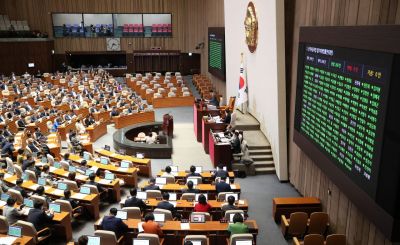
The Distributed Energy Act, passed with 190 votes in favor (5 against, 17 abstentions) at the 406th National Assembly plenary session on the 25th, includes provisions to establish a system that allows electricity to be produced and consumed near power demand sites. The core idea is to increase power demand in regions like Busan, where power is oversupplied, and to mandate the expansion of distributed energy installations in areas with low power self-sufficiency rates, such as Seoul. In fact, Busan, which has nuclear power plants, has a power self-sufficiency rate of 192%, whereas Seoul's rate is only 11%.
One aspect is the 'differential electricity rate system,' which charges residents living near power plants less than those living farther away. Following the law's passage, electricity rates in the metropolitan area, which has fewer power plants, are likely to rise, while rates in regions with many plants may relatively decrease. Traditionally, Korea has operated a 'centralized' power system by building large-scale power plants mostly along the coast and transmitting electricity over long distances to demand areas, charging the same energy rates to consumers regardless of distance, which has raised equity concerns.
Outside the metropolitan area, there are expectations to attract advanced companies such as data centers due to the law's implementation. Park Su-young, a member of the People Power Party and the main proposer of the Distributed Energy Act (Busan Nam-gu Gap), explained, "If the regional differential electricity rate system is implemented, new industries will be attracted to nuclear power plant areas, creating new jobs and addressing the issue of regional extinction." It is predicted that companies and industries will be drawn to non-metropolitan areas with abundant power supply by the incentive of cheaper electricity rates.
However, it is uncertain whether facilities like data centers will locate in non-metropolitan areas solely to receive discounted electricity rates. Experts point out that it may be difficult to hire personnel due to the preference for working in the metropolitan area, and considering the possibility of future facility sales, the metropolitan area may be more advantageous than local regions.
Building consensus among residents in the metropolitan area, who may bear higher energy costs due to the differential rate system, is also an important task. As electricity rates continue to rise, opposition is expected from residents who will have to pay relatively more under the differential rate system. It is reported that there was opposition from metropolitan area lawmakers during the law's passage process.
Specific measures to disperse power demand and expand storage and conversion of excess power supply must also be explored. Lee Yoo-soo, head of the Energy Economics Institute, said, "The biggest problem is the regional mismatch between power demand and supply. The key is to consume the power generated and supplied locally, store surplus power using ESS, or convert it into heat or gas forms (such as P2X). However, economic feasibility and cost issues remain, so it will take time."
The Ministry of Trade, Industry and Energy plans to prepare a comprehensive plan to activate distributed energy and issue enforcement decrees and rules within the year to implement the main provisions of the Distributed Energy Act. A ministry official said, "With the enactment of the Distributed Energy Act, aligning power supply and demand at the regional level is expected to create distributed benefits by avoiding transmission network construction due to power supply-demand gaps. A system where energy produced locally is consumed in the same area will be realized, and new energy industries utilizing ICT technology will also be possible."
Interest is also focused on the designation of distributed energy specialized zones following the law's passage. Jeju Island immediately issued a press release the day after the passage, stating it would accelerate the designation of specialized zones. If designated as a distributed energy specialized zone, renewable energy power producers and consumers can directly trade electricity with Korea Electric Power Corporation under special electricity trading provisions. On the 26th, Jeju announced, "We will focus on follow-up measures to secure the nation's first distributed energy specialized zone. We consider the next year until the law's enforcement as a 'golden time' and plan to actively promote the design of the distributed energy specialized zone and the expansion of social consensus."
© The Asia Business Daily(www.asiae.co.kr). All rights reserved.

















