'Bong-i Kim Seondal' Jeong Cheong-rae Leads Free Temple Admission
'Buddhist Connector' Joo Ho-young Advocates Alternative Holiday Conversion
"This person, as a member of the National Assembly of the Republic of Korea, has dedicated himself to the preservation and succession of traditional culture, and especially by being the principal proposer of the Cultural Heritage Protection Act, has greatly contributed to resolving the issue of cultural heritage admission fees. We present this plaque with deep gratitude for his meritorious service."
On May 25, two days before Buddha's Birthday, Jinwoo Seunim, the Chief Executive of the Jogye Order of Korean Buddhism, presented a plaque of appreciation to a member of the National Assembly. While it may not be unusual for a lawmaker to receive such an award, this case was somewhat special. The recipient was Jeong Cheong-rae, a Democratic Party member who, until a year and a half ago, was considered a 'public enemy' by the Buddhist community.
'Bongyi Kim Seondal'... The phrase that triggered the bad blood between Jeong Cheong-rae and the Buddhist community
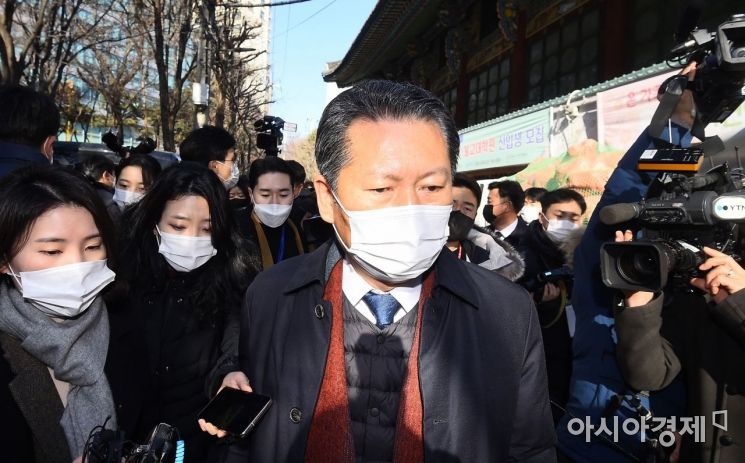 Democratic Party lawmaker Jeong Cheong-rae turned back at the entrance of the event while trying to attend the "National Monk Rally to Eradicate Religious Bias and Buddhist Distortion and to Protect the Autonomy of Korean Buddhism" held on the 21st in the front yard of the Daeungjeon Hall at Jogyesa Temple in Jongno-gu, Seoul. Photo by Yoon Dong-joo doso7@
Jeong became a public enemy of the Buddhist community on October 5, 2021. During the Cultural Heritage Administration's national audit, he criticized the issue of 'cultural heritage admission fees' and made a remark that struck a nerve with the Buddhist community. He said, "The distance from the ticket booth to Haeinsa Temple is 3.5 km, and from the ticket booth to Naejangsa Temple is 2.5 km. If you want to visit a place in between, you still have to pay," adding, "You buy a ticket at the booth 3.5 km away and pay a toll to enter. You have to pay even if you don't enter the temple. This is not Bongyi Kim Seondal."
The Buddhist community expressed discomfort at the 'Bongyi Kim Seondal' remark, feeling that the temple was being misrepresented as a swindler like 'Bongyi Kim Seondal.' The Buddhist community not only visited the Democratic Party headquarters to protest but also continued demonstrations demanding Jeong's expulsion from the party. Although candidate Lee Jae-myung, party leadership, and Jeong himself apologized, the Buddhist community's anger did not subside easily. The issue escalated into factional conflict when Jeong claimed on his social media that "a key aide of candidate Lee Jae-myung came to advise me to voluntarily leave the party."
Especially with the presidential election approaching, both ruling and opposition parties, unable to ignore the Buddhist vote, united to amend the Cultural Heritage Protection Act in May last year, reducing cultural heritage admission fees and having the state cover the costs. For this, a budget of 41.9 billion KRW is allocated this year. Although controversy remains since the state now pays what individual visitors used to pay, the Buddhist community welcomes this with open arms. Thanks to Jeong's slip of the tongue, citizens visiting the mountains on this Buddha's Birthday can now enjoy nature without paying an entrance fee.
Buddhist community's influential figure Joo Ho-young... Proposal for substitute holidays
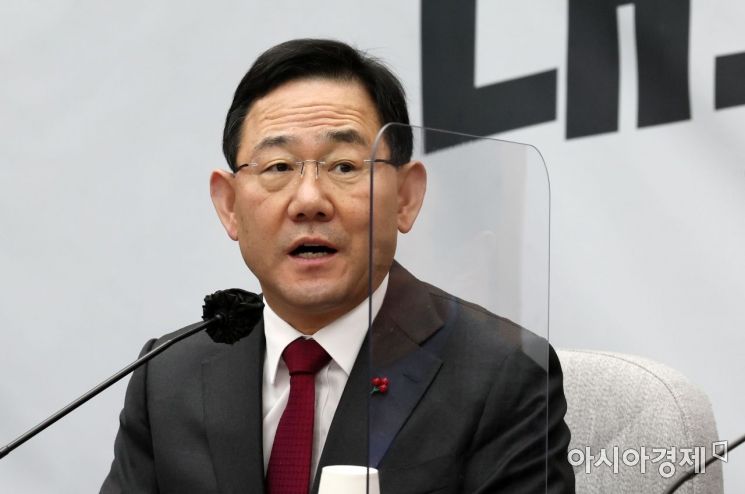 Joo Ho-young, floor leader of the People Power Party, is attending the party strategy meeting held at the National Assembly on the 20th and delivering opening remarks. Photo by Yoon Dong-joo doso7@
The politician who influenced the designation of Buddha's Birthday as a substitute holiday is Joo Ho-young, former floor leader of the People Power Party. In December last year, during a floor strategy meeting, he said, "Next year (2023), the number of public holidays will be 13, two fewer than usual because some fall on weekends," and requested the government to designate non-national holidays like Christmas and Buddha's Birthday as substitute holidays. The government agreed to review this positively within a day, and ultimately, the application of substitute holidays was confirmed for this year. Until last year, Christmas and Buddha's Birthday did not qualify for substitute holidays even if they coincided with weekends or other holidays.
Joo cited reasons for promoting substitute holidays including ▲stimulating domestic consumption ▲expanding citizens' right to rest ▲requests from religious communities. Especially as a prominent political connector, it is believed that his ties with religious groups significantly influenced the designation of substitute holidays. Joo served as president of 'Jeonggakhoe,' a religious organization composed of current lawmakers and National Assembly Secretariat staff, during the first half of the 20th National Assembly and continues to serve in the second half of the 21st National Assembly.
© The Asia Business Daily(www.asiae.co.kr). All rights reserved.

![Clutching a Stolen Dior Bag, Saying "I Hate Being Poor but Real"... The Grotesque Con of a "Human Knockoff" [Slate]](https://cwcontent.asiae.co.kr/asiaresize/183/2026021902243444107_1771435474.jpg)
















