Press Briefing at Seoul City Hall on the 24th
Unveiling Strategies of Emptiness, Connection, Ecology, and Sensibility
Gyeongbu Expressway Upper Park Development, Diversification of Dulle-gil Trails
Yongsan Park and the Songhyeon-dong site will be transformed into gardens within the city. A park will be created above the underground section of the Gyeongbu Expressway. The Seoul Dulle-gil trail will be maintained as an easy and short course, and a pine tree shaded forest will be established in Seoul Plaza.
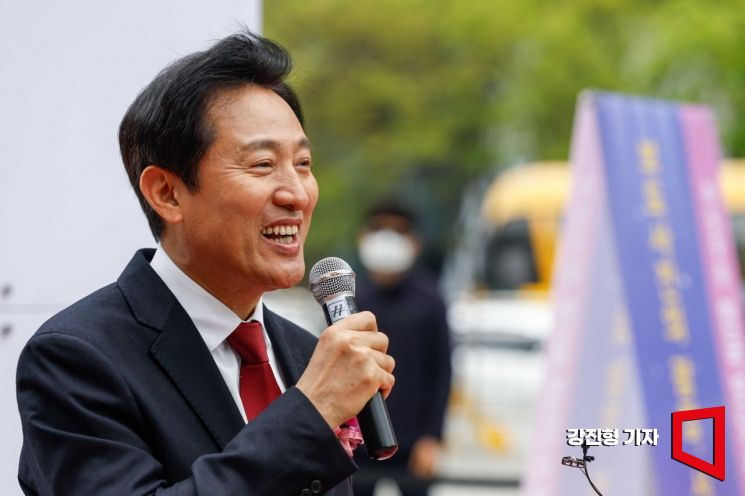
On the 24th, Seoul Mayor Oh Se-hoon held a press briefing at Seoul City Hall and announced the “Garden City, Seoul” plan containing these details. Mayor Oh stated, "We will erase the dense gray structures in the city center and transform Seoul so that gardens can be found anywhere in the city 365 days a year." While his previously announced plans such as the “Great Hangang Project” and “Seoulling” aimed to attract 30 million overseas tourists, this new plan focuses on enhancing the everyday enjoyment of citizens.
Seoul City has been working on transitioning to a green city by renovating Boramae Park and creating Noeul Park and Bokseoul Dream Forest, but the area of parks within walking distance remains only 5.65㎡ per person. Mayor Oh pointed out, "Because there are not enough places to rest in nature, Seoul citizens have to break through congested roads and leave Seoul on weekends," adding, "Due to transportation costs and considerable expenses, it is difficult to enjoy leisure activities."
Accordingly, Seoul plans to realize the Garden City Seoul vision based on four strategies: emptying gray structures in the city center (Empty), connecting fragmented green spaces (Connect), creating ecological parks that coexist with nature (Ecology), and establishing cultural facilities with emotional appeal (Emotion).
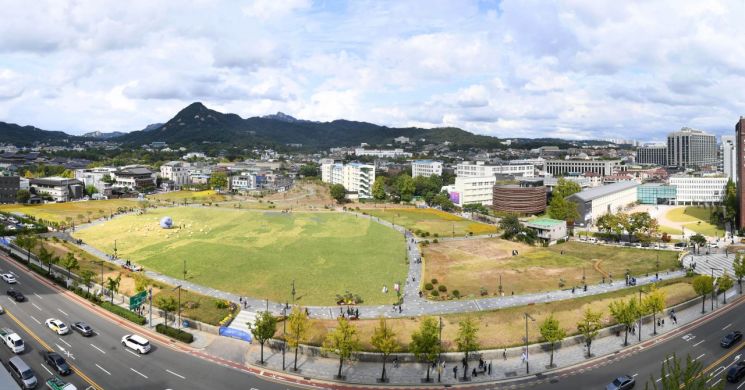
First, the Songhyeon-dong Cultural Park site will be developed into a garden in the city center that many citizens can enjoy. Despite numerous development demands, Mayor Oh decided to maintain the principle that no facilities other than the Lee Kun-hee Museum of Art can be introduced. Yongsan Park will be transformed into a world garden showcasing representative gardens from various countries. Seoul City plans to propose to the government that the park be developed as a garden cultivated and participated in directly by citizens. The idle cultural facility site in Magok 3 District will be transformed into a seasonal flower garden and citizen rest area in connection with the landscaping of Seoul Botanic Park. The upper spaces above existing roads such as National Assembly Boulevard, Yeongdong Boulevard, and the underground section of the Gyeongbu Expressway will not be filled with buildings but will be reborn as parks and gardens.
Seoul plans to connect partially scattered resting spaces to create uninterrupted green spaces from near homes to the distant outer mountains. First, the Seoul Green Path project, which connects fragmented green spaces throughout Seoul, will be completed at 2,063 km by 2026. The Seoul Dulle-gil trail, which was previously divided into 8 courses with sections that were too long and difficult to access, will be divided into 21 courses, making it shorter and more diverse. Seoul Plaza, which was difficult for citizens to stay long due to lack of shade, will be planted with pine trees to create a shaded forest.
Additionally, a forest museum will be built around the Namsan Outdoor Botanical Garden, damaged vegetation will be restored, and seasonal flowers will be planted. Furthermore, the “Water Garden” project, which creates natural experience spaces by establishing flower paths and flower beds in Hangang Park, will be piloted at four locations including Bulgwangcheon and Mokdongcheon. The Seoul Garden Expo, which used to be held for one week, will be held for two months at Haneul Park starting this year, and next year the Seoul International Garden Expo will take place at Ttukseom Hangang Park for six months from spring to autumn.
© The Asia Business Daily(www.asiae.co.kr). All rights reserved.
![Clutching a Stolen Dior Bag, Saying "I Hate Being Poor but Real"... The Grotesque Con of a "Human Knockoff" [Slate]](https://cwcontent.asiae.co.kr/asiaresize/183/2026021902243444107_1771435474.jpg)












