Simultaneous Performance Relationship Revived if Performance Provision Ceases
Landlord Cannot Be Considered in Delay of Security Deposit Return Obligation
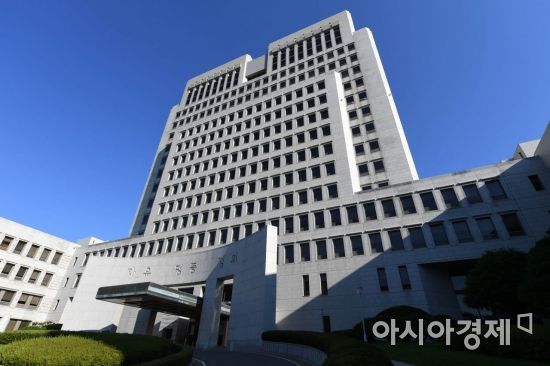
Even tenants who win a lawsuit against landlords for the return of a deposit cannot receive the delayed interest on the deposit from the time they stopped showing the house if they did not cooperate in finding a new tenant, according to a Supreme Court ruling.
Since the return of the deposit and the return of the leased property must be performed simultaneously, the ruling states that even if the tenant expressed the intention not to extend the lease period and to move out, if they did not cooperate in finding a new tenant, it is difficult to consider that there was an offer of performance for the return of the property.
According to the legal community on the 24th, the Supreme Court's First Division (Presiding Justice Park Jeong-hwa) overturned the lower court's partial dismissal ruling in the appeal trial of a claim denial lawsuit filed by landlord B against tenant A and remanded the case to the Uijeongbu District Court.
A entered into a lease contract with B from October 2011 for two years with a deposit of 130 million won and a monthly rent of 550,000 won.
A expressed to B several months before the contract expired that they would not renew the contract and stopped paying rent from April 2013. However, the deposit was not returned because a new tenant was not found by the end of the contract period.
Accordingly, A obtained a tenant registration order from the court, completed the registration of the housing lease right in June 2014, and filed a lawsuit for the return of the deposit. Since B did not submit an answer after being served the complaint, A received a final judgment in October 2014 in their favor. At that time, the court ruled that B must pay A the deposit of 130 million won plus delayed damages (interest) calculated at an annual rate of 20%.
A cooperated in showing the house to find a new tenant before and even after the contract period ended, but after winning the lawsuit, A did not cooperate with B in finding a new tenant.
B filed a lawsuit asking the court to prevent forced execution and disputed the correct amount to be paid.
The issue was whether delayed damages should be paid. B pointed out that A had not vacated the room and was residing without permission, and after winning the deposit return lawsuit, did not cooperate in finding a new tenant.
B argued that since the obligations of 'delivery of the property' (vacating) and 'return of the deposit' are to be performed simultaneously, imposing delayed damages solely because of the other party's non-performance is unfair.
The first and second trials rejected B's claim on the grounds that these circumstances did not newly arise after the deposit return lawsuit judgment.
However, the Supreme Court ruled, "It is recognized that A refused B's cooperation request after the judgment was announced, which can be evaluated as a cessation of the offer of performance newly occurring after the judgment."
It added, "The lower court should have examined when A's offer of performance stopped, recognized only the delayed damages up to that point, and excluded the delayed damages incurred thereafter," and overturned and remanded the second trial ruling.
The Supreme Court has taken the position that even if one party among mutual obligors in a simultaneous performance relationship first offers performance causing the other party to be in delay, if that offer of performance does not continue and is stopped, the right to claim simultaneous performance does not disappear merely because there was an offer of performance in the past, and thus the other party's obligation cannot be considered to be in a state of delay.
© The Asia Business Daily(www.asiae.co.kr). All rights reserved.
![Clutching a Stolen Dior Bag, Saying "I Hate Being Poor but Real"... The Grotesque Con of a "Human Knockoff" [Slate]](https://cwcontent.asiae.co.kr/asiaresize/183/2026021902243444107_1771435474.jpg)
















