State Media: "Korean Companies Can Be Replaced Even If They Withdraw"
"100% Localization of Memory Chip Semiconductors Possible"
After China announced sanctions against the U.S. semiconductor company Micron, it emphasized the localization of memory semiconductors. China claims that full localization is possible, so there will be no impact on the market. Following the authorities' directive to stop purchasing Micron products, local companies' stock prices surged.
On the 22nd, China's state-run Global Times (GT) reported on the Micron sanctions, stating, "In recent years, China's memory chip manufacturing capabilities have greatly improved, allowing domestic companies to quickly fill the gap left by the absence of foreign firms," and added, "It is unlikely that this incident will impact China's memory chip supply."
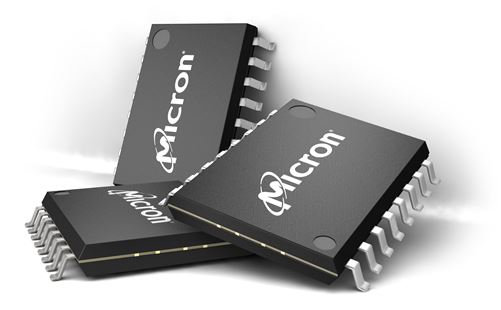 Micron Technology's NOR Flash
Earlier, the Cyberspace Administration of China (CAC), under the National Internet Information Office, announced that serious security issues were found in Micron products, which failed to pass security reviews, and ordered critical information infrastructure operators to stop purchasing products from the company. The security review related to Micron has been ongoing since March 31.
GT cited international strategy expert Chen Jia, who said, "Even if foreign companies are excluded from the Chinese market, Chinese memory chip companies can stably supply products and maintain prices," and evaluated, "Nowadays, China's memory chip semiconductor sector can achieve 100% localization, and only the stability of certain advanced production lines needs to be strengthened." Ma Zhihua, founder of Darui Management Consulting based in Beijing, said the Chinese authorities' decision would "bring opportunities to domestic companies."
As the U.S.-China hegemony battle over the semiconductor industry intensifies, there is speculation that South Korea might benefit indirectly. However, GT also sent signals of restraint toward South Korea. The market identifies South Korean companies such as Samsung Electronics and SK Hynix as beneficiaries of this measure. Nevertheless, the media emphasized, "Whether South Korean and other foreign manufacturers will fill the gap left by Micron remains to be seen," and stressed, "Even if both South Korean and U.S. companies decide to withdraw from the Chinese market, Chinese companies have the capability to quickly fill the market."
Following the announcement of sanctions against Micron, related companies in China saw their stock prices surge. Gigadevice, a semiconductor design company listed on the Chinese mainland stock market, rose more than 5% at one point on the 22nd compared to the previous trading day, closing with a 1.6% increase. CPU specialist Ingenic Semiconductor rose 2.8%, and Kaifa Technology increased by 1.31%, drawing attention as beneficiary companies. SMIC, China's largest foundry (semiconductor contract manufacturer) listed on the Hong Kong stock market, jumped more than 4% during trading and closed with a 1.2% gain.
Industry insiders view China's move as a form of retaliation against U.S. sanctions on China. Previously, the U.S. announced sanctions at the end of last year banning the export of advanced semiconductor equipment to Chinese semiconductor manufacturers. The timing of the announcement, which came the day after the G7 summit joint statement containing measures to counter China, also attracted attention.
On the 21st, the U.S. Department of Commerce issued a statement strongly opposing China's actions, calling them "virtually baseless restrictions." The department said, "Along with recent attacks on other U.S. companies, this measure contradicts China's claims that it is committed to opening its market and creating a transparent regulatory framework," and announced it would cooperate with allies to address China's semiconductor market distortions.
Meanwhile, Micron generated $30.8 billion (approximately 40.7 trillion KRW) in revenue last year, with more than 16%?$5.2 billion?coming from mainland China and Hong Kong. Revenue from mainland China is known to account for about 10 to 11% of total sales.
© The Asia Business Daily(www.asiae.co.kr). All rights reserved.
















