China Reopening Drives Surge in LNG Demand
US Default Crisis Impacts Crude Oil Market
Continued Dependence on Russian Energy
Following Russia's invasion of Ukraine last winter, Europe, which struggled with rising energy costs, is facing the prospect of another heating cost crisis this winter. Experts pointed to China's gas demand as a key variable.
Fatih Birol, Executive Director of the International Energy Agency (IEA), said in an interview with the US economic media CNBC on the 21st (local time), "Europe has reduced the market share of Russian liquefied natural gas (LNG) to less than 4% and successfully secured stable gas reserves," but noted that the energy crisis still remains a potential threat.
◆ China’s Economic Reopening and US Default Crisis... Impact on LNG and Crude Oil Prices
First, Executive Director Birol assessed that China's gas demand outlook will have a significant impact on the European energy market. The IEA forecasted that due to the reopening of the economy, China's LNG demand will increase by 7% compared to the previous year. Accordingly, China's LNG imports are expected to increase by up to 35% this year.
If China's demand surges sharply, Europe's LNG imports are expected to shrink. Last year, Europe was able to increase its gas reserves as China's LNG imports decreased by 16 million tons compared to the previous year.
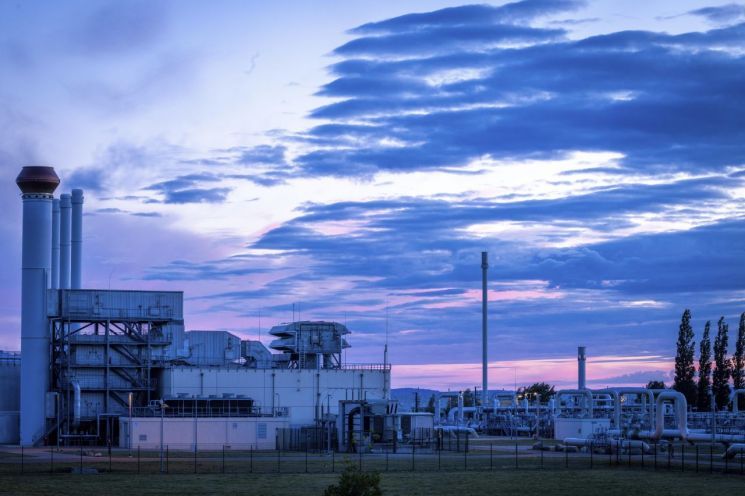
The possibility of a US debt default is also expected to be a major variable in the European energy market. Currently, international oil prices are reacting sensitively to the US debt ceiling negotiations, fluctuating repeatedly. If the negotiations face difficulties, the likelihood of a US default increases. In this case, economic uncertainty would rise, reducing energy demand and causing crude oil prices to fall.
Executive Director Birol said, "The likelihood of a US default scenario is low, so I do not think there is a major risk to the oil market," but added, "If a default were to occur, we would expect a significant drop in oil prices."
Conversely, if the negotiations are settled before reaching the debt ceiling, uncertainty will decrease, leading to an expansion in energy demand. Since US debt ceiling negotiations typically conclude with a last-minute agreement, there is a high possibility that energy demand will also increase.
◆ Continued Dependence on Russian Energy... Possibility of Winter Energy Crisis
Dependence on Russian energy was identified as a core issue facing the European energy market. When Russia reduced LNG supplies to Europe to about 20% as retaliation for sanctions against Russia, the European Union (EU) diversified its import sources to stockpile gas. As a result, Europe's gas reserves increased to 55.7% of storage capacity as of last month, marking the highest level since 2011.
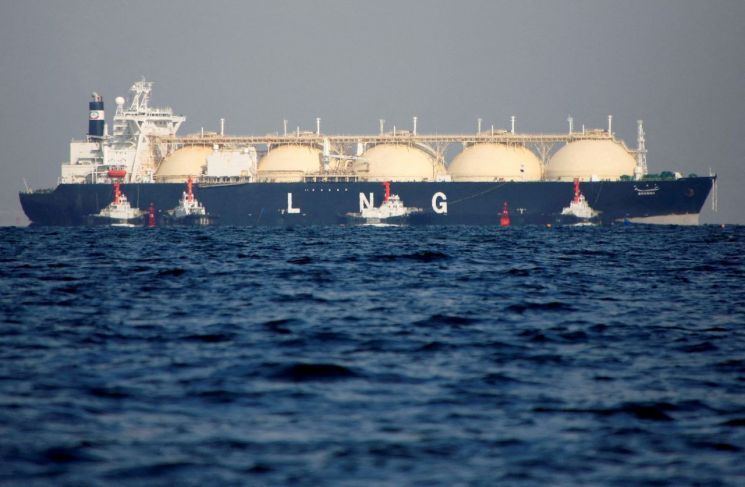
However, Executive Director Birol pointed out that European countries have still not completely eliminated their dependence on Russian energy. According to major foreign media, as Russia reduced LNG supplies via pipelines, European countries significantly increased imports by ship. Russian TASS news agency reported that in December last year, European countries increased their imports of Russian LNG by about 20-40% compared to the previous year. In particular, France, Belgium, Spain, the Netherlands, and Germany were the main importers of gas.
The Kiel Institute for the World Economy in Germany explained, "The German government wants to endure without Russian gas, but Russian LNG continues to be supplied to Germany," adding, "About 6% of Germany's total gas demand is Russian LNG." Birol pointed out that the Group of Seven (G7) and European countries will not resume energy negotiations with Russia, and if gas imports decrease further, Europe could face another energy crisis this coming winter.
© The Asia Business Daily(www.asiae.co.kr). All rights reserved.
![Clutching a Stolen Dior Bag, Saying "I Hate Being Poor but Real"... The Grotesque Con of a "Human Knockoff" [Slate]](https://cwcontent.asiae.co.kr/asiaresize/183/2026021902243444107_1771435474.jpg)












