Hollywood Horror Taking Over Film Production in the UK
Investment Scale Reaches 10 Trillion Won... Also Faced Strikes in 2008
When over 10,000 Hollywood film and television writers in the United States launched a full-scale strike earlier this month in protest of failed wage increase negotiations, the British film industry was gripped by fear. This is because the UK, which has served as a production hub for Hollywood films, is increasingly concerned that it will once again be hit hard by the strike, just as it was over a decade ago.
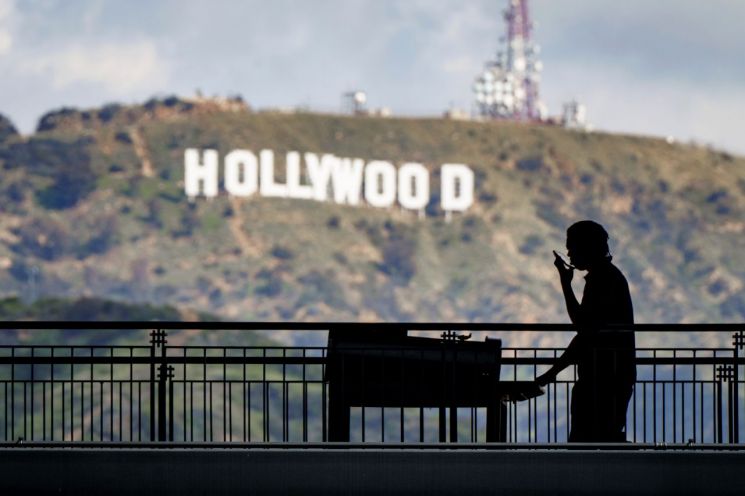
On the 21st (local time), The Economist in the UK reported, "As Hollywood studios expanded their production capacity amid an arms race in streaming content, the UK was one of the winners," adding, "However, this also means that the UK will become a loser due to the strike by American writers."
More than 11,500 Hollywood film and television writers affiliated with the Writers Guild of America (WGA) went on strike on the 2nd after wage increase negotiations with the Alliance of Motion Picture and Television Producers (AMPTP) broke down. The WGA argues that while the boom in content driven by competition among streaming services via online video platforms (OTT) has intensified labor demands, the treatment and working conditions of writers have deteriorated and need improvement.
As writers went on strike, TV talk shows were canceled, and the writing of some TV series and films was halted. Production of the final season of Netflix's popular series "Stranger Things" was delayed, and the writing of the prequel to the "Game of Thrones" series, produced by Warner Bros., was also reportedly suspended.
At present, there is no sign that the strike will end. On the contrary, there are indications that Hollywood actors may join the strike, raising concerns that the US film industry could face a halt in content production.
As the situation unfolds, the British film industry, which produces films based on Hollywood scripts, is inevitably facing a blow. While projects that have already received scripts and entered production are expected to continue, signing new contracts has become virtually impossible. David Gray, Managing Director of the US-based global virtual production company Lux Machina, conveyed the atmosphere, saying, "There was already fear about joining projects underway this year even before the Hollywood writers' strike began."
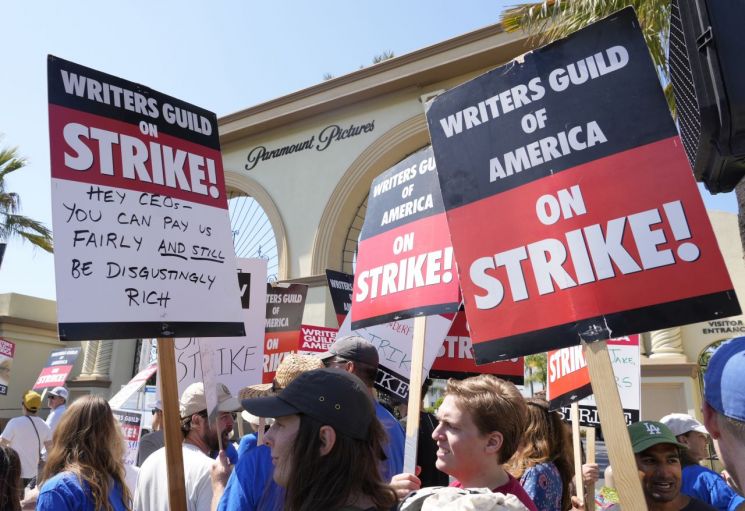
The British film industry feels even greater fear about this strike because it is not the first time experiencing such a situation. From late 2007 to early 2008, WGA-affiliated writers in Hollywood went on strike for 14 consecutive weeks. At that time, the UK film industry faced difficulties as many ongoing projects were canceled and staff left the industry.
As film production became difficult, chaos ensued with the 22nd James Bond film "Quantum of Solace," "Transformers: Revenge of the Fallen," and "X-Men Origins: Wolverine" having to hastily create scripts on set or directors contemplating halting production.
The UK film industry has a significant collaborative relationship with Hollywood. Adrian Wootton, Director of the British Film Commission (BFC), an organization supporting international feature film and TV production in the UK, appeared on the US radio program Marketplace last month and explained, "Outside North America, including the US and Canada, the UK is probably the country receiving the most investment in content production worldwide," adding, "Last year alone, investment reached a record high of ?6 billion (approximately 9.8 trillion KRW)."
The history of the relationship between the British film industry and Hollywood dates back 100 years, but it was especially strengthened when British author J.K. Rowling insisted that her book "Harry Potter" be filmed in the UK. Marketplace reported that at that time, Warner Bros., the American company responsible for producing the Harry Potter films, purchased an old aircraft factory in North London to create a major film production studio. Subsequently, films such as "The Lord of the Rings," "Star Wars," "Mission: Impossible," and the Marvel series were filmed in the UK.
Considering these factors, the UK government offers tax relief benefits related to film production. According to Marketplace, when producing films in the UK, producers can receive benefits such as tax relief or cash rebates amounting to more than 20% of production costs. It is reported that Disney has received over $300 million (approximately 400 billion KRW) in tax credits in the UK over the past decade through these incentives.
© The Asia Business Daily(www.asiae.co.kr). All rights reserved.
![Clutching a Stolen Dior Bag, Saying "I Hate Being Poor but Real"... The Grotesque Con of a "Human Knockoff" [Slate]](https://cwcontent.asiae.co.kr/asiaresize/183/2026021902243444107_1771435474.jpg)

















