[Interview] Moon Songcheon, KAIST Emeritus Professor
"Suspicious transactions are detected by systems, not people"
"Tracking fund flows of associates... assessing connections"
"The Kim Namguk incident is a 'Blockchain Counterattack'"
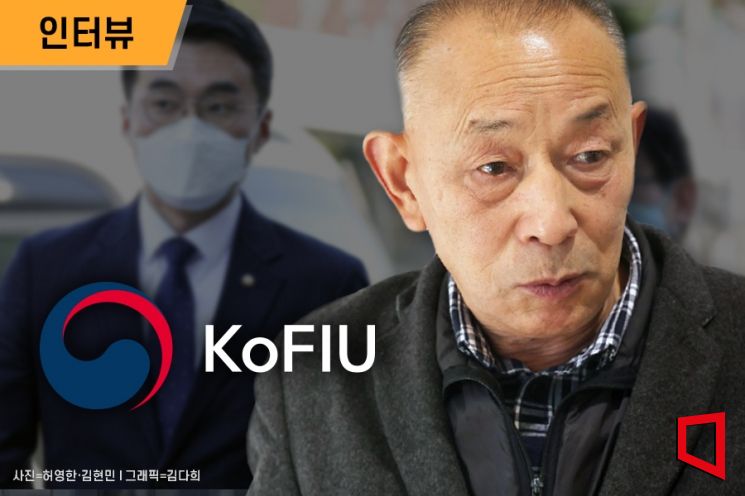
"The 'Kim Nam-guk incident' clearly reveals the pros and cons of digital finance. It is now time to enhance transparency and complement anonymity," said Moon Song-cheon, Professor Emeritus at KAIST Graduate School of Management, in a recent interview with Asia Economy regarding the controversy over Representative Kim Nam-guk's cryptocurrency investments.
Professor Moon is the first Ph.D. in Computer Science in Korea and was involved in designing and building the transaction analysis system data for the Financial Intelligence Unit (FIU), which detected abnormal cryptocurrency transactions linked to Representative Kim. He stated, "To properly understand the controversy surrounding Representative Kim, one must accurately understand the FIU and digital finance," adding, "This incident should serve as an opportunity to address the shortcomings of rapidly developing digital finance."

Professor Moon explained, "The FIU's abnormal transaction analysis system is designed to detect multiple withdrawals exceeding a certain amount. Originally, the limit was 50 million KRW, but as money laundering crimes became more frequent domestically, the limit was lowered to 10 million KRW."
Representative Kim claimed through YouTube and other platforms that the current government intentionally leaked issues related to him. In response, Professor Moon said, "Suspicious transactions are detected by the system, not by people. The system raises an alert, and after staff review, if a problem is found, it is noted that the transaction party happened to be Representative Kim."
Suspicious transactions detected by the FIU are broadly categorized into 'illegal asset formation,' 'criminal organization funding,' and 'money laundering.' Among these, Professor Moon suspected money laundering in Representative Kim's case. Considering the repeated transaction patterns and the fact that he is a member of the National Assembly who must transparently disclose assets, money laundering is highly likely. Professor Moon emphasized, "The FIU does not concern itself with whether the funds are political donations or bribes. That is the domain of investigative agencies like the prosecution or police. The FIU only judges suspicious transactions based on the three criteria."
Regarding Representative Kim's explanation that he withdrew only 4.4 million KRW in cash from January to March last year, Professor Moon said, "Understanding the FIU system makes that explanation unconvincing," adding, "The FIU does not only monitor accounts under the name 'Kim Nam-guk' but also tracks the cash flow of related parties to assess connections."
"The Kim Nam-guk Incident Should Not Remain a Political Issue... It Must Become an Opportunity to Solve Digital Finance Problems"
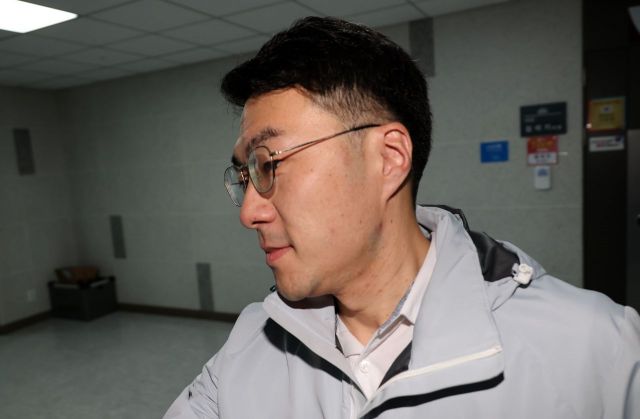 Independent lawmaker Kim Nam-guk is arriving at his office in the National Assembly on the morning of the 14th. [Image source=Yonhap News]
Professor Moon stated, "The controversy surrounding Representative Kim should not be confined to issues of politicians' money laundering or lobbying," and added, "We must understand the bright and dark sides of Korea's digital finance system revealed through this incident and use it as an opportunity to resolve negative issues."
He pointed out anonymity as a downside of digital finance. "Blockchain guarantees users' anonymity," he said, "The controversy over Representative Kim's cryptocurrency holdings can be seen as a case where politicians exploited blockchain's anonymity for money laundering."
As an advantage of digital finance, he cited transparency. Regarding Representative Kim's attempt to use anonymity by publicly disclosing his cryptocurrency wallet and subsequently being traced back, Professor Moon described it as a "blockchain counterattack." He explained, "Bitcoin has been traded since 2009, and all transaction records remain to this day. Even if someone tries to hack it, it is impossible. Attempts to hack are also recorded." Furthermore, "Representative Kim's cryptocurrency transaction history was revealed due to blockchain's transparency." He concluded, "We need to improve regulations to further strengthen the transparency of digital finance and resolve issues arising from anonymity."
© The Asia Business Daily(www.asiae.co.kr). All rights reserved.



















