Temporary General Meeting of Daewoo Shipbuilding on the 23rd
Approval of Company Name Change and Appointment of Registered Directors
Daewoo Shipbuilding & Marine Engineering (DSME) will hold an extraordinary general meeting of shareholders on the 23rd and newly launch as a Hanwha Group affiliate. Once the agenda items such as the company name change and the appointment of registered directors are finalized at the shareholders' meeting, Daewoo Shipbuilding will be renamed ‘Hanwha Ocean.’ At the extraordinary shareholders' meeting, Hanwha Group Chairman Kim Seung-yeon’s eldest son, Vice Chairman Kim Dong-kwan, will complete the acquisition of Daewoo Shipbuilding, which was initially attempted and failed in 2008, after 15 years.
Hanwha Group, KDB Industrial Bank?the major shareholder of Daewoo Shipbuilding?and Daewoo Shipbuilding announced last September that Hanwha would acquire and merge (M&A) Daewoo Shipbuilding for 2 trillion won. The CEO of Hanwha Ocean has been nominated as Kwon Hyuk-woong, head of the Support Division at Hanwha Corporation and a close aide to Chairman Kim.
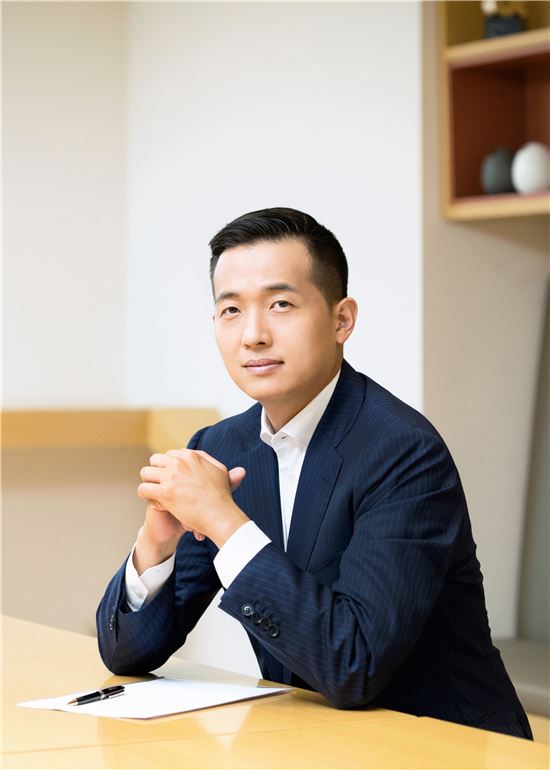 Kim Dong-kwan, Vice Chairman of Hanwha Group
 [Photo by Hanwha]
As inside directors, Kim Jong-seo, former CEO of Hanwha TotalEnergies, and Jeong In-seop, former CEO of Hanwha Energy, both known as part of the ‘Kim Dong-kwan faction,’ were appointed. The two worked closely with Vice Chairman Kim when he was leading the solar energy business and undergoing management training. Vice Chairman Kim also joined the board as a non-executive director to support management normalization. Overseeing defense, renewable energy, and space businesses, Vice Chairman Kim is expanding his management capabilities to the shipbuilding sector.
As of the end of last month, Daewoo Shipbuilding had 8,192 direct employees and 12,326 subcontracted workers. The cumulative losses for 2021 and last year amount to approximately 3.37 trillion won. The debt ratio at the end of the first quarter this year reached 1,858%.
Improving profitability is an urgent task. Although orders remain strong, the shipbuilding industry faces challenges such as intensified competition with Chinese companies, labor shortages, and downward revisions in cargo volume forecasts. Lee Bong-jin, a researcher at Hanwha Investment & Securities, said, “The five domestic shipbuilders’ orders in the first quarter of this year totaled $11.8 billion, a 23.2% decrease compared to a year ago,” adding, “The shipbuilding industry has entered a downcycle.”
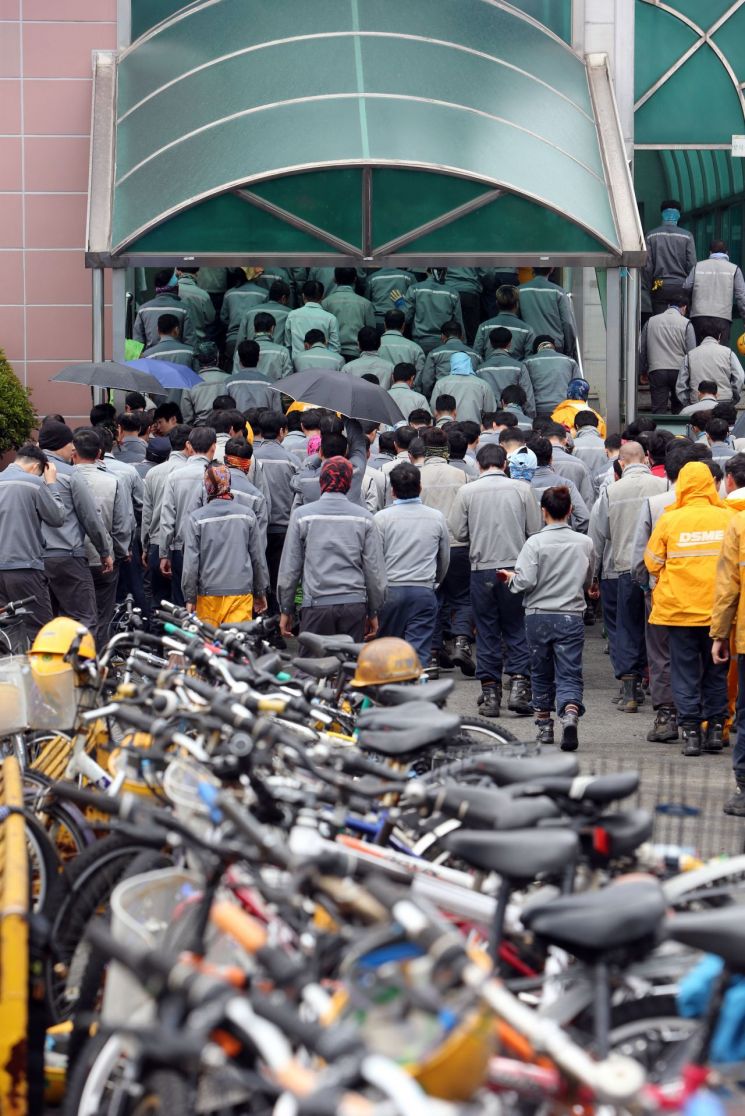
The ‘sale consolation money’ demanded by the Daewoo Shipbuilding labor union from Hanwha Group is expected to be replaced by performance bonuses. On the 19th, the Daewoo Shipbuilding union and Hanwha held a working-level consultative body and reached a tentative agreement to pay 300% of wages as a performance bonus if sales targets are met. The sales target figure has not been determined. For employees of in-house subcontractors, if they meet the target working hours, they will receive 300% of their wages divided over three years.
Remaining challenges include wage and collective bargaining negotiations with the Daewoo Shipbuilding union and alleviating concerns about workforce restructuring. The Daewoo Shipbuilding union, which includes members at the deputy manager level and above, is known for its strong stance. A Daewoo Shipbuilding official said, “The tentative agreement reached at the working-level consultative body will be finalized within this month,” adding, “Labor and management are having many discussions for the future of the newly launched Hanwha Ocean.”
Raising the morale of Daewoo Shipbuilding employees who have endured 20 years under KDB management and achieving chemical integration with them is also a key task for Vice Chairman Kim. Yoon Dong-yeol, a professor of business administration at Konkuk University, said, “When transitioning to a new corporate culture after a merger and acquisition, various cultural clashes occur,” adding, “Employees of the acquired company often describe the acquiring company’s employees as ‘occupying forces.’” He continued, “It would be possible to establish non-monetary welfare support systems to foster a sense of belonging for the acquired company as part of the group,” and “Assigning value as a new company and creating a new corporate culture is also a way forward.”
© The Asia Business Daily(www.asiae.co.kr). All rights reserved.

















