U.S. President Joe Biden and Republican House Speaker Kevin McCarthy have agreed to resume stalled negotiations on the debt ceiling on the 21st (local time). Following working-level talks, Biden and McCarthy are scheduled to meet in person on the afternoon of the 22nd, drawing attention to whether a breakthrough can be achieved in the seemingly intractable debt ceiling negotiations. U.S. Treasury Secretary Janet Yellen reiterated her warning that if the debt ceiling is not raised, the default deadline could come as early as June 1.
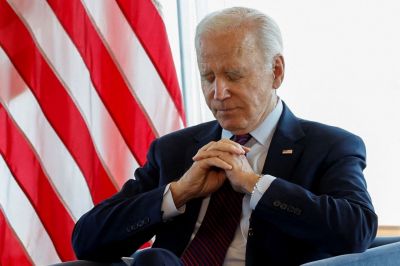
According to the Wall Street Journal (WSJ) and others, President Biden made the agreement during a phone call with Speaker McCarthy on the plane returning from the Group of Seven (G7) summit held in Japan. Biden and McCarthy each instructed their negotiation teams to resume discussions from 6 p.m. that day.
After the call, Speaker McCarthy said, "There is still no agreement. We are still far apart," but confirmed that the negotiation teams from both sides would meet for talks later that afternoon. This came about two days after McCarthy declared that no negotiations would take place before Biden’s return on the 19th.
McCarthy described the call with President Biden as "productive." Although a meeting between Biden and McCarthy has not yet been confirmed, he said it is likely to take place on the afternoon of the 22nd. CNN reported that no other congressional leaders are expected to attend this meeting besides Speaker McCarthy.
Just after their second meeting last week, both Biden and McCarthy expressed that a default would be avoided, raising expectations that the related negotiations would soon conclude. However, as the White House and Republicans remain deadlocked, concerns about a default have intensified. The WSJ reported, "Biden and McCarthy are resuming talks to prevent a default," but added, "So far, they have only blamed each other for failing to narrow their differences."
The sharp divide between the two sides was also evident in statements made that day. Before departing for the U.S., President Biden held a press conference where he took a firm stance against accepting the Republicans’ demands. He said, "The other side (Republicans) needs to move away from their ‘extreme’ position." While the Republican majority in the House has made large government spending cuts a precondition for raising the debt ceiling, President Biden has consistently maintained that tax reform through increased taxes on the wealthy should be considered.
On the other hand, Speaker McCarthy appeared on Fox News Sunday and countered, saying, "I don’t think saying we should spend less than we did this year is ‘extreme’." He added, "We have maintained a consistent position," and claimed, "It is President Biden who has changed his stance." He also emphasized on his Twitter account, "My position has not changed."
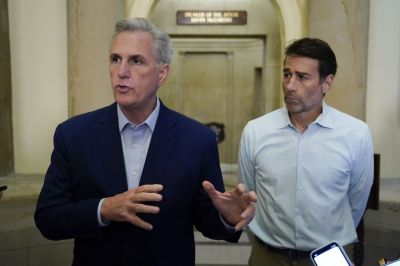
The United States exhausted its $31.4 trillion debt ceiling in January and has been relying on special measures since then. If Congress does not raise the debt ceiling, unprecedented default could lead to job losses, financial market turmoil, and other consequences. Treasury Secretary Yellen has estimated the so-called X-day, when cash will run out, to be June 1.
On the same day, Secretary Yellen appeared on NBC and warned again, "In early June, as soon as June 1, we will not be able to pay all our bills," calling it a "hard deadline." She expressed concern, saying, "If the debt ceiling is not raised, we will face difficult choices about which bills to pay. We have to pay interest on unpaid debt, and there are obligations to seniors relying on Social Security, military pay, and contractors providing services to the federal government. Some of these may go unpaid." She added, "If the debt ceiling is not raised, there will be difficult choices," and warned, "Regardless of what decisions we make, if the debt ceiling is not increased, there may be no acceptable outcome."
Some analysts suggest that the Biden administration might ultimately invoke the 14th Amendment as an emergency measure to raise the debt ceiling without congressional approval. The 14th Amendment stipulates that "the validity of the public debt of the United States... shall not be questioned." However, Secretary Yellen said, "Although it has been discussed extensively, given the legal uncertainties and tight timeline, it does not seem appropriate to use it." On the same day, President Biden said, "We are looking into whether we have the authority under the 14th Amendment. I believe we do," but the likelihood of this being implemented is considered low. There are concerns that invoking this provision could lead to lawsuits and potentially halt the process to raise the debt ceiling.
© The Asia Business Daily(www.asiae.co.kr). All rights reserved.
![Clutching a Stolen Dior Bag, Saying "I Hate Being Poor but Real"... The Grotesque Con of a "Human Knockoff" [Slate]](https://cwcontent.asiae.co.kr/asiaresize/183/2026021902243444107_1771435474.jpg)

















