"22.9 Trillion Spent and Additional 24.5 Trillion by 2030"
"KEPCO's 32 Trillion Operating Loss Main Cause"
The Nuclear Policy Center at Seoul National University estimated the cost of the Moon Jae-in administration's nuclear phase-out policy from 2017 to 2030 at 47.4 trillion won.
On the 21st, the Center released a report titled "Cost Evaluation of the Nuclear Phase-Out Policy." The Center calculated the costs based on three factors: ▲ costs incurred due to capacity reduction ▲ decline in utilization rate compared to the target of the Basic Plan for Electricity Supply and Demand ▲ reduction in nuclear power plant operating periods due to delays in continued operation procedures.
The costs were calculated by comparing the reduction in nuclear power capacity and decreased operating rates caused by a series of measures such as the cancellation of new nuclear power plant plans, suspension of construction on plants under construction, early shutdown of Wolseong Unit 1, and restrictions on continued operation, against a scenario where these measures were not implemented.
The Center simulated the scenario where the reduced nuclear power generation compared to the planned generation in the 7th Basic Plan for Electricity Supply and Demand established in 2015, before the nuclear phase-out policy, was entirely replaced by gas power generation, estimating that costs of 22.9 trillion won occurred from 2017 to 2022.
During this period, the average generation settlement price was 58.2 won per kWh for nuclear power and 135.1 won per kWh for liquefied natural gas (LNG).
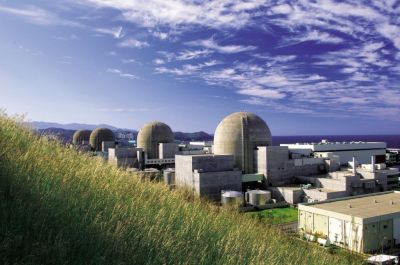
The cost of the nuclear phase-out was 1.9 trillion won in 2017, the first year of the Moon Jae-in administration, but surged to 9.6 trillion won last year. This was analyzed to be due to the sharp rise in international energy prices caused by the Russia-Ukraine war.
Korea Electric Power Corporation (KEPCO) posted a deficit of around 32 trillion won last year, largely influenced by the surge in international energy prices. The Center claimed that KEPCO’s losses increased further due to the nuclear phase-out policy.
Since the inauguration of the Yoon Suk-yeol administration last year, which has effectively scrapped the nuclear phase-out policy by restarting construction of Shin Hanul Nuclear Units 3 and 4?previously canceled by the Moon administration?the research institute forecasted that costs related to the nuclear phase-out would continue due to a significant "nuclear power gap" persisting for a considerable period.
The institute predicted an additional cost of 24.5 trillion won from this year through 2030.
Of this, costs due to reduced nuclear capacity were calculated at 19.2 trillion won, and costs due to delays in continued operation at 5.3 trillion won.
During this period, the average generation settlement price was assumed to be 59.37 won per kWh for nuclear power and 114.31 won per kWh for LNG.
However, the Center explained, "The assumption that all increased nuclear power generation is replaced by gas power is a strong assumption and the biggest limitation of this review," adding, "The results of this review should be used as an approximate evaluation of the cost level of the nuclear phase-out policy."
© The Asia Business Daily(www.asiae.co.kr). All rights reserved.
![Clutching a Stolen Dior Bag, Saying "I Hate Being Poor but Real"... The Grotesque Con of a "Human Knockoff" [Slate]](https://cwcontent.asiae.co.kr/asiaresize/183/2026021902243444107_1771435474.jpg)
















