The prolonged downturn in the semiconductor industry, acting as a downward pressure on economic growth, is raising concerns that the economic trend will shift from 'low in the first half and higher in the second half' to 'low in both halves.' The initially expected effect of China's reopening (resumption of economic activities) has also been limited to its domestic service sector, leading major domestic and international economic institutions to revise down their growth forecasts for the Korean economy.
According to the Korea Customs Service on the 21st, semiconductor exports amounted to $1.975 billion as of the 10th of this month, down 29.4% compared to the same period last year. This marks the 10th consecutive month of export decline since August last year (-7.8%). The share of semiconductors in total exports fell by 6.0 percentage points from 18.9% last year to 12.9% as of April this year.
The sharp drop in semiconductor exports is due to the prolonged steep decline in product prices such as DRAM this year. The fixed transaction price of general-purpose PC DRAM products (DDR4 8Gb) fell from $4.10 in Q3 2021 to $1.45 last month. According to the Korea Development Institute (KDI) report titled ‘Recent Semiconductor Market Trends and Macroeconomic Impact,’ a 10% decrease in semiconductor export volume reduces GDP by 0.78%, and a 20% drop in semiconductor prices lowers GDP by 0.15%. This is why concerns are growing that if the semiconductor industry recovery is delayed in the second half of this year, the economic growth rate could decline further.
The immediate reduction in semiconductor exports is also adversely affecting exports in the Information and Communication Technology (ICT) sector. Last month, ICT exports totaled $12.77 billion, down 35.9% year-on-year. Exports decreased by 30.5% in displays, 41.6% in mobile phones, 66.7% in computers and peripherals, and 14.7% in communication equipment.
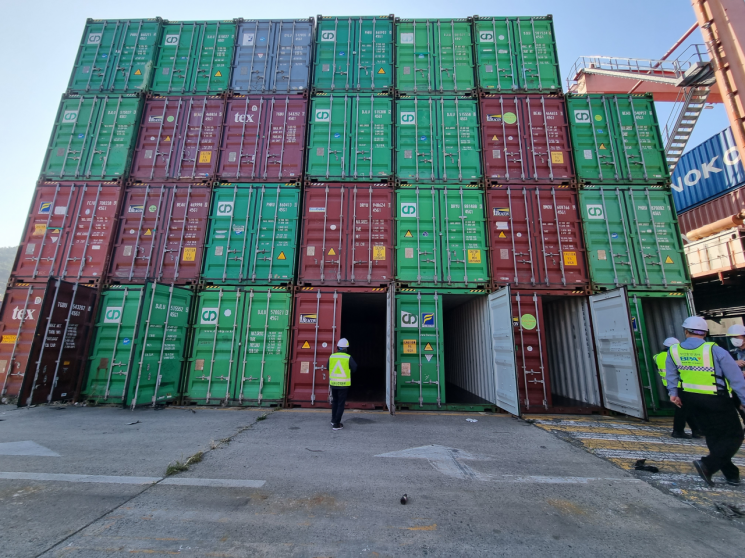
The effect of China’s reopening has also fallen far short of expectations, heightening the sense of crisis. For Korean exports to recover, China’s reopening must restore production and investment centered on manufacturing; however, since China’s growth remains focused on domestic consumption, its impact on the Korean economy is limited. Another issue is the declining share of intermediate goods exports to China, as China strengthens its domestic industrial technology and increases self-production of intermediate goods.
Reflecting these concerns, KDI lowered its economic growth forecast for this year from 1.8% to 1.5%. This is because if semiconductor demand recovery in the second half does not materialize and the effect of China’s reopening does not extend to the investment sector, a delay in Korea’s economic recovery is inevitable.
Prolonged high inflation is also a burden. Core inflation is expected to rise by 3.5%, mainly driven by service prices, and cost pressures from labor and material costs could continue to stimulate core inflation in the second half. Recently increased electricity and gas rates may also exacerbate inflationary pressures. The government raised electricity rates by 8 won per kWh and city gas rates by 1.04 won per MJ in Q2 this year, and it is estimated that the additional monthly energy cost burden for a four-person household will reach about 7,400 won.
© The Asia Business Daily(www.asiae.co.kr). All rights reserved.

















