Lawsuit to Cancel Doctor's License Suspension Lost
Case of Reducing Suspension Period by Half After Receiving Prosecutorial Discretion
A court ruling has upheld the suspension of a medical license for a doctor employed to perform medical activities despite being unable to open a hospital due to the 'prohibition of duplicate medical institution establishment' clause under the Medical Service Act.
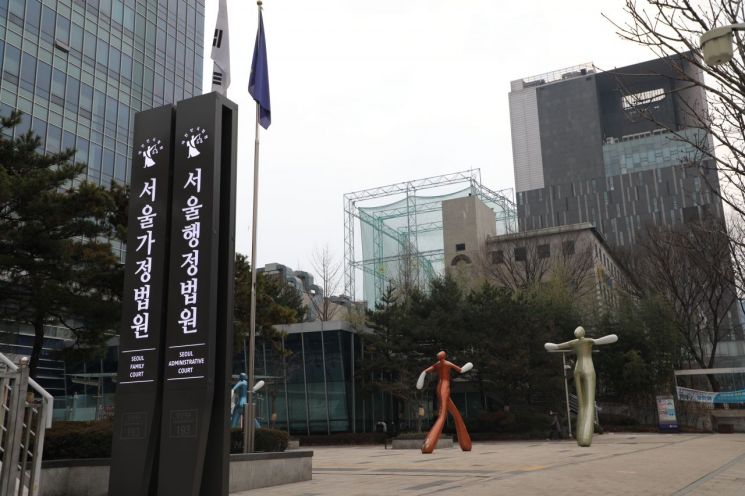
According to the legal community on the 21st, the Seoul Administrative Court, Administrative Division 5 (Presiding Judge Kim Sun-yeol) ruled against dentist Lee in the first trial of his lawsuit against the Minister of Health and Welfare seeking cancellation of his medical license suspension.
The court stated, "It is difficult to view the disposition in this case as exceeding the scope of discretion or abusing discretion by violating the principle of proportionality, so the plaintiff's claim is without merit," thereby dismissing Lee's request.
Lee, who operated a dental clinic in Jung-gu, Busan, opened a dental clinic in Nam-gu, Ulsan, in January 2013 under his name with the condition of receiving a fixed monthly salary, despite knowing that Park operated more than one medical institution, and entrusted Park with the actual operation. This illicit operation continued for 4 years and 9 months until September 30, 2017.
Lee received a non-prosecution disposition from a prosecutor in January 2019 for violating the Medical Service Act.
A non-prosecution disposition means that although criminal charges are acknowledged, the prosecutor decides not to indict considering various circumstances. It is a type of non-indictment disposition, but unlike dispositions such as 'not guilty' or 'no suspicion,' it presupposes the prosecutor's judgment that the suspect committed a crime, so constitutional complaints can be filed to challenge whether basic rights were infringed by the prosecutor's non-prosecution disposition.
Although prosecution was avoided, the Minister of Health and Welfare issued a '1 month and 15 days suspension of dental license' to Lee on June 8, 2022, for violating the Medical Service Act.
This action was taken according to the 'Administrative Disposition Rules Related to Medical Affairs' (Ministry of Health and Welfare Ordinance), established to set appropriate administrative disposition standards for violations of the Medical Service Act.
Article 66(1)(2) of the Medical Service Act stipulates that the Minister of Health and Welfare may suspend a license for up to one year when a person employed by someone who is not allowed to open a medical institution performs medical activities.
Furthermore, the Administrative Disposition Rules Related to Medical Affairs impose a '3-month suspension' for medical personnel who violate this provision. In cases where a non-prosecution disposition is received from a prosecutor, the rules allow for a reduction of up to half of the applicable disposition period, but no more than 3 months.
In other words, although the rules originally require a 3-month suspension, considering the non-prosecution disposition from the prosecutor, the Minister reduced the suspension period by half and imposed a 1 month and 15 days suspension.
In court, Lee made two main arguments.
The first was that the statute of limitations for the disposition had expired.
Article 66(6) of the Medical Service Act, newly established in 2016, states that 'a suspension disposition cannot be made if five years have passed since the occurrence of the reason for the disposition.' The proviso states, 'However, if a public prosecution has been initiated for the reason, the period from the date of prosecution to the date the trial is finalized shall not be included in the limitation period.'
Lee argued that acts committed during the period earlier than five years from the date the Minister's suspension disposition was issued (June 8, 2022)?specifically from January 2, 2013, to June 8, 2017?could not be subject to disposition. He claimed that since the period of medical acts violating the Medical Service Act should be reduced, the severity of the disposition should also be lowered.
However, the court did not accept Lee's argument.
Although the Medical Service Act newly established a 5-year statute of limitations for dispositions and included transitional provisions in the supplementary provisions that prohibit suspension dispositions if five years have passed since the occurrence of the reason before the law's enforcement date, the court found that this statute of limitations did not apply to Lee's case.
The court stated, "The violation acts in this case were continuously and repeatedly committed from January 2, 2013, to September 30, 2017," and "Since these violation acts were a series of continuous and repeated acts for business purposes, the starting point of the statute of limitations should be based on the time of the final act." This aligns with the Supreme Court's position.
Furthermore, the court said, "Since the final act was on September 30, 2017, and the violation acts had not yet passed the 5-year statute of limitations as of the suspension disposition date of June 8, 2022, the plaintiff's claim on this point is without merit."
Secondly, Lee argued that the Minister's disposition was excessively harsh, exceeding and abusing discretion, thus illegal. He emphasized that compared to cases where medical acts are performed by persons employed by non-medical personnel, the illegality is relatively minor when employed by a medical professional qualified to open and operate a hospital. In other words, he claimed that the degree of public interest infringement was minor, while the disadvantage he suffered was too great.
The court first cited Supreme Court precedents on this matter.
The Supreme Court previously stated that when judging whether a punitive administrative disposition exceeds or abuses discretion, "the content and degree of the violation constituting the grounds for the disposition, the public interest to be achieved by the disposition, the disadvantage to the individual, and various related circumstances must be objectively examined to compare and balance the degree of public interest infringement and the disadvantage to the individual."
Additionally, regarding cases where disposition standards like the 'Administrative Disposition Rules Related to Medical Affairs' are applied, the Supreme Court held that "although compliance with disposition standards does not automatically mean the disposition is lawful, unless the standards themselves are unconstitutional or illegal, or applying them results in a disposition that is clearly unreasonable considering the content of the violation and the purpose of related laws, the disposition should not be hastily judged as exceeding or abusing discretion."
Following this Supreme Court stance, the court concluded that the Minister of Health and Welfare's disposition against Lee did not exceed discretion.
The court cited the following reasons: ▲the disposition was made according to standards set by medical laws and regulations; ▲the purpose of prohibiting duplicate establishment of medical institutions by medical personnel is to ensure responsible medical practice at a single institution, maintain quality of medical care, prevent public harm from excessive profit-seeking, avoid imbalance in medical service supply and demand, and prevent monopolization and polarization of the medical market by a few medical personnel, but Lee's employment by Park to perform medical acts resulted in outcomes contrary to these purposes; ▲disciplinary actions on professional qualifications aim to ensure social responsibility, professional ethics, and fairness in duties, and the public interest achieved by this disposition is not insignificant compared to the disadvantage to Lee; ▲considering Lee was employed by Park for about 4 years and 9 months, the degree of illegality cannot be regarded as minor; and ▲the Minister reduced the disposition period by half in consideration of Lee's non-prosecution disposition, which supports this judgment.
© The Asia Business Daily(www.asiae.co.kr). All rights reserved.

















