Expert: "To Revive Local and Essential Medical Fields, Increase Medical School Quotas"
"Introduce Public Policy Fees in the Short Term"
Government Aims to Increase Medical School Quotas from 2025
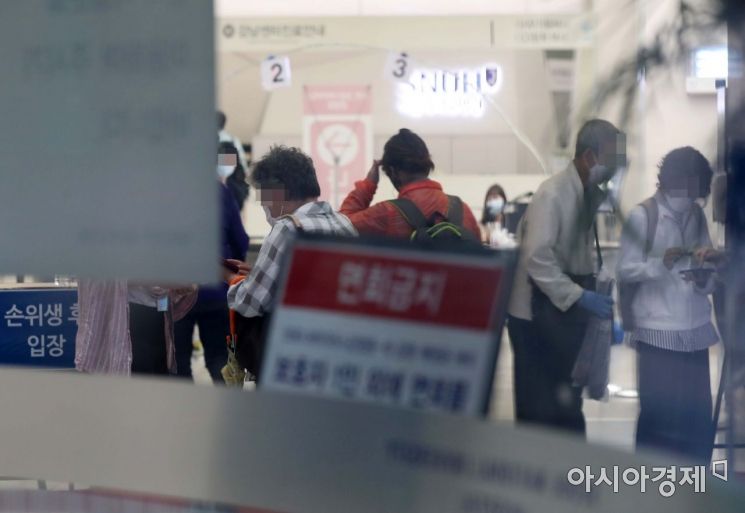
The Sancheong County Health and Medical Center in Gyeongnam announced the '5th recruitment notice' for hiring an internal medicine specialist from the 26th of last month until the 11th of this month but failed to hire anyone. Not a single doctor was willing to come even when offered an annual salary of 360 million KRW. According to the notice, the main duties were general consultations and health counseling rather than complex internal medicine surgeries. The medical situation in other provinces is similar. Sokcho Medical Center in Gangwon Province, which had been operating on a reduced schedule since February due to the inability to find an emergency medicine specialist, was only able to hire one and resume normal operations after issuing a 5th recruitment notice offering an annual salary of 400 million KRW and removing specialty restrictions.
Even with a 400 million KRW salary, no takers... Is increasing medical school quotas the solution for regional and essential medical care?
As it is extremely difficult to find doctors in rural areas, experts have suggested that a substantial increase in medical school quotas is necessary to revive the collapsing regional and essential medical care sectors. The government has maintained a fixed medical school quota of 3,058 students for 18 years since 2006 but plans to expand it starting in 2025. However, negotiations with medical associations have been difficult to achieve.
On the 16th, Yeona Geum, a senior researcher at the Korea Institute for Health and Social Affairs, stated at the 2nd Medical Security Innovation Forum hosted by the Ministry of Health and Welfare, “The need to increase medical school quotas has been strongly raised due to the deepening gaps in regional and essential medical care.” According to the resident recruitment rates by specialty in the first half of 2023, popular specialties such as ophthalmology (175.5%), plastic surgery (161.1%), rehabilitation medicine (160.8%), and psychiatry (159.0%) have high competition rates, but obstetrics and gynecology (71.9%), surgery (65.1%), thoracic surgery (51.4%), and pediatrics (16.3%) are struggling to fill even their quotas.
Among these, the number of doctors per 1,000 people in rural areas such as Ulsan (2.5), Chungbuk and Chungnam (2.4), and Gyeongbuk (2.2) is only about half that of Seoul (4.8). Due to increased public health awareness and aging, the number of patient visits per doctor was 6,989 in 2019, ranking first among OECD countries (average 2,130). Yeona Geum said, “The high medical demand but shortage of doctors leads to increased medical fees, ultimately raising national healthcare costs,” and proposed increasing medical school quotas as a solution.
Discussions on expanding medical school quotas have been ongoing since the 2000s but have not been implemented. In August 2020, during the COVID-19 pandemic, the government's attempt to increase medical school quotas triggered collective strikes by the medical community, including residents. Yeona Geum suggested temporary medical school quotas and establishing medical schools for public healthcare purposes as alternatives. She added, “It is necessary to establish national-level consultations and support policies so that expanding medical school quotas can lead to a virtuous cycle where the quality of medical services used by the public improves and all medical personnel can work in better clinical environments.”
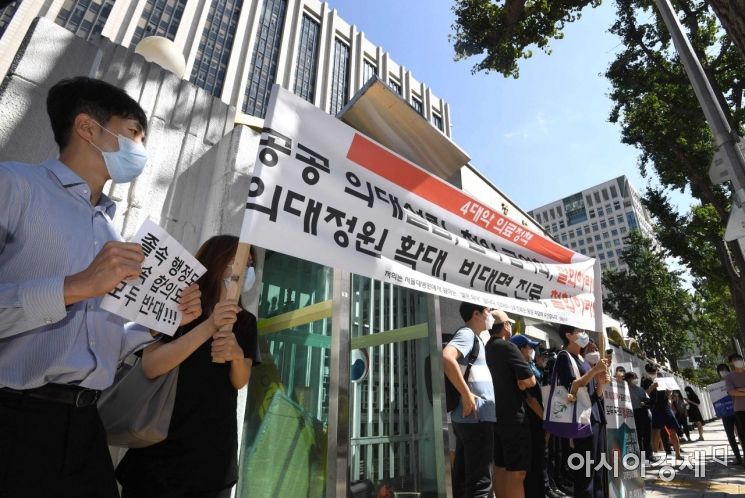
However, there are considerable criticisms that increasing medical school quotas will not immediately fill the gaps in regional and essential medical care. In response, Yeona Geum said that in the short term, public policy-based fee adjustments should be temporarily utilized to fill the gaps in regional essential medical care. Currently, Korea’s fee-for-service system results in lower income with fewer medical services provided, but sufficient compensation should be given to medically underserved areas based on need. Im In-taek, Director of Health and Medical Policy at the Ministry of Health and Welfare, stated, “While discussing the expansion of medical school quotas from a long-term perspective, we will also accelerate the preparation of effective short-term measures such as expanding specialist employment, improving fees in essential fields, and reforming the resident assignment system to overcome the urgent shortage of personnel in regional and essential medical care.”
© The Asia Business Daily(www.asiae.co.kr). All rights reserved.

![User Who Sold Erroneously Deposited Bitcoins to Repay Debt and Fund Entertainment... What Did the Supreme Court Decide in 2021? [Legal Issue Check]](https://cwcontent.asiae.co.kr/asiaresize/183/2026020910431234020_1770601391.png)