Tenants Return to Jeonse Market Amid Interest Rate Decline
Apartment Preference Strengthened Due to Jeonse Fraud Impact in Villas
Jeonse Prices Continue to Fall... Concerns Over Reverse Jeonse in Second Half
Seoul apartment jeonse listings, which had been overflowing due to the preference for monthly rent in the high-interest rate era, have decreased by 30% in six months. As jeonse prices have dropped significantly and loan interest rates have fallen to the 3% range, tenants who had switched to monthly rent are returning to jeonse. Additionally, due to the aftermath of jeonse fraud that was rampant mainly in villas and officetels, a considerable number of tenants seem to be moving into safer apartments.
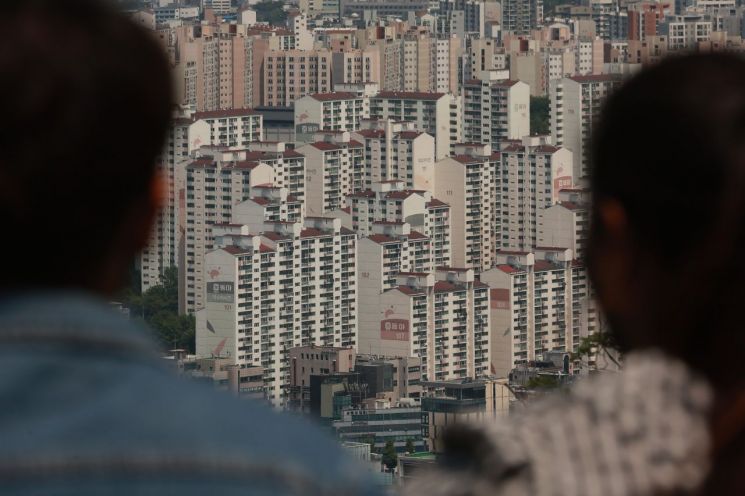
According to the real estate big data platform Apartment Real Transaction Price on the 16th, the number of jeonse listings for Seoul apartments was recorded at 38,614 as of the previous day. This is a 29.5% decrease compared to 54,765 listings six months ago in November last year. November was the period when the full-scale interest rate hike intensified the aversion to jeonse, causing Seoul listings to break through the 50,000 mark. The listings, which remained in the 50,000 range until February this year, decreased to the 40,000 range in March and further dropped to the 30,000 range in May.
Among the 25 autonomous districts of Seoul, Seodaemun-gu experienced the largest decrease over the past six months. The number of listings dropped from 1,943 in November last year to 903 currently, a 53.6% decrease. The second largest decrease was in Mapo-gu, which fell sharply from 2,382 to 1,114 listings, a 53.3% drop. Additionally, five other districts saw a decrease rate exceeding 40%. Gangdong-gu decreased from 2,322 to 1,263 listings (45.7%), and Seongbuk-gu from 1,857 to 1,027 listings (44.7%). Following these, Gangseo, Geumcheon, and Dongjak districts saw decreases of 42.8%, 42.6%, and 41.8%, respectively.
The biggest reason for the rapid decrease in jeonse listings in such a short period is the decline in jeonse prices. As the high interest rates intensified the aversion to jeonse, landlords reluctantly lowered jeonse prices to find tenants. Moreover, with jeonse loan interest rates dropping to the 3% range, tenants had no reason to avoid jeonse.
Jeonse fraud, which had plagued the non-apartment market, is another major cause of the decrease in apartment jeonse listings. Tenants of villas and officetels, concerned about the non-return of deposits, are believed to have chosen to move to apartments, which are considered relatively safer. Especially, the sharp rise in jeonse prices due to the implementation of the new lease law naturally led tenants who had moved to non-apartments to return to apartments.
Despite the decrease in jeonse listings, jeonse prices continue to decline. According to the Korea Real Estate Board, Seoul apartment jeonse prices fell by 0.07% last week. They have dropped by a total of 10.82% this year. However, apartments in large complexes where listings have disappeared are beginning to see a rebound in jeonse prices. For example, Mapo The Classy in Ahyeon-dong, Mapo-gu, Seoul, which was completed at the end of last year, saw its jeonse listings decrease from 628 in November last year to 59 currently, while jeonse prices, which had fallen to 500 million KRW, surged to 650 million to 860 million KRW based on asking prices. A representative from a real estate agency in Ahyeon-dong explained, "As the new construction jeonse shortage stabilized, the jeonse price of Mapo Raemian Prugio right next door also rose from the 500 million KRW range at the beginning of this year to the 600 million KRW range, and the mid-level units in the royal building jumped to 750 million KRW."
However, as the spring moving season is coming to an end, jeonse demand is decreasing, and a considerable amount of new construction supply is expected in the future, it is difficult to predict whether the decrease in listings and the resulting narrowing of price declines will continue. In particular, since Seoul jeonse prices peaked at the end of 2021, there are concerns that reverse jeonse could spread widely in the second half of this year.
Yeokyunghee, senior researcher at Real Estate R114, said, "As the spring moving season and demand for moving to higher-grade areas come to an end, and as urgent sale listings are exhausted causing prices to rise, the trend of decreasing listings may slow down. Especially near large new construction complexes, the decline in jeonse prices could be more significant." She added, "Since contracts signed at the peak of jeonse prices at the end of 2021 will expire this year, there is a high possibility that discounted renewal contracts due to reverse jeonse effects will increase."
© The Asia Business Daily(www.asiae.co.kr). All rights reserved.
![Clutching a Stolen Dior Bag, Saying "I Hate Being Poor but Real"... The Grotesque Con of a "Human Knockoff" [Slate]](https://cwcontent.asiae.co.kr/asiaresize/183/2026021902243444107_1771435474.jpg)











