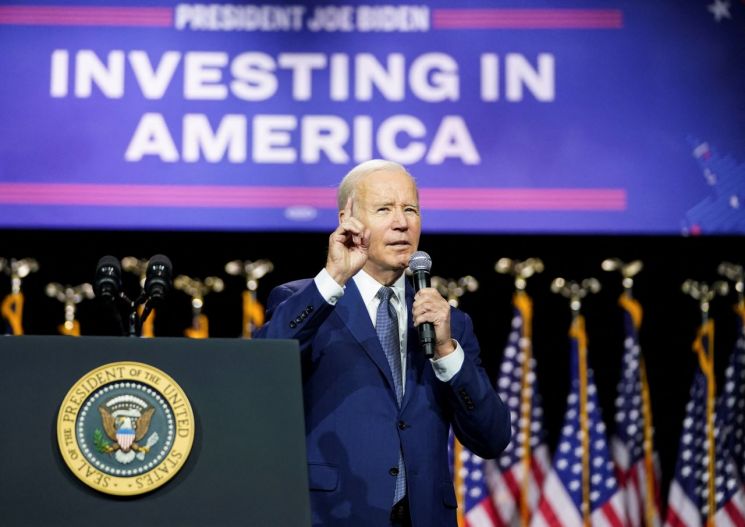
 U.S. President Joe Biden is delivering a speech on the federal government debt ceiling at SUNY Westchester Community College in Valhalla, New York, on the 10th (local time).
 [Image source=Yonhap News]
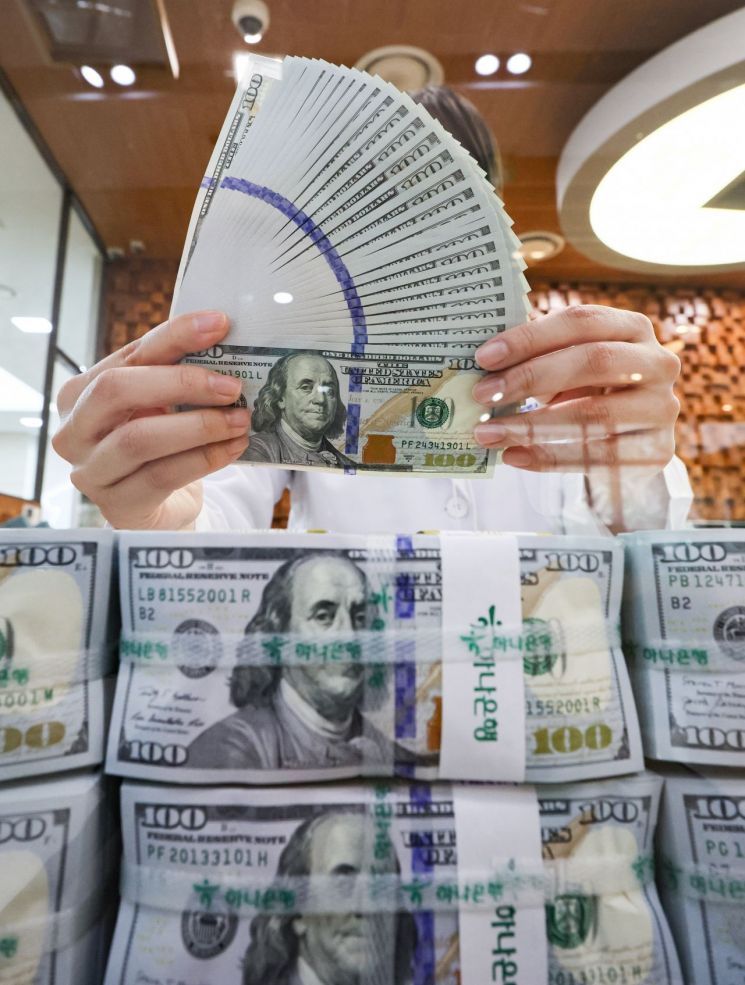
The won-dollar exchange rate surpassed 1,340 won on the 15th due to factors such as the possibility of additional tightening in the U.S. and concerns over a federal government default, which strengthened the dollar.
On that day, in the Seoul foreign exchange market, the won-dollar exchange rate opened at 1,340.1 won, up 5.6 won from the previous trading day. It has been on an upward trend since falling to 1,294.7 won intraday on the 14th of last month.
The exchange rate is rising again because concerns about additional tightening by the U.S. Federal Reserve (Fed) have increased recently.
On the 12th (U.S. local time), the University of Michigan announced that the U.S. one-year expected inflation was 4.5%, higher than the market expectation of 4.4%. The five-year expected inflation also exceeded market expectations at 3.2%, compared to the forecast of 2.9%.
The higher-than-expected U.S. expected inflation has strengthened the dollar.
Hawkish remarks from Fed officials have also supported the dollar's upward momentum.
Fed Governor Michelle Bowman recently said, "The most recent Consumer Price Index (CPI) and employment reports do not provide consistent evidence that inflation is on a downward trend," adding, "additional monetary tightening would be appropriate to achieve sufficiently restrictive monetary policy."
According to the Chicago Mercantile Exchange (CME) FedWatch, the probability that the Fed will raise interest rates by 0.25 percentage points at next month's meeting increased to 15.4%, up from 8.5% a week earlier.
Increased domestic and international economic uncertainties, such as delays in negotiations over the U.S. federal government debt ceiling between the government and Congress, are also problematic. In the first round of talks held on the 9th (local time), U.S. President Joe Biden and congressional leaders including Republican House Speaker Kevin McCarthy failed to reach an agreement. They are scheduled to meet again on the 16th to continue debt ceiling negotiations.
The U.S. Treasury Department has stated that without an increase in the debt ceiling, the U.S. could default as early as the 1st of next month. Since President Biden is scheduled to depart for Japan on the 18th to attend the Group of Seven (G7) summit, if the negotiations are not concluded at this meeting, concerns over a default crisis are expected to intensify.
There is a growing preference for safe-haven assets in the market. On that day, the dollar index, which measures the value of the dollar against six major currencies, rose 0.05% from the previous trading day to 102.73.
U.S. Treasury Secretary Janet Yellen arrived in Niigata, Japan, on the 11th to attend the G7 finance ministers' meeting and said, "The threat of default alone could lead to a downgrade of the U.S. national credit rating, similar to what happened in 2011."
Additionally, recent concerns about crises in regional banks such as PacWest Bancorp in California are also influencing the rise in the won-dollar exchange rate. However, high-volume selling (dollar selling) by exporters and cautious intervention by foreign exchange authorities are factors restraining the exchange rate increase.
Seunghyuk Kim, a researcher at NH Futures, said, "Concerns about the banking system instability and U.S. default reflect the possibility of an economic recession, and the resulting safe-haven sentiment is also leading to purchases of dollar assets," adding, "Importers chasing this strong dollar trend by expecting further increases can also intensify upward pressure on the (exchange rate)."
He continued, "The absence of factors supporting won strength, such as yuan weakness and trade balance instability, also provides a favorable environment for the exchange rate to rise," adding, "however, high-volume selling by exporters and cautious micro-adjustments by authorities are expected to control the pace."
© The Asia Business Daily(www.asiae.co.kr). All rights reserved.


















