Market Share No.1 Pride Battle
Tensions Rise Over Air Conditioner Fire Issues
What’s Behind the Air Conditioner Sales Competition?
With daytime temperatures expected to rise up to 30 degrees Celsius, signaling early summer weather, the air conditioner competition between Samsung and LG is heating up. As demand for TVs and IT products remains sluggish, air conditioners are playing a role as a 'breakthrough' to supplement second-quarter earnings, turning the air conditioner rivalry between the two major home appliance giants into a tense battle.
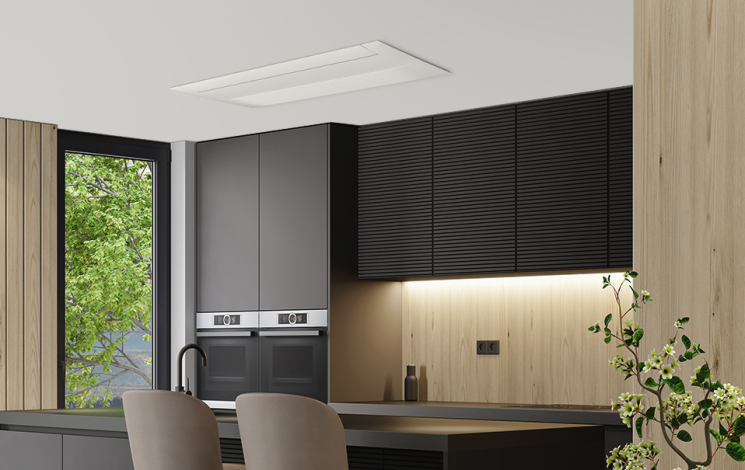
On the 15th, Samsung Electronics launched the ‘Bespoke Wind-Free System Air Conditioner Infinite Line.’ Featuring a ‘Wide Wind-Free’ cooling function that is twice as wide as previous models, it can save up to 61% of power consumption compared to normal operation. Following the release of the new ‘Bespoke Wind-Free Air Conditioner Gallery’ in January, Samsung also introduced the ‘Window Fit’ in April, a window-type air conditioner equipped with Wind-Free cooling, preparing for the peak air conditioner sales season in the second quarter.
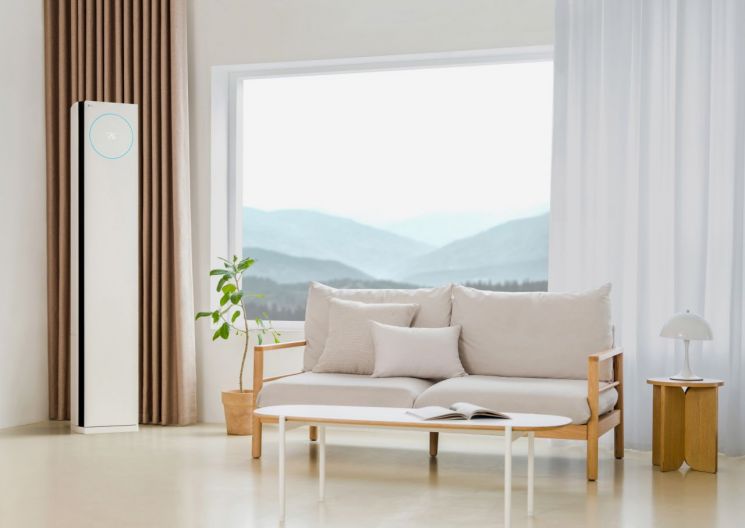
LG Electronics expanded the selection of premium air conditioners by launching the new ‘LG Whisen Tower II,’ which features a simplified design and reduced price burden. They also introduced a new ‘Whisen Portable Air Conditioner’ that can be installed in small windows ranging from 56 to 102 cm in height. The air conditioners LG released this year are rated as energy efficiency grade 1 to 2. Since early last month, LG Electronics has been operating its air conditioner production line in Changwon, Gyeongnam, at full capacity.
The Korea Meteorological Administration forecasts that daytime temperatures will reach up to 30 degrees Celsius this week, especially inland areas like Seoul, marking the start of full-fledged early summer weather. This summer is expected to see intense rainy seasons and heatwaves due to the development of El Ni?o, leading to high demand for air conditioners early on.
The air conditioner sales competition has turned into a pride battle over the number one market share. Samsung Electronics cited statistics from market research firm GfK, stating that the sales proportion of Wind-Free air conditioners with energy efficiency grade 1 doubled in the first quarter of this year, securing a 48.6% share of the domestic air conditioner market and taking first place. LG Electronics’ market share was reported at 32.5%.
In response, LG Electronics criticized the GfK statistics as unreliable, arguing that sales from LG Best Shop, the largest sales channel for LG air conditioners, were not included. Since LG has never officially disclosed product sales figures to GfK, LG claims that Samsung’s reported number one market share in air conditioners significantly differs from the actual domestic market share.
The rivalry between Samsung and LG also extends to disputes over air conditioner fires. As the Fire Agency publicly released data on air conditioner fire incidents by brand over the past decade, efforts to shed the stigma of ‘fire-prone air conditioners’ have intensified. According to the Fire Agency, there were a total of 2,055 air conditioner fire cases in the last 10 years, with 1,521 of those caused by ‘electrical factors.’
As the perception that LG Electronics air conditioners are prone to electrical fires spread, LG stated, “There are almost no fires caused by product defects.” They explained that “at the time, LG air conditioners had a high market share, and most fires occurred due to improper handling of outdoor unit connection wires by private companies during relocations or secondhand transactions.”
The tense air conditioner competition between Samsung and LG reflects Samsung Electronics’ predicament after being overtaken by LG Electronics in the first quarter, despite traditionally leading in performance.
How much the losses occurring in the semiconductor parts sector can be offset by the home appliance and other set sectors will determine second-quarter earnings. For Samsung Electronics, maximizing air conditioner sales is more crucial than ever. LG Electronics’ operating profit in the first quarter was 1.4974 trillion won, surpassing Samsung’s 640.2 billion won, which was affected by semiconductor losses, marking the first time in 14 years that LG has overtaken Samsung.
© The Asia Business Daily(www.asiae.co.kr). All rights reserved.
![Clutching a Stolen Dior Bag, Saying "I Hate Being Poor but Real"... The Grotesque Con of a "Human Knockoff" [Slate]](https://cwcontent.asiae.co.kr/asiaresize/183/2026021902243444107_1771435474.jpg)












