The U.S. federal government faces immediate "7 doomsday scenarios"?including a stock market crash, temporary layoffs of federal workers, and repercussions for the global financial system?if it fails to raise the debt ceiling and falls into default. Experts warn that the ensuing chaos would be unpredictable and could bring even greater uncertainty to the global economy.
On the 14th (local time), The Washington Post (WP) reported that economists are warning about the worst possible outcomes if the federal government fails to raise the debt ceiling before running out of cash, known as X-day. The U.S. exhausted its $31.4 trillion debt limit in January and is currently relying on special measures, which are also nearing their limits.
The seven doomsday scenarios include a stock market crash, sudden recession, unemployment, difficulties in Social Security and Medicare payments, a sharp rise in U.S. borrowing costs, economic fallout spreading to countries holding U.S. Treasury securities, and a weakening of the dollar's status. Mark Zandi, chief economist at Moody's, warned, "It would be a deadly combination," adding, "We can see how this issue could cascade, collapsing the entire financial market and ultimately impacting the economy."
Wall Street is expected to be the first to take a direct hit. Although debt ceiling risks have not yet been fully reflected in stock prices, the closer X-day approaches, the more the stock market is expected to plunge and the banking sector to tighten. WP reported that during the 2011 debt ceiling standoff, major indices fell about 20% less than a week before X-day.
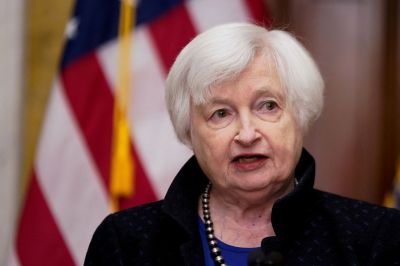
Recently, Treasury Secretary Janet Yellen set X-day as June 1. Moody's Analytics predicts that in the event of a default, stock prices could plummet to about one-fifth of their value, delivering a severe blow to the retirement accounts of millions of Americans. The White House Council of Economic Advisers estimates that if a default lasts more than three months, the stock market could crash by 45%, and up to 8.3 million jobs could be lost.
The impact on the broader economy, already facing recession fears due to over a year of Federal Reserve tightening, is inevitable. WP noted, "Household wealth nationwide will decline due to Wall Street sell-offs," which "will reduce consumer spending and hurt businesses." According to the Treasury Department, the 2011 debt ceiling standoff resulted in a $2.4 trillion decrease in total household wealth.
Additionally, soaring mortgage rates are expected to shock the real estate market. Real estate company Zillow forecasted in a report that if the debt ceiling is not raised, mortgage rates could rise to 8.4%. This would increase monthly loan principal and interest payments by an estimated 22%. Furthermore, a sharp drop in home sales and related sectors like construction could dampen the overall economy.
Temporary layoffs or unpaid wages for federal workers are also a concern. According to the Congressional Research Service, about 4.2 million people are employed by the federal government. WP expects that, besides the military, workers in critical roles such as food safety and air traffic controllers would be affected by a default. Pension, Medicare, and Social Security payments for retirees would also be temporarily suspended. These factors could further deepen the economic downturn.
An unprecedented default would also raise U.S. borrowing costs. U.S. Treasury securities have long been regarded as the safest foundational bonds underpinning the international financial system, but in the event of a default, global volatility and uncertainty would inevitably cause prices to plummet. The Brookings Institution projected that exceeding the debt ceiling could increase federal borrowing costs by $750 billion over the next decade. WP noted, "The borrowing discount the U.S. has enjoyed for decades could end."
This would exacerbate economic problems worldwide. Many countries hold large amounts of U.S. Treasuries as the safest foundational bonds to protect their finances. Moreover, as trust in the U.S. erodes, the global standing of the U.S. dollar is expected to be damaged. WP pointed out, "The global economy has already begun reducing its dependence on the dollar," adding, "Although about 60% of foreign exchange transactions are still conducted in dollars, a default could shake the dollar's value."
Earlier, Secretary Yellen also indicated that "if the U.S. fails to repay its debt, our creditworthiness will be questioned," suggesting the crisis could become even more fundamental.
Economists also warned that the aftermath of a default is difficult to predict. Claudia Sahm, an economist and former Fed official, said, "We don't know. This has never happened before," expressing concern that "no one, including myself, can sketch out what will happen on X+1, the day after X-day."
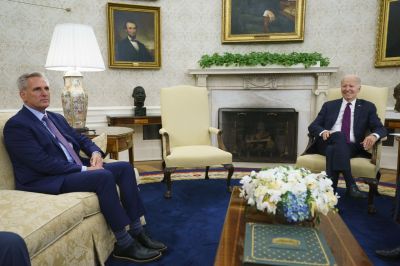
Officials from the Biden administration and Congress are currently continuing negotiations to prevent a default by raising the debt ceiling. A second meeting between President Biden and congressional leaders, previously postponed, is scheduled for early this week. The first meeting last week only confirmed the differences in positions. The Republican majority in the House opposes raising the debt ceiling without large government spending cuts as a precondition, while the White House and Democrats insist the debt ceiling is not negotiable and demand an unconditional increase.
© The Asia Business Daily(www.asiae.co.kr). All rights reserved.


















