Ministry of Science and ICT Registers Telecommunications Operators on 12th
Completed 4 Months After January Application
Attention on Potential Shift in Telecom Market Landscape
Elon Musk's satellite communication service 'Starlink' has established a foundation to operate in the Korean market. This is because it has cleared the first hurdle of government regulations. Attention is focused on whether waves of change will ripple through the domestic telecommunications market.
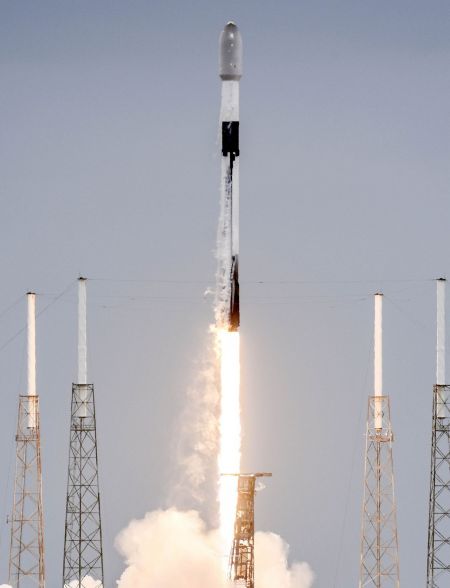
The Ministry of Science and ICT announced on the 12th that "Starlink Korea, a Korean subsidiary of the US-based SpaceX, has completed registration as a telecommunications service provider." The Ministry reviewed registration requirements such as financial and technical capabilities and user protection plans in accordance with Article 6 of the Telecommunications Business Act before completing the registration. Going forward, a cross-border supply agreement between SpaceX and Starlink Korea will be signed, and the Ministry's approval process for the agreement will proceed.
Earlier, SpaceX applied for telecommunications service provider registration with the Ministry of Science and ICT in January. Two months later, in March, it established Starlink Korea to handle domestic operations and appointed Lauren Ashley Dreyer, Senior Director of Starlink Business Operations, as the CEO of Starlink Korea. An office was also set up near Gangnam Station in Seocho-gu, Seoul. They had completed all preparations to enter the Korean telecommunications market. The market had been closely watching when the telecommunications service provider registration would be finalized.
Starlink, which began service in 2020, provides broadband internet to over 50 countries worldwide based on approximately 4,000 satellites. It has expanded into the US, Canada, the UK, Germany, Australia, France, and last year extended its reach to Japan in Asia. Its greatest advantage is the ability to supply internet without 'blind spots' thanks to its vast satellite infrastructure. Starlink was also the provider of internet services to Ukraine during its war with Russia.
With the completion of the telecommunications service provider registration, attention is on whether Starlink can shake up the market landscape. Some opinions suggest that Starlink will have little impact, citing a lack of price competitiveness and the nearly 100% coverage of wired and wireless networks in Korea’s telecommunications environment, making it difficult for Starlink to change the market dynamics. On the other hand, there are arguments that if the internet ecosystem expands from traditional land-based networks to maritime and aviation sectors, satellite communications like Starlink could become a powerful player in the 6G era. In the past, the Ministry of Science and ICT mentioned that with the widespread adoption of 6G mobile communications, services such as ship Wi-Fi and maritime logistics Internet of Things (IoT) could expand. There are also expectations that Starlink will form cooperative relationships with the existing three major Korean telecom companies.
© The Asia Business Daily(www.asiae.co.kr). All rights reserved.
!["The Woman Who Threw Herself into the Water Clutching a Stolen Dior Bag"...A Grotesque Success Story That Shakes the Korean Psyche [Slate]](https://cwcontent.asiae.co.kr/asiaresize/183/2026021902243444107_1771435474.jpg)
















