"Hunger alone is enough"
"Similar effects expected in other species"
A new study has found that simply feeling hungry may help slow down aging.
On the 12th, Dr. Scott Fletcher and his research team at the University of Michigan Medical School in the United States published their findings in the scientific journal Science after studying the relationship between hunger and lifespan in fruit flies (Drosophila). Fruit flies are known to share about 60% of their genes with humans. Therefore, scientists often use fruit flies as subjects for human genetic research and other studies.

The research team previously discovered that the lifespan-extending effects of dietary restriction disappear if the flies taste and smell food without swallowing it. Based on this, they investigated whether brain changes that stimulate the search for food might influence lifespan extension.
The team induced hunger in fruit flies by either controlling their diet or activating related brain neurons.
First, the dietary control method involved withholding any food from the fruit flies for 20 hours, then providing food with varying amounts of branched-chain amino acids (BCAAs) such as leucine, isoleucine, and valine?essential amino acids?for about 3 hours. Afterward, the flies were allowed to freely consume sugar and yeast (Saccharomyces cerevisiae) food.
They focused on previous research showing that reducing BCAA levels in food increases protein craving and extends lifespan in both fruit flies and mammals.
As a result, fruit flies fed with low-BCAA food consumed more yeast than sugar, unlike those fed with high-BCAA food.
The research team explained that the preference for yeast over sugar indicates hunger based on nutritional needs, and these flies consumed more food and calories and lived longer.
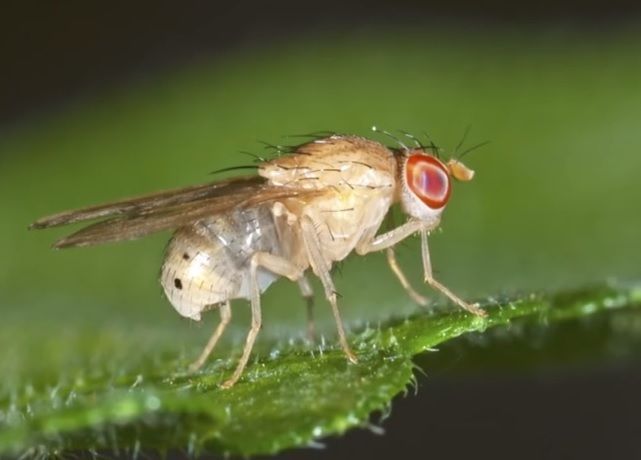
Next, the team used optogenetics to expose fruit flies to red light, activating brain neurons related to the "hunger drive."
Fruit flies that felt hunger and had the impulse to eat due to neural activation consumed twice as much food as flies without light stimulation and also lived significantly longer.
Christy Weaver, the first author of the paper, explained, "It seemed we created an unquenchable hunger in the fruit flies, and through this, they lived longer."
Dr. Fletcher added, "The perception that food is insufficient is enough."
The team also identified molecular mechanisms that induce epigenomic changes in the related neurons. These changes affect how certain genes are expressed in the fruit fly brain, influencing feeding behavior and aging.
While emphasizing caution in applying these findings to humans, the research team stated, "There is reason to expect that the mechanism controlling hunger drive found in fruit flies may also regulate hunger drive in other species."
The team plans to investigate how the shared enjoyment of eating between fruit flies and humans is related to lifespan.
© The Asia Business Daily(www.asiae.co.kr). All rights reserved.
![Clutching a Stolen Dior Bag, Saying "I Hate Being Poor but Real"... The Grotesque Con of a "Human Knockoff" [Slate]](https://cwcontent.asiae.co.kr/asiaresize/183/2026021902243444107_1771435474.jpg)

















