Biden's Decarbonization Drive
Industry and Republicans Oppose "Grid Instability, Rising Electricity Costs"
The U.S. government is mandating the installation of carbon capture and storage (CCS) devices and hydrogen power generation at coal and gas power plants to reduce carbon emissions. Over the next decade, power plants that fail to significantly reduce carbon emissions are expected to be phased out. Industry and the Republican Party are concerned that the Biden administration's rapid decarbonization policies could threaten energy security and lead to higher electricity bills and grid instability.
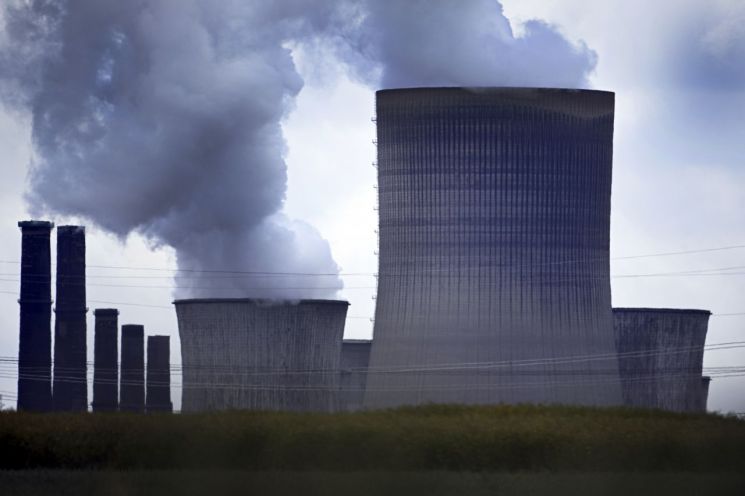
U.S. Announces 'Clean Power Plan 2.0'... Accelerating the Phase-Out of Coal and Gas Power Plants
The U.S. Environmental Protection Agency (EPA) announced on the 11th (local time) the 'Clean Power Plan 2.0,' which strengthens regulations on carbon emissions from coal and gas power plants.
The plan aims to accelerate decarbonization by reducing greenhouse gas emissions from thermal power plants, which account for one-quarter of the total carbon emissions in the U.S. Previously, the Barack Obama administration attempted in 2015 to significantly reduce carbon emissions from the power industry, but the policy became embroiled in legal disputes and was later discarded under the Donald Trump administration, which was more favorable to fossil fuel power generation.
According to the new regulation, existing and newly installed natural gas power plants must install CCS and reduce carbon emissions by 90% by 2035. If they fail to reduce carbon emissions, an alternative is to increase the share of hydrogen power generation to 30% by 2032 and 96% by 2038. Coal power plants must install CCS devices starting in 2030, and if they are scheduled to close between 2035 and 2040, they must increase the share of gas power generation to 40% by 2030.
The EPA expects that this will reduce carbon emissions from thermal power generation by approximately 617 million tons between 2028 and 2042, an amount equivalent to the emissions from 137 million cars.
The regulations apply to 200 coal power plants and 120 natural gas power plants. The EPA stated that 60% of coal power plants are already planning to cease operations by 2040.
The EPA projects that electricity rates will increase by about 2% on average by 2030 and then decrease by about 1% by 2040. Although the new regulations will incur costs exceeding $10 billion (approximately 13.3 trillion won) for the power industry, the health and environmental benefits from reduced carbon emissions are expected to reach $85 billion (approximately 113.2 trillion won).
Michael Regan, EPA Administrator, said, "I am truly pleased that this has a very minimal impact on electricity rates but a significant impact on public health and the climate."
Ali Zaidi, White House climate advisor, stated, "This will help the U.S. achieve its net-zero power sector goal by 2035," adding, "This regulation fully aligns with the President's objectives."
Industry Pushback: "Electricity Rates Will Rise and Jobs Will Be Lost"… Political Conflict Over Energy Transition Intensifies
The industry is opposing the rapid decarbonization policies, arguing that they will exacerbate grid instability and increase electricity costs. They also criticize that CCS technology is still in its early stages and difficult to commercialize.
American Power, representing coal power plants, protested, saying, "There are numerous legal issues raised, including whether the EPA has the authority to mandate the use of economically and technically unproven technologies."
Regions dependent on coal power, such as West Virginia, are expected to suffer a direct blow to their local economies. Senator Shelley Moore Capito of West Virginia, a Republican, criticized in a statement, "The plan announced today is the Biden administration's most blatant attempt to shut down power plants and kill American energy jobs," adding, "Americans are well aware that the left continues to wage war over the energy sources that actually supply power to this country."
The Electricity Power Supply Association (EPSA) said, "Policies driven by enthusiasm are outpacing operational realities," and criticized, "There is no doubt that such aggressive regulations will increase energy costs and lead to the closure of a significant number of power plants."
The EPA plans to finalize the regulation after a two-month public comment period.
The Wall Street Journal (WSJ) reported, "The new regulations for addressing climate change and implementing progressive policies are likely to become another point of political contention," noting, "The Democrats are pressuring the administration to do more, while the Republicans are fighting the administration's initiatives at the congressional and state levels."
© The Asia Business Daily(www.asiae.co.kr). All rights reserved.
![Clutching a Stolen Dior Bag, Saying "I Hate Being Poor but Real"... The Grotesque Con of a "Human Knockoff" [Slate]](https://cwcontent.asiae.co.kr/asiaresize/183/2026021902243444107_1771435474.jpg)
















