Eldest Son → Eldest Grandson → Eldest Daughter Order Now Applies to the Closest Elder Relative
"Gender Discrimination No Longer Appropriate"
Retroactive Application Excluded, Applies from This Case
Clan Association "Concerned" · Women's Groups "Welcome"
Legal Community "No Impact on Inheritance Issues"
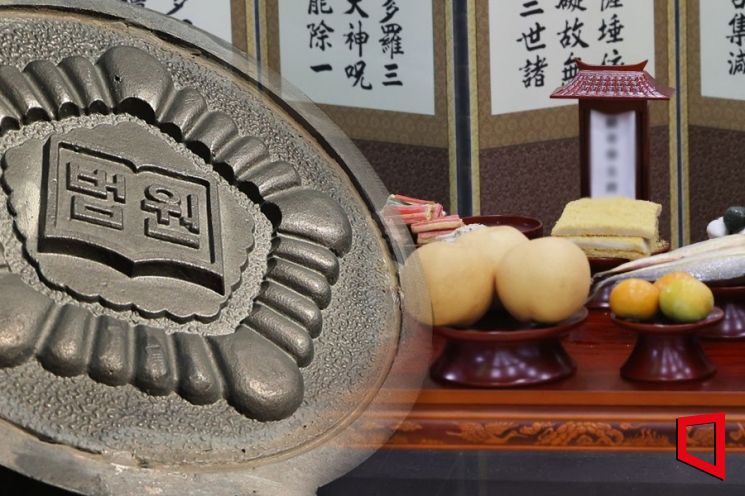
The Supreme Court has ruled that a daughter, not just a son, can perform ancestral rites for the parents. On the 11th, the Supreme Court overturned its previous precedent, which prioritized male descendants such as the eldest son or eldest grandson to perform the rites, for the first time in 15 years, deciding that regardless of gender, the eldest among the closest relatives in terms of kinship degree has priority.
This ruling means that since societal perceptions have changed so that the traditional notion of "son first" in family succession can no longer be upheld, the order of conducting ancestral rites should be determined by age rather than gender.
The Supreme Court's full bench on the 11th overturned the lower court's ruling that dismissed the appeal in a case where the wife of the deceased Mr. A, Kim, and their two daughters sued Ms. Lee, a woman who had an extramarital relationship with Mr. A and lived with him, demanding the return of his remains, and remanded the case to the Seoul High Court.
Mr. A married Kim in 1993 and had two daughters. However, Mr. A had an affair with Ms. Lee and fathered a son in 2006, after which he lived with Ms. Lee. He did not divorce his legal wife, Kim. When Mr. A died in 2017, Ms. Lee held the funeral and selected a memorial park to enshrine the remains without consulting Kim, the legal wife.
In response, Kim and her two daughters filed a lawsuit against Ms. Lee demanding the return of the remains. Since the remains of the deceased legally belong to the person who performs the ancestral rites (the rite host) as "property for ancestral rites," the court had to first determine who the rite host of Mr. A was and then decide the right to inherit the remains.
The first and second trials ruled that Ms. Lee should retain ownership of the remains. This decision was based on the 2008 Supreme Court ruling that, barring special circumstances, the eldest son is the rite host regardless of whether he is a legitimate or illegitimate child, and if the eldest son is deceased, the eldest grandson inherits the rites. Although the son born from the extramarital relationship with Ms. Lee was illegitimate, he was the eldest son, thus ranking higher than Kim’s daughters in the order of rite hosts, leading to the conclusion that the legal ownership of Mr. A’s remains belonged to Ms. Lee’s family.
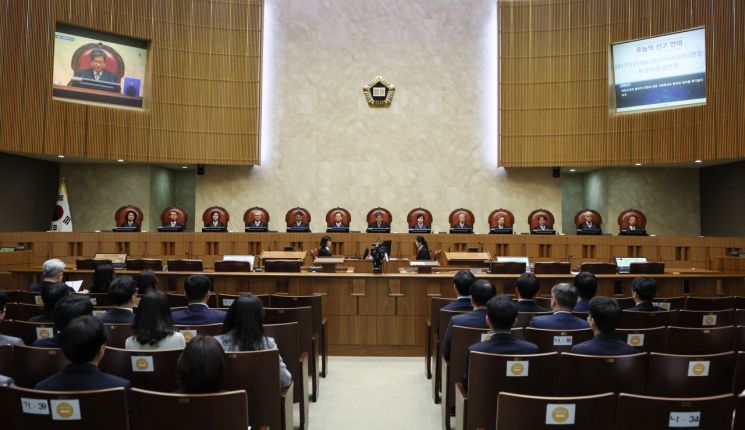 Chief Justice Kim Myung-soo and Supreme Court Justices are seated in the Grand Courtroom of the Supreme Court in Seocho-gu, Seoul, on the afternoon of the 11th, for the plenary session ruling on whether to recognize the status of ritual officiant.
 [Image source=Yonhap News]
However, the Supreme Court found it difficult to maintain the existing precedent due to the strengthening of gender equality awareness in our society.
The Supreme Court stated, "Prioritizing male heirs such as the eldest son or eldest grandson as rite hosts is incompatible with the constitutional spirit prohibiting gender discrimination," and added, "The male-centered family succession meaning of ancestral rites has faded, and the importance of reverence and remembrance for deceased ancestors has increased, so it cannot be said that male descendants must perform the rites over female descendants."
Ultimately, the Supreme Court established a new legal principle that "among the direct descendants of the deceased, regardless of gender, the eldest among the closest relatives in terms of kinship degree shall be the rite host." According to the revised precedent, among Mr. A’s two daughters and son, who are all first-degree relatives, the eldest daughter, being the eldest, becomes the rite host, and thus the remains of Mr. A will be inherited by Kim’s family. However, the Supreme Court stated that the changed precedent will not be applied retroactively but will apply from this case onward.
Our society generally accepts this ruling as an inevitable change following social development.
Kwon Oh-ik, the general secretary of the Andong Kwon Clan Association, said, "It is still unfamiliar for a female descendant to perform the rites when there is an eldest son," and added, "I think it is better for each family to decide who will perform the rites rather than having the law determine it."
Heo Myung, chairperson of the Women’s Association Council, said, "This ruling is the court’s acceptance of the principle of gender equality following the abolition of the family head system."
Meanwhile, the legal community explains that this ruling is unrelated to inheritance issues. The Civil Act stipulates that "the rite host inherits the forest land where the grave is located, farmland within 600 pyeong used as grave soil, and ownership of the family register." Lawyer Bae In-gu of Logos Law Firm said, "This ruling means that close relatives of the deceased should perform the rites without gender discrimination, so the general legal principles regarding inheritance do not change with this ruling."
© The Asia Business Daily(www.asiae.co.kr). All rights reserved.


















