The World Health Organization (WHO) announced on the 11th (local time) that it will lift the international public health emergency of international concern (PHEIC) for Mpox (formerly known as monkeypox) after 10 months.
WHO Director-General Tedros Adhanom Ghebreyesus stated at a briefing that day, "We have accepted the advice of the expert committee that Mpox no longer meets the criteria for a PHEIC," and added, "I am pleased to declare that Mpox is no longer a PHEIC."
This comes about 10 months after the PHEIC was declared for Mpox in July last year. Mpox, which was an endemic disease in Central and West Africa, began spreading worldwide from mid-last year. The infection source includes the blood, bodily fluids, and skin lesion exudates of infected individuals, with symptoms starting from fever, headache, and muscle pain, followed by vesicles, pustules, and scabs.
According to WHO, from January 2022 to April 2023, a total of 111 countries and regions reported cumulative Mpox deaths of 140 and infections exceeding 87,000. In particular, as most cases were known to be transmitted through sexual contact among men who have sex with men, there was controversy over social stigma against infected individuals.
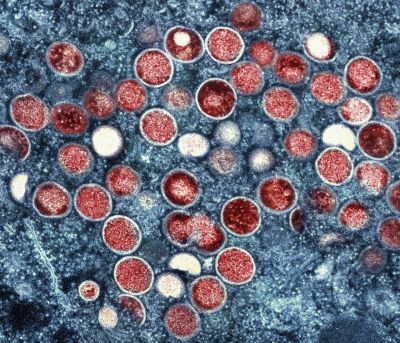
The WHO's declaration to lift the PHEIC on this day was based on the assessment that new Mpox cases have significantly decreased since the fourth quarter of last year. Director-General Tedros noted at the recent expert committee meeting that "reported cases have decreased by 90% over the past three months," and evaluated that "due to the rapid response of most countries, we are now making steady progress in controlling the Mpox outbreak." The lifting of the PHEIC for COVID-19 on the 5th after 3 years and 4 months also appears to have influenced this decision.
The PHEIC, the highest public health alert level by WHO, signifies a crisis situation requiring international response. It enables WHO-level related research, funding support, and international health measures, and carries legal binding force over approximately 190 countries. Besides COVID-19, PHEIC was also declared during the 2009 influenza pandemic and the West African Ebola outbreak.
However, like with COVID-19, WHO emphasized that this does not mean the end of all situations regarding Mpox. Director-General Tedros said, "This does not mean the work is finished," and added, "Mpox remains a serious public health issue requiring sustainable response." He also urged countries to maintain capabilities for related testing and rapid response in case of future outbreaks, noting that uncertainties remain, including the possibility of large-scale reinfections.
© The Asia Business Daily(www.asiae.co.kr). All rights reserved.
![Clutching a Stolen Dior Bag, Saying "I Hate Being Poor but Real"... The Grotesque Con of a "Human Knockoff" [Slate]](https://cwcontent.asiae.co.kr/asiaresize/183/2026021902243444107_1771435474.jpg)
















