Regulated Areas Including Gangnam 3 Districts and Yongsan Rise
Incheon Also Stops Declining Following Sejong
Apartment prices in four southeastern districts of Seoul?Gangnam, Seocho, Songpa, and Gangdong?rose simultaneously. Nowon-gu and Yongsan-gu continued their upward trends for three and two consecutive weeks, respectively. By city and province, Incheon stopped declining following Sejong.
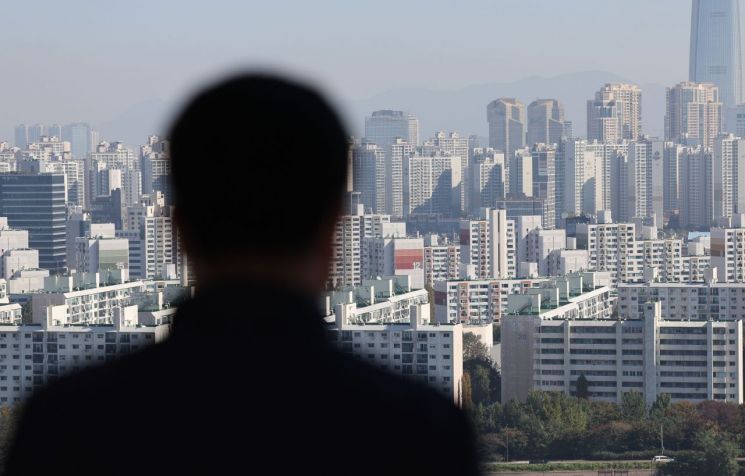
According to the weekly apartment price trend announced by the Korea Real Estate Board on the 11th, Seoul apartment prices fell by 0.04% in the second week of May (as of the 8th), with the rate of decline slowing for the fifth consecutive week. Although there is an expectation of further price drops, the Real Estate Board explained that the overall decline narrowed as some areas saw increases in actual transaction prices or asking prices.
The rise in the southeastern region was particularly notable. Seocho-gu (0.02%) and Gangnam-gu (0.01%) increased for four and three consecutive weeks, respectively, while Songpa (0.08%) and Gangdong (0.02%) rebounded just one week after turning downward. This appears to be due to rising transactions after low-priced listings were exhausted.
Yongsan-gu, which recorded no change last week, also rose by 0.01%. This is the first time in 11 months that apartment prices in Yongsan-gu have increased since the second week of June last year (0.01%). As a result, apartment prices in all of Seoul’s Gangnam 3 districts and Yongsan-gu, which remain regulated areas, have risen.
Additionally, Nowon-gu (0.05%) saw increases mainly in mid- to low-priced and older complexes in Junggye and Hagye-dong, and Dongjak-gu ended two consecutive weeks of no change to rise by 0.02%. In Seongdong-gu, the decline that had continued since the second week of May last year stopped, turning to no change for the first time in a year.
Incheon (0.00%) halted its 15-month decline that began in the last week of January last year (-0.04%). Junggu (0.08%), Yeonsu-gu (0.04%), and Gyeyang-gu (0.12%) showed strong performance.
Gyeonggi Province fell by 0.04%, with the rate of decline narrowing compared to the previous week (-0.09%). Cheoin-gu in Yongin-si (0.27%) rose for seven consecutive weeks due to the development of a national industrial complex, and Yeongtong-gu in Suwon-si (0.16%) continued its upward trend mainly in Gwanggyo New Town. Seongnam-si also turned to an increase (-0.02% → 0.02%). Gwangmyeong-si (0.16%), Hwaseong-si (0.14%), Osan-si (0.095%), Pyeongtaek-si (0.08%), and Hanam-si (0.15%) also showed strong performance.
Among other cities and provinces, Sejong (0.23% → 0.39%) maintained its upward trend for eight consecutive weeks.
Jeonse prices nationwide saw the rate of decline ease from -0.13% to -0.11%. By city and province, Seoul’s decline narrowed from -0.11% to -0.07%, and Sejong rose by 0.10%, continuing its upward trend for six consecutive weeks since turning positive in the last week of March.
The Real Estate Board stated, "Seoul’s Jeonse prices are declining due to the impact of newly scheduled move-in volumes and inventory backlog, but inquiries are increasing and urgent listings are being exhausted in areas with favorable living conditions, reducing the rate of decline."
© The Asia Business Daily(www.asiae.co.kr). All rights reserved.

















