Preventing 'Illusion' Confusion in Autonomous Calculation Performance
Review of Existing Calculation Standards... Detailed Criteria Presented for Some Items
The Financial Supervisory Service (FSS) is preparing detailed standards for performance calculation under the new accounting system IFRS17, introduced this year. Although insurers have been allowed a certain degree of autonomy to calculate new indicators reflecting profitability, this autonomy has led to differing standards among companies, making it difficult to clearly assess corporate value and fundamental strength. The FSS is responding to these market concerns.
On the 11th, the FSS held a meeting at its headquarters in Yeouido, Seoul, with chief financial officers (CFOs) from 23 life and non-life insurance companies. The purpose was to listen to industry difficulties and announce requests and future policies to reduce confusion caused by insurers freely using actuarial assumptions under IFRS17.
Deputy Director Cha said, "IFRS17 is a principle-based international insurance accounting standard that grants insurers autonomy to use optimal actuarial assumptions. However, if this autonomy is not properly managed, various problems may arise, as the market has expressed concerns. In particular, if insurers set optimistic assumptions, profits may initially appear to increase, but over time losses expand, effectively postponing current burdens into the future."
A representative example is the newly introduced profitability indicator, Contractual Service Margin (CSM). This concept recognizes future profits generated from insurance contracts annually, and CSM can vary depending on the insurer’s assumptions. For instance, in the case of indemnity health insurance, if assumptions such as excessively raising future renewal premiums are applied to calculate financial statements, insurance liabilities may temporarily decrease, making performance appear improved. However, if differences between expected and actual values (experience variances) occur later, adjustments will be made, ultimately returning as future liability burdens for insurers. There are also concerns that some insurers are designing products with the longest possible insurance periods and focusing sales on them to boost short-term performance.
Deputy Director Cha pointed out, "If insurers aggressively push sales of certain product types to maximize short-term profits, they may become excessively exposed to risks related to those products, and if related assumptions change, they could face significant financial burdens. If sales competition intensifies through excessive business expense spending, there is also a risk of frequent consumer harm such as unfair contract conversions."
Therefore, based on insurers’ first-quarter performance announcements, the FSS plans to conduct its own review of key actuarial assumptions (such as future loss ratios for indemnity insurance and surrender rates for no- and low-surrender value policies) and provide detailed standards on major issues. The announcement is expected as early as this month, with ongoing reviews aimed at reducing trial and error and enhancing the reliability of IFRS17 financial statements.
Deputy Director Cha added, "We will urge insurers to plan sound growth from a long-term perspective rather than merely pursuing short-term accounting profit maximization. We also plan to strictly address all unfair practices, including incomplete sales, to ensure fair competition in the market."
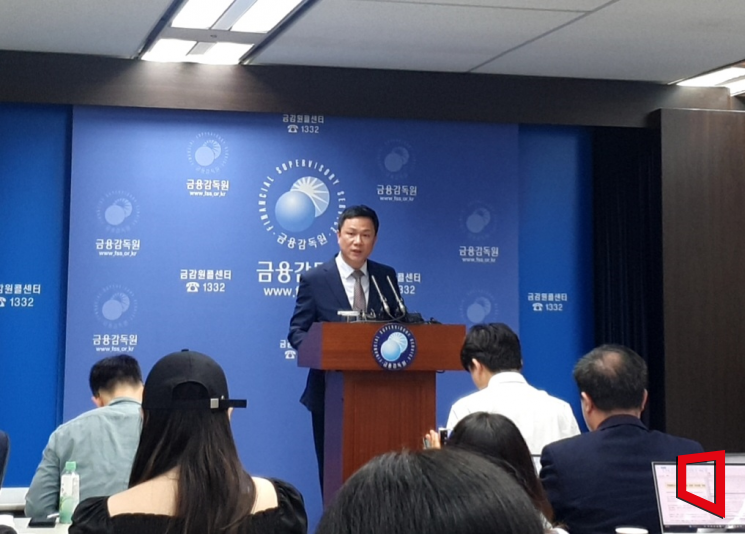 Cha Suhwan, Deputy Director of the Financial Supervisory Service, is explaining the calculation of detailed standards for IFRS17 at the Financial Supervisory Service on the 11th.
© The Asia Business Daily(www.asiae.co.kr). All rights reserved.