On the 11th, 'Platform Private Autonomous Organization' Self-Regulation Plan Presentation Held
The final version of the self-regulation between platform companies and tenant businesses, promoted by the Yoon Suk-yeol administration, has been finalized. The "commission fee cap system," which was a sharp issue strongly demanded by tenant businesses, was not included. Instead, companies participating in the discussions such as Kakao, 11st, and Gmarket proposed temporary win-win plans, such as freezing or discounting commission fees for a certain period, bringing the matter to a close.
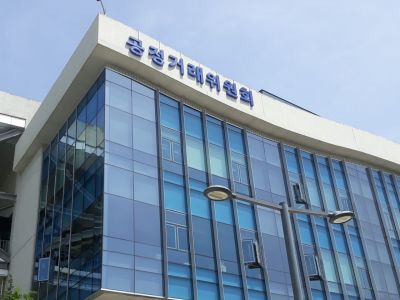
On the 11th, the "Platform Private Self-Regulatory Organization" held a "Platform Self-Regulatory Organization Self-Regulation Plan Presentation" at 2 p.m. in the main conference room of Post Tower in Myeongdong, Seoul, announcing the self-regulation plans prepared by its four subcommittees (Consumer/User, Data/AI, Innovation Sharing/Governance). The "Platform Private Self-Regulatory Organization" is a discussion body formed to prepare self-regulation plans in the platform market by the private sector itself. Since its launch on August 19 last year, it has organized four subcommittees: Gap-Eul (principal-agent), Consumer/User, Data/AI, and Innovation Sharing/Governance, discussing self-regulation plans within each subcommittee.
Fair Trade Commission-led 'Gap-Eul Subcommittee' Announces 'Open Market Self-Regulation Final Plan'
At the presentation, the Gap-Eul subcommittee announced the final self-regulation plan in the "Open Market" sector. This is the final self-regulation outcome prepared after policy adjustments by the Fair Trade Commission since the launch of the Yoon Suk-yeol administration, shifting toward managing the "Gap-Eul problem" arising between online platform companies and tenant businesses through private-led self-regulation. Since the platform self-regulatory organization was launched last August, the Open Market subcommittee had intense confrontations over including the "commission fee cap system" in the tenant contract terms. Tenant businesses insisted that the contract must include an annual cap on commission fees that platform companies can raise, while companies opposed this.
It was concluded that the commission fee cap system would not be included as a mandatory core item in the tenant contract terms concluded between open market operators and tenant businesses. The self-regulatory organization decided that the mandatory contents to be included in the tenant contract terms are ▲tenant contract period, ▲reasons and procedures for contract changes or termination, ▲reasons and procedures for service restrictions, suspension, or changes, ▲commission and advertising fee application methods, ▲payment settlement cycle and procedures, and ▲criteria for determining search exposure order. A platform industry official said, "Although there were considerable difficulties, discussions could be concluded as the delivery app organization announced a self-regulation plan in February, and companies prepared win-win plans to reduce commission fees." Additionally, to prepare for disputes between platform operators and tenant businesses, it was decided to establish an "Open Market Self-Dispute Mediation Council (tentative name)" to resolve conflicts.
Instead of Introducing 'Commission Fee Cap Clause' in Tenant Contracts... Win-Win Plans Include Commission Reduction Measures
About ten platform companies participating in the discussions, including Kakao, 11st, Gmarket, Coupang, and Musinsa, prepared temporary win-win plans to reduce commission burdens. Kakao decided to freeze its existing commission policy within the year and expand the small business preferential commission policy (commission 3.3% → 0.53%~1.64%) previously applied only to credit card payments to other payment methods (such as KakaoPay Money). 11st will apply a discounted commission rate (6%) to new sellers in 2023 for one year and extend the 6% commission rate for small and medium-sized tenant sellers among 2022 tenant sellers for one year. Gmarket will freeze commission fees by category for one year. Musinsa will exempt payment commissions for about 3,600 companies, which account for the lower half of sales, for one year.
Meanwhile, the Consumer/User subcommittee decided that to prevent the spread of consumer damage caused by fraudulent shopping malls, the Korea Consumer Agency Council will monitor collective complaints trends within open markets, and open markets will restrict search exposure for businesses repeatedly receiving complaints. The Data/AI subcommittee prepared a plan for platform companies to disclose search and recommendation criteria through algorithms in an easy-to-understand manner.
Han Ki-jung, Chairman of the Fair Trade Commission, said, "Since the self-regulation plan announced today was prepared based on the voluntary participation of each platform operator, I expect a high level of compliance willingness," adding, "I hope that a win-win culture based on the voluntary efforts of platform operators will take root well in the market, so that Korea's platform market ecosystem can be reborn in a healthier form."
© The Asia Business Daily(www.asiae.co.kr). All rights reserved.
![Clutching a Stolen Dior Bag, Saying "I Hate Being Poor but Real"... The Grotesque Con of a "Human Knockoff" [Slate]](https://cwcontent.asiae.co.kr/asiaresize/183/2026021902243444107_1771435474.jpg)
















