Declining Profitability Due to Marketing Cost Burden
"Accepting Losses with Aggressive Marketing"
'Dual Brand' Strategy to Decide Outcome Within This Year
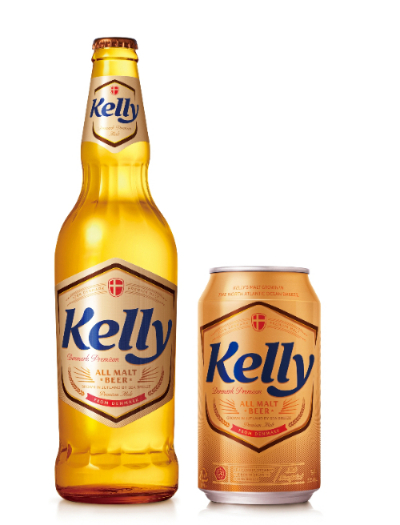
HiteJinro is aiming to reclaim the top spot in the domestic beer market with its new beer product, 'Kelly.' However, in the first quarter of this year, the company is expected to report disappointing results due to decreased profitability caused by the burden of marketing expenses. Since HiteJinro has announced its intention to take on losses and compete aggressively through marketing, a decline in annual profitability also seems inevitable. Therefore, the monthly sales volume and market share trends of the new product will be key factors in determining future performance.
According to the consensus estimate of domestic securities firms compiled by financial information provider FnGuide on the 11th, HiteJinro's sales in the first quarter of this year are expected to increase by 2.8% year-on-year to 599.7 billion KRW. On the other hand, operating profit is projected to decrease by 38.5% to 35.7 billion KRW, and net profit is expected to fall by 56.0% to 16.3 billion KRW during the same period.
The decline in HiteJinro's first-quarter profits is attributed to increased promotional expenses amid a sluggish market caused by the recent economic downturn and weakened alcohol consumption. In particular, the main factor is considered to be the pre-expenditure of inventory adjustments and related marketing costs ahead of the launch of the new beer Kelly last month. Additionally, changes in drinking culture and a slower-than-expected recovery in demand for beer and soju despite the transition of COVID-19 to an endemic phase have also had an impact.
HiteJinro launched the new beer Kelly on the 4th of last month. Kelly is the first beer brand introduced by HiteJinro in four years since 'Terra' in 2019. To ensure a smooth market entry for Kelly, HiteJinro has deployed strong sales efforts from the initial launch, betting heavily on its success. Since early diffusion is crucial for new products, the company is pursuing a strategy to rapidly raise product awareness through various sales activities. When Terra was launched, HiteJinro also focused its sales efforts on key commercial districts with a strategy to win the market within three months, achieving sales of 100 million bottles within 100 days.

Kim In-kyu, CEO of HiteJinro, has expressed a strong determination to reclaim the leading position in the domestic beer market through aggressive marketing, even if it means incurring losses this year. Since 2012, HiteJinro has remained in second place behind OB Beer’s 'Cass.' CEO Kim is determined to settle the competition within this year through a 'dual brand' strategy by selling Terra and Kelly together.
When Terra was launched in the first quarter of 2019, HiteJinro also pre-spent marketing costs, increasing selling and administrative expenses by about 10% compared to the same period the previous year, which led to an operating loss and a shift to a deficit for that quarter. On an annual basis, selling and administrative expenses increased by about 17% (approximately 112 billion KRW) compared to the previous year, resulting in a decrease in operating profit. Lee Kyung-shin, a researcher at Hi Investment & Securities, analyzed, “Considering that costs related to the launch, such as recruitment expenses, malt costs, and marketing expenses, increased at the time of Terra’s launch in early 2019, expectations for margins in the first half of this year need to be lowered.”
Although Terra is performing well mainly in the entertainment market, Cass is leading Terra in the home market. Therefore, expanding market share in the home market will be crucial for HiteJinro to regain the top position in the beer market. However, in the first quarter of this year before Kelly’s launch, Cass further expanded its market share, widening the gap. According to market research firm Nielsen Korea, Cass’s market share in the home beer market in the first quarter increased by 2.3 percentage points year-on-year to 42.8%. This is the highest share in four years since the first quarter of 2019 and also 1.3 percentage points higher than in the fourth quarter of last year.
© The Asia Business Daily(www.asiae.co.kr). All rights reserved.
![Clutching a Stolen Dior Bag, Saying "I Hate Being Poor but Real"... The Grotesque Con of a "Human Knockoff" [Slate]](https://cwcontent.asiae.co.kr/asiaresize/183/2026021902243444107_1771435474.jpg)

















