Various Waste Recycling Cement Company
Reducing Carbon Emissions... Part of ESG Management
Civic Groups "Contains Heavy Metals... Grading System Needed"
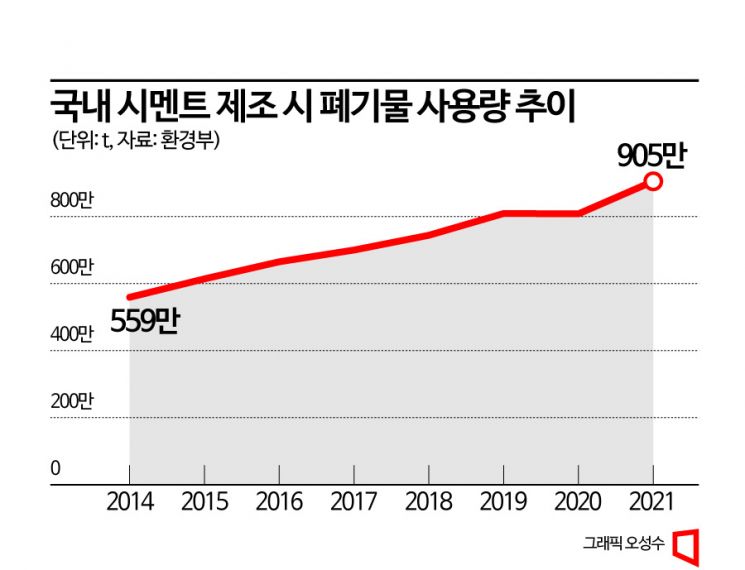
As the amount of waste used in cement manufacturing continues to increase, opinions on this issue are divided. Cement producers claim that using recycled resources as fuel results in "eco-friendly cement," while civic groups argue that making cement from waste full of heavy metals threatens public health. A bill requiring mandatory disclosure of the types and origins of waste used in cement production has been dormant in the National Assembly for over a year.
According to data from the Ministry of Environment on the 9th, the amount of waste used in cement kilns in 2021 was 9.05 million tons, an increase of about 62% compared to 5.59 million tons in 2014. All nine domestic cement companies, including Ssangyong C&E and Sampyo, use waste to produce cement. These companies recycle waste tires, waste plastics, and other materials as auxiliary fuels replacing bituminous coal, and use coal ash, sludge, and other substitutes for limestone, the main raw material of cement.
Waste is one of the headaches for local governments. The COVID-19 pandemic has increased waste generation, intensifying the financial burden of incineration costs. If cement companies handle waste disposal, it can reduce costs and contribute to lowering carbon emissions and preventing global warming. The cement industry, long identified as a major source of fine dust, can also improve its image. As part of ESG (Environmental, Social, and Governance) management, companies can transform into eco-friendly businesses leading resource circulation.
For example, Sampyo Group has invested 200 billion KRW over five years in building eco-friendly facilities and set a goal to replace 100% of bituminous coal with recycled resources. A Sampyo representative stated, "The inside of the cement kiln reaches ultra-high temperatures of around 2000℃, ensuring complete combustion of waste, which is environmentally friendly," and added, "We plan to achieve 100% carbon neutrality before 2050."
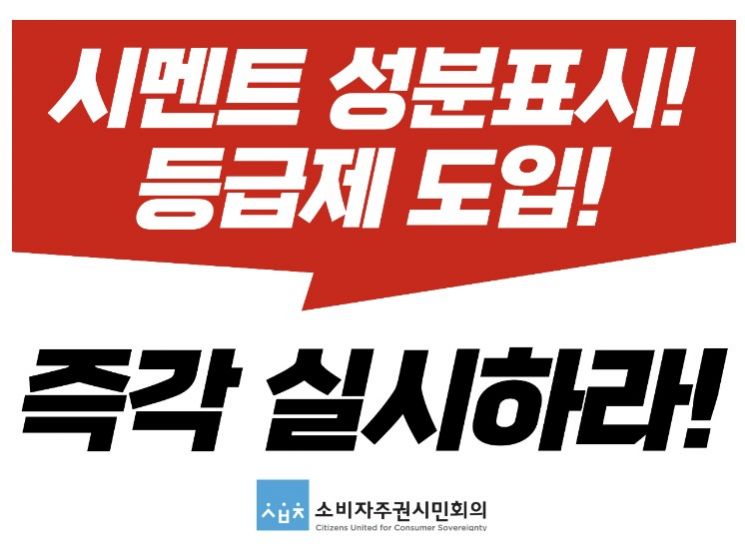
However, civic groups hold opposing views. The Consumer Sovereignty Citizens' Meeting claimed that cement companies produce cement from various wastes to reduce costs and maximize profits. Kim Samsu, the policy director of the group, stated, "Ssangyong C&E earns over 100 billion KRW in annual sales by handling waste disposal." He further asserted, "Cement companies use various wastes such as sludge from sewage treatment plants, slag from steel mills, waste dust, waste vinyl, and even human feces."
Environmental activist Pastor Choi Byung-sung warned in his recently published book, Is Your House Safe?, that building materials (cement) contain carcinogens and heavy metals, threatening public health. He also criticized, "The Ministry of Environment permitted waste incineration at cement plants without establishing proper waste usage standards or safety standards for cement products."
The "Waste Management Act Amendment," which could partially resolve these controversies, has been pending in the National Assembly for a year. The bill, introduced by Representative Noh Woong-rae of the Democratic Party in April last year, includes provisions to disclose the types, origins, and components of waste used in cement manufacturing; classify and restrict cement usage based on harmfulness standards; and impose penalties of up to two years imprisonment or fines up to 20 million KRW for violations. Kim, the policy director, emphasized, "To guarantee the public's right to know, waste information should be disclosed, and cement should be classified by grade according to the waste input, producing separate cement for residential and industrial use."
© The Asia Business Daily(www.asiae.co.kr). All rights reserved.


















