Showing Symptoms Like Rapid Breathing, Sweating, and Fussiness
New Treatment Method Emerges Instead of Existing Medication Therapy
In the United States, thousands of mothers addicted to opioid painkillers such as fentanyl give birth to babies each year, resulting in newborns experiencing drug withdrawal symptoms.
According to a report by The Wall Street Journal (WSJ) on the 30th of last month (local time), the number of pregnant women using opioids, represented by fentanyl, is increasing, and the babies they give birth to show withdrawal symptoms immediately after birth. Typical symptoms of withdrawal include rapid breathing and heart rate, excessive sweating, and fussiness.
WSJ introduced the case of Quian Hamilton (39), who gave birth to her fifth child last year. She was unable to quit opioid addiction until six months into her pregnancy. Hamilton's daughter showed severe irritability and rapid breathing as withdrawal symptoms right after birth, and eventually, the mother and daughter had to visit a specialized hospital the day after delivery to undergo eight days of drug addiction treatment.
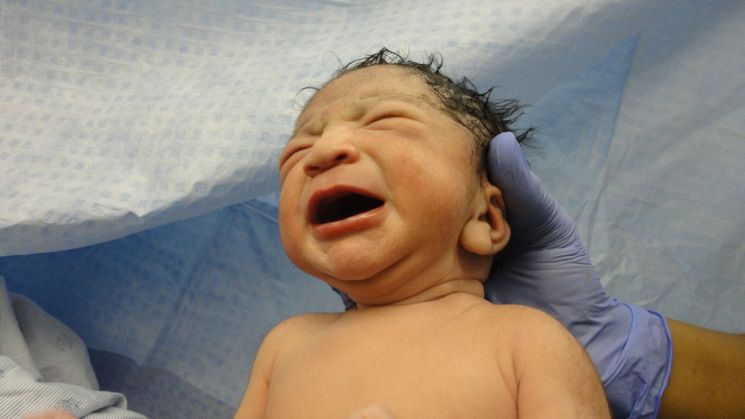
WSJ reported that as fentanyl use has increased, the number of newborns showing opioid withdrawal symptoms has risen in recent years. According to an analysis by the medical data company Truveta, since 2017, about 6 out of every 1,000 newborns in the U.S. were born drug-dependent each year. This is about twice the number compared to statistics from 2009.
Regarding this, Dennis Hand, an associate professor of obstetrics and gynecology at Thomas Jefferson University in Philadelphia, said, "Mothers are using increasingly potent drugs such as fentanyl."
According to the 2021 National Survey on Drug Use and Health conducted by the U.S. Substance Abuse and Mental Health Services Administration, nearly 8% of the 60,000 respondents reported using illegal drugs in the past month, and about 1% of pregnant women reported using illegal drugs.
The American College of Obstetricians and Gynecologists and the World Health Organization (WHO) recommend medication treatment rather than detoxification for pregnant women addicted to opioids. This is because discontinuing drug use increases the risk of relapse and fatal overdose. Additionally, many states require reporting to health authorities when opioid test results for mothers are positive.
The traditional treatment for drug-addicted newborns involved separating the baby from the mother, administering morphine, and isolating the infant for several days or weeks for intensive care. However, a new treatment method has recently emerged. Instead of using morphine as the initial treatment, it is now considered a last resort, focusing on helping the newborn overcome drug dependence by holding and soothing the baby more.
Matthew Grossman, an associate professor of pediatrics at Yale School of Medicine who developed this treatment, says, "Treat the baby like a baby." This approach simplifies the evaluation of drug-addicted newborns into three criteria (whether the baby is sleeping, feeding, or can be quickly soothed) and raises the threshold for administering medication. Caregivers are encouraged to try swaddling, dimming lights, and skin-to-skin contact to soothe a fussy baby.
A study by the U.S. National Institutes of Health involving 1,305 drug-addicted infants showed that the average hospital stay for infants treated with the traditional method was 22 days, whereas those treated with the new method were discharged after an average of 6 days. Additionally, the use of morphine to calm withdrawal symptoms dropped significantly from 98% to 14% with the new treatment.
© The Asia Business Daily(www.asiae.co.kr). All rights reserved.
![Clutching a Stolen Dior Bag, Saying "I Hate Being Poor but Real"... The Grotesque Con of a "Human Knockoff" [Slate]](https://cwcontent.asiae.co.kr/asiaresize/183/2026021902243444107_1771435474.jpg)
















