More than Doubled Since COVID-19
Upward Trend to Continue Due to Increased Demand
With the COVID-19 endemic, pent-up demand for overseas travel has exploded, causing airfares to skyrocket. However, a gloomy forecast suggests that this high airfare trend will continue for the time being.
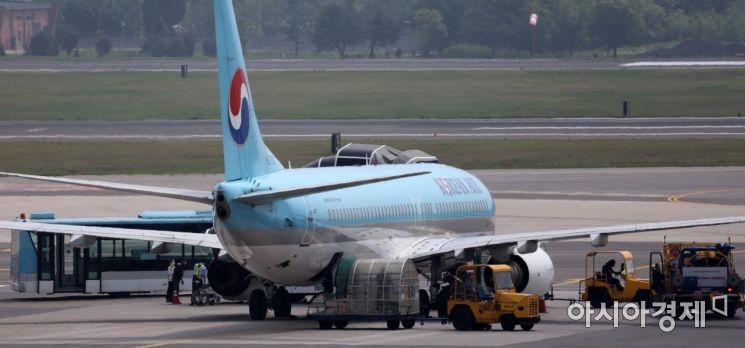
Bloomberg reported on the 26th (local time) in an article titled "Why flying is very expensive and likely to remain so" that one of the factors driving airfare increases is expanded demand. With the endemic and the arrival of the summer vacation season, consumers' revenge spending mentality has grown. According to a survey by Booking.com of 25,000 adults planning to travel within the next 1-2 years, most have become more generous in planning their travel schedules, especially in terms of expenses.
Currently, airfares have more than doubled since COVID-19. According to travel information company ForwardKeys, airfare for the Seoul-Singapore route has risen 139% over the past four years (Q1 2019 to Q1 2023). The Seoul-Bangkok route also increased by 28%. London-New York rose 80%, London-Dubai surged 128%, New York-Cancun jumped 191%, and Los Angeles-London soared 67%.
However, there is a shortage of aircraft to accommodate the increasing air travel demand. Aircraft manufacturers such as Boeing and Airbus are unable to supply new aircraft on time due to supply chain instability and labor shortages, including difficulties in procuring parts. In particular, sanctions against Russia have made it difficult to secure raw materials necessary for aircraft manufacturing, such as titanium, causing parts prices to rise. As a result, the number of global aircraft operations dropped from 38.9 million in 2019, before the COVID-19 pandemic, to 16.9 million in 2020, then increased to 20.1 million last year, but still remains at about half the 2019 level.
The aviation industry's labor shortage is also severe. Airlines, which underwent large-scale layoffs due to COVID-19, are now hiring staff amid increased travel demand, but it is difficult to find experienced employees. Consequently, airlines are offering high salaries to recruit staff, which Bloomberg explains is a factor pushing up airfare prices.
From the airlines' perspective, there is no reason to miss the opportunity to recover the enormous losses caused by COVID-19. According to the International Air Transport Association (IATA), global airlines have suffered losses totaling approximately $200 billion over the past three years.
Earlier, Michael O'Leary, CEO of Ryanair, stated last year, "With oil prices rising from $40 to $100 per barrel (currently in the $70 range as of April 2023), ultra-low-cost airfares will no longer be available," adding, "We expect oil prices to remain structurally high for the next 4-5 years until we can move away from Russian oil and natural gas."
© The Asia Business Daily(www.asiae.co.kr). All rights reserved.

















