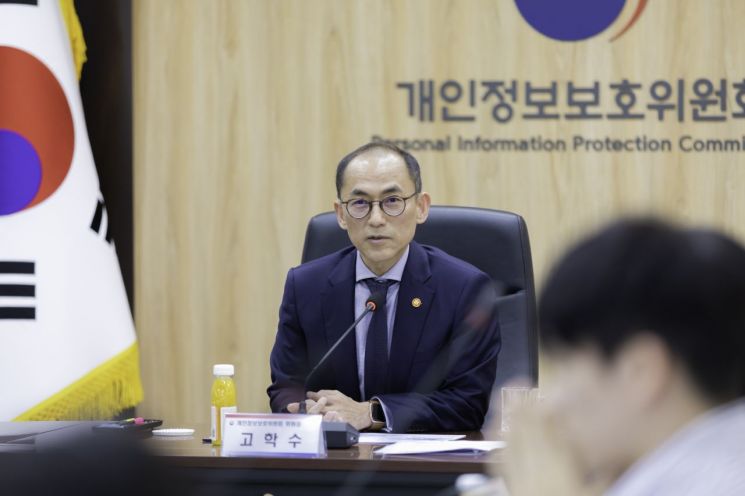
On the 26th, the Personal Information Protection Commission held a meeting at SK T Tower in Jung-gu, Seoul, with 11 companies from the telecommunications and online video service (hereinafter OTT service) sectors, along with the Personal Information Protection Association.
This meeting was part of a relay meeting chaired by the Commission’s Chairperson to share the amendments to the "Personal Information Protection Act," scheduled to be enforced from September 15 this year, and future policy directions with the industry and to gather opinions. It was the fourth session following online platforms, medical and welfare sectors, and startups.
At the meeting, the Personal Information Protection Association, a self-regulatory organization for personal information protection in the telecommunications sector, first presented on the current status of the telecommunications market and the structure of the telecommunications industry.
They emphasized the need for various government support measures to help sellers, who are mostly small business owners connected through the telecommunications industry structure of telecom companies (consignors), agencies (consignees), and retailers (sub-consignees), comply with personal information protection regulations.
In the following session, the Commission explained the amendments to the Personal Information Protection Act and the direction of revisions to subordinate statutes. The explanation focused on issues of high interest to the industry, such as the introduction of the right to request personal information transfer, unification of the dual regulatory system for online and offline, and improvement of the excessive reliance on prior consent methods.
The Commission added that in the process of concretizing the newly introduced systems and policies, it plans to broadly listen to the opinions of various stakeholders, including those in the telecommunications and OTT service sectors, and to prepare the drafts for enforcement ordinances and notifications reflecting these opinions without delay.
During the subsequent discussion, the telecommunications and OTT service industries expressed expectations that the amendment of the "Personal Information Protection Act" would accelerate digital transformation and strengthen the protection of citizens’ rights. They stated their intention to comply well with laws and regulations and actively participate in voluntary personal information protection activities to further protect the personal information of the Korean people.
However, they pointed out the need for the Commission to provide concrete standards so that new laws and systems, such as improvements in consent methods and diversification of requirements for overseas transfers, can be meaningfully applied in the field. They also requested that management and supervision obligations for consignees and sub-consignees in the increasingly complex personal information processing environment be operated so as not to impose excessive burdens on consignors.
In response, the Commission stated that it would promptly prepare guidelines and explanatory materials following the legal amendments and actively support the industry’s innovative data-related challenges so that they do not face limitations or difficulties due to interpretations or judgments of the Personal Information Protection Act.
Chairperson Koh Hak-soo of the Commission said, “We will continue to communicate with the field and properly organize systems and policies so that the telecommunications industry, which is the foundation of the data economy, and the OTT service industry, a new growth base for the cultural content industry, can effectively utilize data under the firm trust of the public in personal information protection.”
© The Asia Business Daily(www.asiae.co.kr). All rights reserved.
![Clutching a Stolen Dior Bag, Saying "I Hate Being Poor but Real"... The Grotesque Con of a "Human Knockoff" [Slate]](https://cwcontent.asiae.co.kr/asiaresize/183/2026021902243444107_1771435474.jpg)
















