Full Amendment to the Animal Protection Act to Take Effect on the 27th
Stricter Penalties for Illegal Business and Enhanced Compliance Requirements for Pet Business Operators
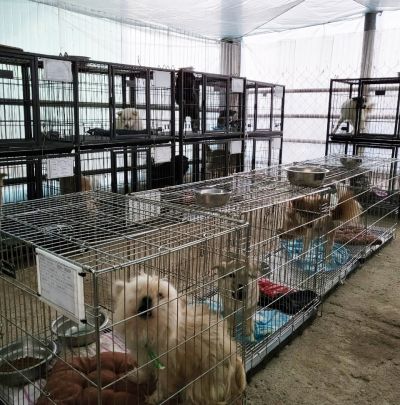
From now on, if animals that are old or sick are abandoned or traded for disposal purposes, not only will business suspension be imposed, but fines can also be levied. In addition, penalties for unlicensed pet business operators will be strengthened to a maximum of 2 years imprisonment. This is intended to prevent the recurrence of animal abuse cases such as the 'Yangpyeong dog carcass' incident, where over 1,000 dogs and cats were starved to death.
The Ministry of Agriculture, Food and Rural Affairs announced on the 26th that starting from the 27th, it will revise and implement the 'Animal Protection Act' and the 'Enforcement Decree and Enforcement Rules of the Animal Protection Act' with these contents.
First, compliance requirements for pet business operators and penalties and sanctions for illegal business will be strengthened. The import, sale, and funeral services of pets will be changed from the previous registration system to a licensing system. Furthermore, penalties for unlicensed or unregistered businesses will be increased from fines of up to 5 million KRW to imprisonment of up to 2 years or fines of up to 20 million KRW for unlicensed operations, and imprisonment of up to 1 year or fines of up to 10 million KRW for unregistered operations.
Moreover, local governments will be able to take necessary measures to close business establishments that continue operations despite being unlicensed, unregistered, or having received business suspension orders.
In particular, violations of important compliance matters from an animal welfare perspective, such as the prohibition of trading animals for abandonment or disposal due to aging or illness, may result in both fines and administrative penalties. Previously, penalties and sanctions were limited to business suspension, but now ▲a fine of up to 3 million KRW for violating the prohibition on trading animals for abandonment or disposal due to aging or illness ▲a fine of up to 5 million KRW for breeding or giving birth to dogs or cats under 12 months of age ▲a fine of up to 3 million KRW for selling dogs or cats under 2 months of age may also be imposed.
Additionally, pet business operators who produce, import, or sell pets must report the transaction details of handled dogs (animals subject to registration) to the relevant city, county, or district office every month, and when selling dogs (animals subject to registration), they must register the animal under the buyer's name before the sale.
Obligations for pet owners to prevent dog bite accidents are also strengthened. Dog owners must ensure that their dogs do not leave the place where they are kept without the guardian, and when taking dogs out accompanied by the owner, if a transport device (such as a bag) rather than a leash or harness is used, it must be equipped with a locking device to prevent the animal from escaping.
Owners must restrict the movement of dogs by holding them directly or using a leash or harness in common indoor areas of multi-family houses, multi-unit houses, and apartment complexes. The scope of these mandatory measures has been expanded to include dormitories, multi-use facilities, senior welfare housing, officetels, and other quasi-residential common indoor areas. In particular, the areas where dangerous dogs such as Dosa dogs and Pit Bull Terriers are prohibited have been expanded from the current 'daycare centers, kindergartens, elementary and special schools' to include 'senior welfare facilities, facilities for the disabled, children's parks, and children's playgrounds.'
If an owner keeps a pet tied with a leash, the length of the leash must be at least 2 meters, and the animal must not be kept for a long time in a dark space where light is blocked. If the place where the animal is kept is far from the owner's residence, the hygiene and health status of the animal must be regularly monitored.
Measures for the rescue and protection of animals and the institutional environment for these have also been improved. The period during which local governments must isolate animals judged to have been abused after rescue has been extended from 'at least 3 days' to 'at least 5 days.' If the owner wants to reclaim the animal, they must submit a plan to the local government to prevent recurrence of abuse.
Furthermore, the revision introduces a 'private animal protection facility reporting system,' requiring existing private animal shelters to report their facility operation to the relevant local government and comply with facility and operation standards for proper management of protected animals.
A system allowing local governments to accept animals abandoned by owners through applications will also be introduced. However, to prevent indiscriminate acceptance applications, local governments may refuse acceptance unless there are unavoidable reasons such as ▲long-term hospitalization or care for over 6 months, ▲military service, or ▲damage to housing caused by typhoons, floods, earthquakes, etc., making it difficult for the owner to care for the animal.
The animal experiment management system is also strengthened, including the introduction of a full-time veterinarian system for experimental animals. Institutions that possess or use more than 10,000 experimental animals annually must have a veterinarian dedicated to experimental animals. Currently, animal experiment institutions must undergo review by an animal experiment ethics committee before conducting experiments, but from now on, if important aspects of the experiment such as species addition or changes are made, they must also undergo ethics committee review. The ethics committee will supervise whether animal experiments are conducted according to the reviewed content and may request suspension of unreviewed animal experiments.
Song Nam-geun, Director of Animal Welfare and Environment Policy at the Ministry of Agriculture, Food and Rural Affairs, said, "We plan to promote and prepare guidelines to ensure that the newly established and strengthened systems being implemented this time are well settled in the field," and added, "We will continue to improve animal welfare systems through consultations with pet owners, local governments, and related organizations."
© The Asia Business Daily(www.asiae.co.kr). All rights reserved.

















