5 Retail Store Associations "Use Products from Affected Areas"
Concerns of Release Already Raised Due to Possible Hole in Nuclear Plant Floor
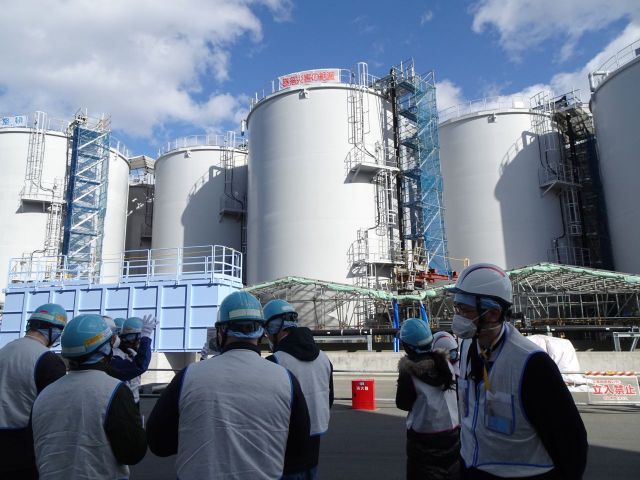
As the Japanese government is expected to discharge contaminated water from the Fukushima nuclear power plant explosion accident in July, the Japan Retailers Association, representing supermarkets and convenience stores, has sparked controversy by stating that they will continue to use products from the affected areas even after the discharge. Concerns are spreading both inside and outside Japan that contaminated water may already be leaking, as there are suspicions that holes have been drilled in the bottom of the reactor of Fukushima Nuclear Power Plant Unit 1.
According to the Fukushima Minyu Newspaper on the 26th, executives from five organizations?the Japan Chain Stores Association, the National Supermarket Association, the Japan Supermarket Association, the Japan Voluntary Chain Association, and the All Japan Supermarket Association?held a meeting on the 24th in Tokyo with Ota Fusae, Vice Minister of Economy, Trade and Industry, regarding misinformation (false information causing damage to Fukushima) and conveyed their intentions.
At the 'Countermeasures Against Misinformation and Distribution Measures for Contaminated Water Disposal' meeting hosted by the Ministry of Economy, Trade and Industry that day, the retailer association executives stated that they would continue to handle agricultural and marine products from Fukushima and nearby mountainous areas in their stores even after the contaminated water is discharged.
Sanriku is a coastal area extending from Aomori Prefecture to Miyagi Prefecture, near the coast of Fukushima. Joban is the coastal area of Fukushima. Both places were famous for seafood before the nuclear accident. Jun Inoue, Vice President of the Japan Chain Stores Association, said, "We support producers who work hard every day in the affected areas and will continue to handle products from Sanriku and Joban as before."
Vice President Inoue also emphasized, "It is important to create an environment where consumers nationwide can purchase with peace of mind," and requested the Ministry of Economy, Trade and Industry to continue radiation inspections after the discharge, provide easily understandable information to consumers, and establish a response window to answer public questions related to the contaminated water.
In response, Vice Minister Ota said, "The message that the retail industry, which directly contacts consumers, will continue to handle products from Sanriku and Joban after the marine discharge of contaminated water is encouraging," and added, "We will respond firmly to the requests." He also mentioned that the ministry would provide radiation monitoring data later and engage in activities such as preparing pamphlets and Q&A materials for public dissemination.
While they treated concerns about Fukushima agricultural and marine products as misinformation, the day before, Tokyo Electric Power Company (TEPCO) announced a high possibility that there is a hole in the bottom of the reactor of Fukushima Nuclear Power Plant Unit 1, amplifying public anxiety.
At a meeting the previous day, TEPCO reported a high possibility that there is a hole in the bottom of the reactor of Fukushima Nuclear Power Plant Unit 1, which experienced a meltdown. It stated that the hole appears to have been caused by heat from melted nuclear fuel debris. Considering that deposits believed to be melted nuclear fuel debris were attached to other remaining equipment, it is estimated that multiple holes have been drilled in the reactor bottom.
TEPCO added, "Unit 1 melted down in a short time after the tsunami swept through, making nuclear fuel cooling impossible, and it seems this caused the hole to be drilled through the reactor bottom," and said, "This investigation result supports previous assumptions."
Meanwhile, TEPCO is working toward discharging the contaminated water around July. They announced that the excavation of the underwater tunnel for discharging contaminated water has been completed. Preparations, including the underwater tunnel and discharge-related facilities within the nuclear power plant site, are targeted to be completed by the end of June. The Fukushima Minyu Newspaper analyzed that "the start of discharge is expected to be no earlier than after July."
© The Asia Business Daily(www.asiae.co.kr). All rights reserved.


















