National Palace Museum Exhibition Until the 28th of Next Month
The calendar recording the last moments of Admiral Yi Sun-sin will be made public. It is the 'Ryuseongryong Bimanggi Ipdaetongryeok-Gyeongja (柳成龍備忘記入大統曆-庚子)', which was repatriated to Korea last September. The National Palace Museum announced on the 25th that it will be exhibited in the 'Science and Culture' permanent exhibition hall until the 28th of next month, coinciding with Admiral Yi Sun-sin’s birthday (the 28th).
Daetongryeok is a type of calendar book (冊曆) corresponding to today’s calendar. It was useful for farming and other activities as it indicated seasonal changes. Its form is similar to a diary. Next to the dates, schedules and personal thoughts were written. The 'Ryuseongryong Bimanggi Ipdaetongryeok' is presumed to have been used directly in the year of Gyeongja (1600) by Seoae Ryu Seong-ryong (1542?1607), a scholar-official who served as Prime Minister during the Imjin War and authored the 'Jingbirok'. The basis for this is the 'Seoae Seonsaeng Yeonbo (西厓先生年譜)', a chronicle of Ryu Seong-ryong. The Cultural Heritage Administration explained, "This conclusion was drawn by comparing the handwriting recorded with the mainly mentioned figures and events."
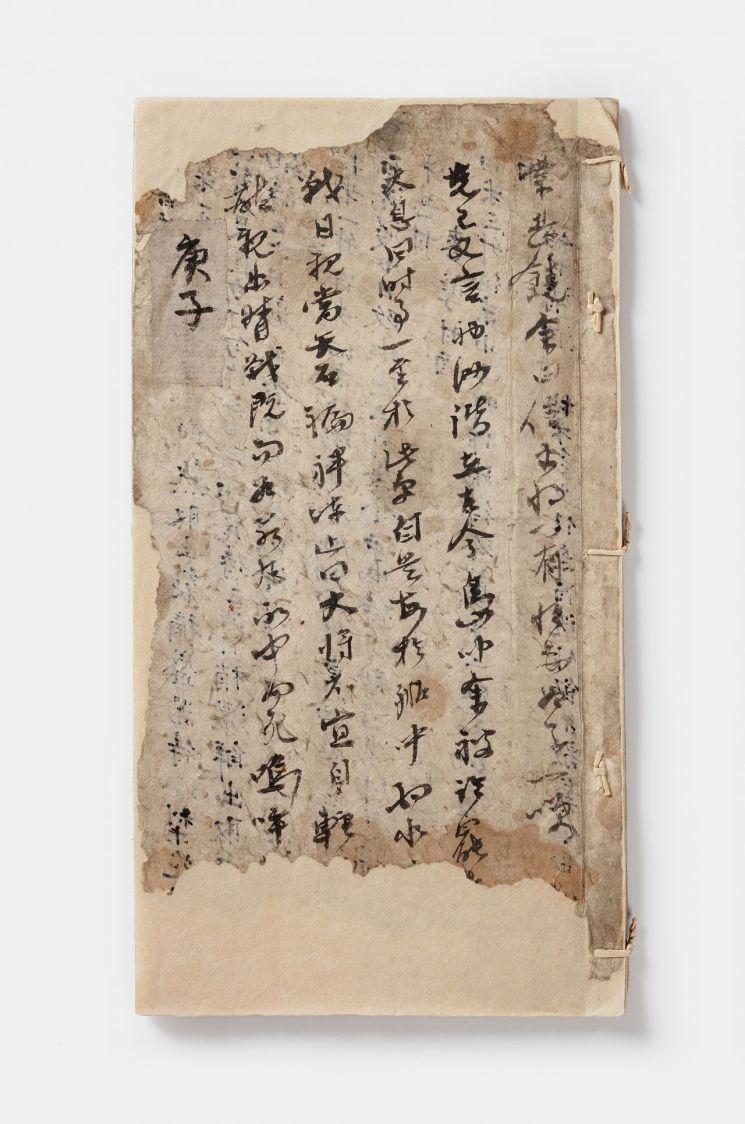
The book contains ink writings (墨書) and red writings (朱書) detailing the weather, appointments, symptoms of illnesses, and prescriptions for 203 days of the Gyeongja year. The mentioned figures number about 190. The cover, temporarily bound with paper, has eighty-three characters recorded, though the top and bottom are cut off.
"When Yi Sun-sin was on Gogeumdo (古今島), he heard that I was dismissed after being criticized (...) and sighed deeply, saying, 'Has the state of affairs really come to this?' From then on, whenever he was on the ship, he placed clear water (...) On the days of battle, he braved the arrows and stones himself, but the deputy commanders tried to dissuade him, saying, 'The general should not take such risks himself.' (However, he did not listen) and directly went out to encourage the troops in battle, eventually being struck by a flying bullet and dying. Ah!"
This is understood to describe the situation in which Yi Sun-sin, during the Imjin War, rejected the surrounding objections and commanded on the battlefield until he was killed. The Cultural Heritage Administration analyzed, "The paper used on the cover is similar to that used in the 'Jingbirok', which often reused the reverse side of sheets. It appears to have been written expressing thoughts at the time of Admiral Yi’s death and later utilized."
Besides this, the 'Ryuseongryong Bimanggi Ipdaetongryeok' contains various contents that help understand the contemporary situation, such as the return of Kang Hang (1567?1618), who was taken prisoner to Japan during the Jeongyu War and came back in 1600. It also records methods for brewing alcohol, including how to ferment rice and how much water to add, which is highly valued for its historical significance.
Meanwhile, the Cultural Heritage Administration will hold a commemorative event for Admiral Yi Sun-sin’s birthday on the 28th at Hyeonchungsa Shrine in Asan, Chungnam. At the tea ceremony (茶禮) held at 11 a.m., the head of the Hyeonchungsa Management Office will serve as the first ritual officer, the Chohwongwan (初獻官), who offers the first cup. Lee Jae-young, representing Admiral Yi’s descendants, will serve as the Ahwongwan (亞獻官), the second ritual officer, and citizen ritual officer Lee Bong-su will participate as the Jonghwongwan (終獻官), the third ritual officer.
© The Asia Business Daily(www.asiae.co.kr). All rights reserved.

















