Bank of Korea April Consumer Sentiment Survey Results Announced
Consumer Sentiment Rises on Price Slowdown and End of Tightening Expectations
Housing Price Outlook Up for 5 Consecutive Months
Expected Inflation Falls for 2 Consecutive Months to 3.7%

Despite recent economic sluggishness, consumer sentiment index rose for the second consecutive month as expectations grew for the end of the Bank of Korea's tightening and a slowdown in inflation. Housing price outlook has been on the rise for five consecutive months since November last year.
The general public's expected inflation rate for consumer prices over the next year fell to 3.7%.
According to the 'April Consumer Sentiment Survey Results' announced by the Bank of Korea on the 26th, the Composite Consumer Sentiment Index (CCSI), which comprehensively reflects consumers' economic sentiment, stood at 95.1 this month, up 3.1 points from the previous month.
The CCSI is an indicator calculated using six major individual indices among the 15 indices that make up the Consumer Sentiment Index (CSI): current living conditions, outlook on living conditions, household income outlook, consumption expenditure outlook, current economic judgment, and future economic outlook.
A figure above 100 indicates optimistic consumer sentiment compared to the long-term average (2003?2021), while below 100 indicates pessimism.
This month's index also remained below 100, indicating a prevailing negative view, but it has shown an upward trend for two consecutive months, recording 90.2 in February, 92.0 in March, and 95.1 in April.
Looking specifically at households' perceptions of their financial situation, the Current Living Conditions CSI (87) and Living Conditions Outlook CSI (90) rose by 4 points and 3 points respectively from the previous month, while Household Income Outlook CSI (96) and Consumption Expenditure Outlook CSI (110) remained unchanged from the previous month.
Regarding the recent economic situation, the Current Economic Judgment CSI (58) and Future Economic Outlook CSI (68) increased by 6 points and 5 points respectively compared to the previous month.
The Interest Rate Level Outlook CSI (111) fell by 9 points in one month. This is interpreted as growing expectations that there will be no further interest rate hikes, given that the Bank of Korea has recently held the base rate steady for two consecutive times.
The Housing Price Outlook CSI rose 7 points from the previous month to 87. It has been steadily increasing since falling to 61 in November last year.
Hwang Hee-jin, team leader of the Statistics Survey Team at the Bank of Korea's Economic Statistics Bureau, explained, "As the rate of inflation slowed, some consumers expressed willingness to spend more on durable goods, entertainment culture, and dining out," adding, "The consumption trend seems to have improved."
However, Team Leader Hwang added, "There is still a lot of news about sluggish exports and the economy, and although inflation is stabilizing, there have been recent movements of rising international oil prices, and there is a perception that public utility fees will be raised at some point, so uncertainty remains."
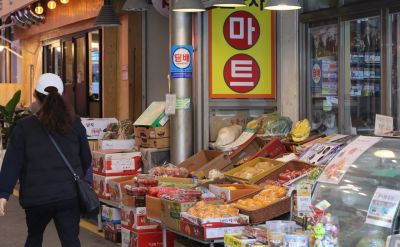
This month's expected inflation rate fell 0.2 percentage points from the previous month to 3.7%.
Expected inflation refers to the anticipated inflation rate one year ahead, based on information currently known by economic agents such as businesses and households.
The expected inflation rate rose to 4.7% in July last year, then fell to 3.8% in December due to a drop in international oil prices and base rate hikes. It then rose for two consecutive months to 3.9% in January and 4.0% in February, before declining again for two consecutive months starting in March.
Regarding this, Team Leader Hwang explained, "Although prices of processed foods, public utility fees, and service prices remain high, the price increase of petroleum products has slowed, and the consumer price index's upward trend has decelerated, which seems to have caused the expected inflation rate to fall a bit more."
Looking at the distribution of responses for expected inflation rates, the '2?3%' category increased by 3.3 percentage points, while the '4?5%' category decreased by 2.7 percentage points.
The proportion of responses regarding major items expected to affect consumer prices over the next year was in the order of public utility fees (77.6%), petroleum products (35.3%), and agricultural, livestock, and fishery products (28.8%). The response proportion for petroleum products increased significantly by 11.9 percentage points compared to the previous month.
© The Asia Business Daily(www.asiae.co.kr). All rights reserved.


















